




Efficient cooling: EU plan prepares new strategy for HVACR sector
The EU plan prepares new measures for efficient cooling, storage, heat recovery and skills in the HVACR sector.
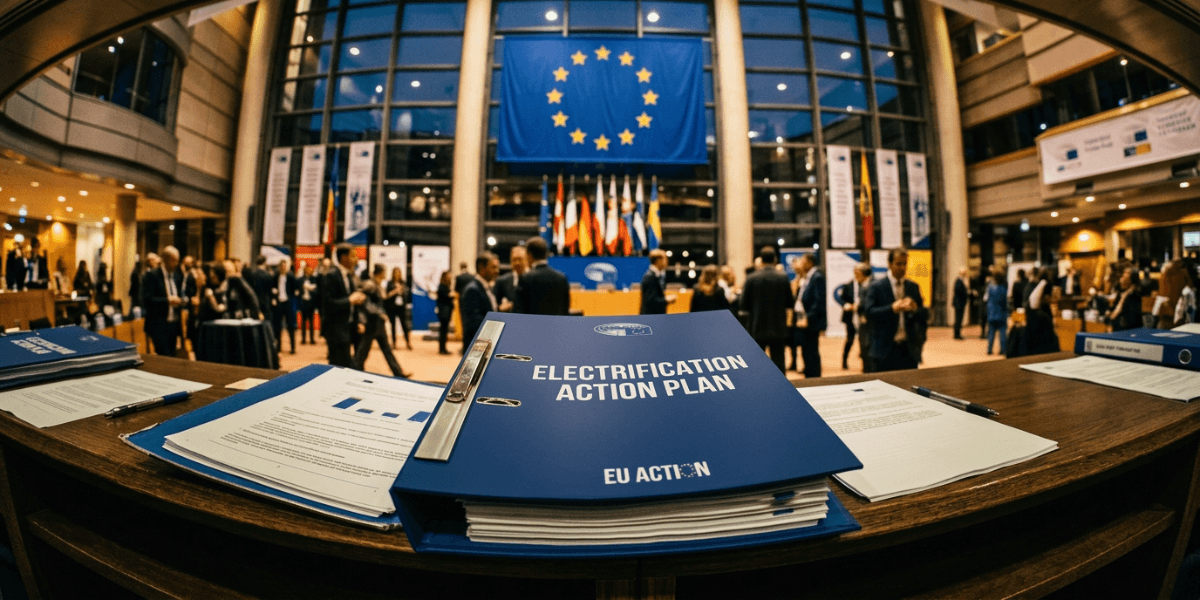
Image source: industriaeformazione.it
The European Commission has published its new Electrification Action Plan , outlining the actions needed to accelerate the electrification of end-use consumption and reduce the Union's dependence on imported fossil fuels. Among the most significant commitments for the HVACR sector is the future adoption of a Cooling and Heating Action Plan , designed to address the growing demand for efficient cooling from citizens, businesses, and production activities.
The plan proposes increasing electricity's share of European final consumption from the current 23% to 46% by 2040. For refrigeration, already heavily electrified, the new phase is less about fuel substitution than integrating systems with networks, storage, digital systems, and heat recovery solutions.
More efficient and grid-integrated cooling
The growing demand for cooling , intensified by hotter and longer summers, requires increasing system efficiency without exacerbating electricity consumption peaks. The European document emphasizes the value of energy flexibility, storage, and load shifting to times with greater renewable generation or lower grid pressure.
For supermarkets, temperature-controlled warehouses and industrial plants , this approach values technologies such as:
- digital supervision and regulation of systems;
- modulation of compressors and fans;
- thermal and refrigeration storage;
- dynamic electrical contracts;
- coordinated management of production and consumption;
- demand response systems.
Flexibility must not, of course, compromise storage temperatures or the continuity of the cold chain. It must be developed by considering the thermal inertia of environments and products, process limitations, and the actual behavior of the system. Cooling can thus become not just a load to be supplied, but a manageable resource within an increasingly renewable electricity system.
Heat recovery, from waste to energy resource
Another central element of the Action Plan is the recovery of industrial waste heat , whose European potential is estimated at around 300 TWh per year. The Commission has announced a dedicated European initiative by the second quarter of 2027 and has set the goal of covering 11% of the EU's heating demand with recovered heat by 2050.
For commercial and industrial refrigeration , this approach is particularly important. The heat normally rejected during condensation can be used for:
- produce domestic or process hot water;
- heating rooms and sales areas;
- support industrial washing and processing;
- power defrosting systems;
- integrate local heating networks;
- serve users near the plant.
There are already applications in which heat recovered from supermarket refrigeration systems is used to heat buildings or fed into local heating networks. The actual cost-effectiveness depends on the available temperature, the simultaneous demand for cooling and heating, and the distance between the point of generation and the point of use.
Integrated design of refrigeration, air conditioning, and heat production can therefore improve the overall efficiency of the plant or store, reducing the need for separate generators.
Technical skills for the new cooling phase
The European plan also highlights the need to strengthen skills along the entire electrification value chain . The Commission intends to support vocational training and promote greater portability of qualifications between Member States.
For designers and refrigeration technicians, the evolution of the sector will require increasingly transversal skills. Knowledge of the refrigeration circuit will need to be combined with skills related to:
- consumption control and analysis;
- integration with storage and renewable sources;
- heat recovery and valorization;
- flexibility management;
- sensors and digital supervision;
- safety of alternative refrigerants.
The future Cooling and Heating Action Plan will be able to more precisely define cooling measures. However, the Electrification Action Plan has already indicated the direction: more efficient, connected, and flexible systems capable of producing cold safely while simultaneously interacting with the energy system and maximizing the heat generated.

Related Focus


FAQ – Domande frequenti
The Electrification Action Plan includes the adoption of a future Cooling and Heating Action Plan, also addressing the growing demand for efficient cooling in Europe. The strategy will coordinate technologies, networks, storage, and consumption reduction.
Through digital control, thermal storage, and scheduled load management, some consumption can be shifted to more favorable hours. However, the strategy must always guarantee the required temperatures and the safety of the stored products.
Condensation heat can be used for hot water, heating, industrial processes, defrosting, or thermal networks. Feasibility depends on the available temperature and the presence of a simultaneous heat demand and cooling production.
