




Recovered and liquefied CO₂: new opportunities for the cold chain
Recovered and liquefied CO₂ can find new uses in cooling, freezing, and cold chain logistics.
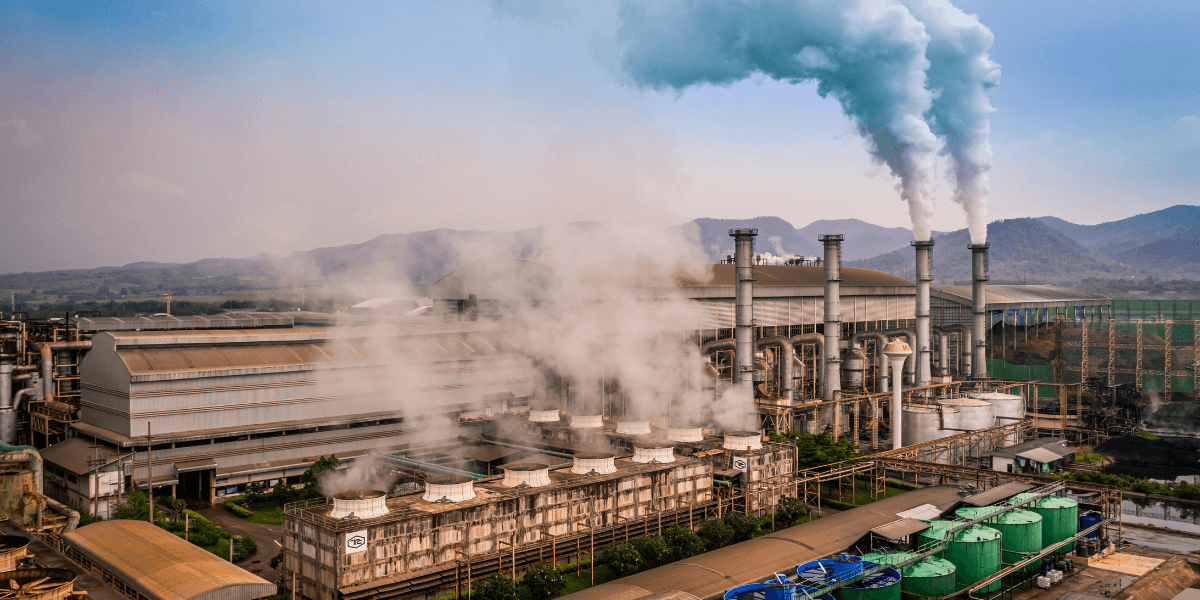
The CO₂ recovered from biogas plants and industrial processes can be purified and liquefied, transforming a stream destined for atmospheric emission into a raw material usable in a variety of applications. For the refrigeration sector, this approach opens up exciting prospects, especially in food refrigeration, freezing processes, dry ice production, and temperature-controlled logistics.
This topic is particularly relevant in a sector that already makes extensive use of carbon dioxide, both as a cryogenic fluid and as R744 refrigerant. The possibility of recovering and valorizing CO₂ from other industrial processes therefore fits into a circular economy approach, provided the purity standards required by the various applications are met.
From capture to liquid CO₂
In biogas plants, the methane separation required to produce biomethane generates a CO₂-rich stream. Similarly, carbon dioxide can be recovered from certain industrial processes through dedicated capture systems.
Before being reused , however, it must be purified from unwanted substances and then liquefied. This treatment allows for a product that is easier to store and transport, and can achieve quality levels suitable for food-grade applications.
Liquid CO₂ is already used in the food sector for:
- rapid cooling and freezing;
- dry ice production;
- transport of temperature-controlled products;
- modified atmosphere packaging;
- food & beverage industry processes.
Dry ice , obtained from CO₂, has a temperature of approximately -78.5°C and sublimates directly from solid to gas without leaving liquid residue. This characteristic makes it particularly useful for transporting food, pharmaceuticals, and other temperature-sensitive products.
Recovered CO₂ and R744 refrigerant are not automatically the same thing
Carbon dioxide is also one of the most widely used natural refrigerants in commercial and industrial refrigeration . Like R744 , it is used in supermarkets, cold storage rooms, industrial plants, refrigerated transport, and other configurations requiring continuous cooling.
However, it's important to distinguish between recovered CO₂ intended for industrial or food applications and CO₂ usable directly in a refrigeration circuit. An R744 system requires a fluid with purity and moisture content specifications suitable for refrigeration. Excessive water or contaminants can cause problems for the circuit and its components. For example, products marketed specifically as R744 require particularly low humidity levels to protect the system.
The recovery of captured CO₂ does not automatically imply its use as a refrigerant: the product must be treated and certified according to its final destination.
Circular economy and new synergies with refrigeration
For the refrigeration sector, CO₂ recovery can connect activities that were previously considered separate. A stream from biogas or a production process can become a raw material for cooling, freezing, or refrigerated logistics, reducing the need to produce new CO₂ from other sources.
The possibility of using recovered CO₂ for cryogenic applications could be particularly interesting in food industries, slaughterhouses, processing plants and logistics platforms, where production, refrigeration and the need for CO₂ can coexist in the same industrial ecosystem.
From a design perspective, several aspects remain crucial: gas purity, continuity of the source, energy consumption of the purification and liquefaction process, storage methods, and the gap between production and use. Only by analyzing the entire system can the true environmental and economic benefits be assessed.
CO₂ can therefore play a dual role in the future of refrigeration: as a natural refrigerant in R744 circuits and as a recoverable resource for cryogenic and cold chain applications. The challenge will be to develop supply chains capable of transforming emissions recovery into a practical, safe, and technically controlled use.

Related Focus



FAQ – Domande frequenti
After appropriate purification processes, CO₂ can be liquefied and used for cooling, freezing, dry ice production, and temperature-controlled transportation, among other food industry applications.
Not automatically. R744 refrigerant must meet specific purity and moisture content requirements. The recovered CO₂ must therefore be treated and tested based on its intended use in the refrigeration circuit.
Dry ice sits at approximately -78.5°C and sublimates directly into gas, without producing water. It is therefore suitable for maintaining low temperatures during the transport of food, pharmaceuticals, and other sensitive goods.
