




Refrigera 2027: The future of refrigeration: efficiency, industrial cooling, and new skills
Refrigera 2027 returns to BolognaFiere with a focus on refrigeration, industrial cooling, energy efficiency, and new skills for the future of the cold chain.
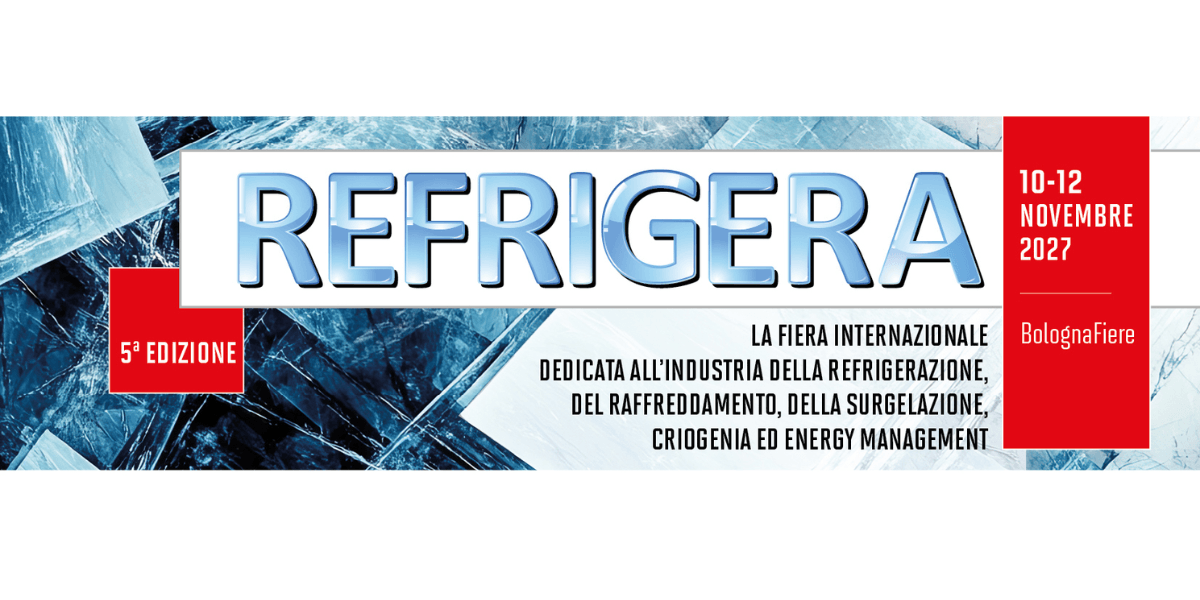
From November 10 to 12, 2027, BolognaFiere will host the fifth edition of Refrigera , the international trade fair dedicated to the entire refrigeration, cooling, freezing, cryogenics, and energy management supply chain. Following the success of previous editions, the event is preparing to further consolidate its role as a meeting point for manufacturers, designers, installers, maintenance technicians, and industrial operators called upon to address the transformations currently affecting the refrigeration sector.
The event's growth confirms the significant evolution the refrigeration industry is experiencing: the need to reduce energy consumption, limit the environmental impact of systems, and integrate new technologies is profoundly changing the way refrigeration systems are designed and managed. In this scenario, specialized trade fairs become a strategic place to learn about innovative solutions, discuss new regulations, and build collaborations along the entire value chain.
From commercial refrigeration to industrial cooling: new technological challenges
Alongside the more traditional sectors of commercial, industrial, and logistics refrigeration, the 2027 edition will place particular emphasis on process cooling , an increasingly important area for companies and industries that need to optimize their energy performance. Industrial cooling is no longer considered solely a technical necessity, but a strategic element for improving the efficiency of production processes, reducing operating costs, and achieving sustainability goals.
The evolution of the sector passes through technologies capable of integrating refrigeration, energy management and digitalization.
Among the central themes we find:
- High-efficiency refrigeration systems , designed to reduce consumption and optimize performance;
- Low environmental impact refrigerants , in line with the transition path imposed by European regulations;
- Heat recovery solutions , capable of valorising the thermal energy produced by the systems;
- Digital monitoring and intelligent control , to improve system management, maintenance and reliability.
This transformation brings the sector ever closer to the issues of energy efficiency and integrated energy management, expanding the role of refrigeration within industrial decarbonization strategies.
The new role of refrigeration technicians: from maintenance technicians to energy consultants
One of the most significant aspects of the sector's evolution concerns the changing role of refrigeration operators . The modern refrigeration engineer is no longer solely involved in the installation, maintenance, and repair of systems, but has become a key technical figure in the design and management of complex systems.
The growing integration of refrigeration, automation, and energy saving requires increasingly broad skills: knowledge of new refrigerants, the ability to analyze system performance, data management, and consumption optimization are becoming essential elements to support companies and industries in the energy transition.
In this context, professional training and development take on strategic importance. The availability of qualified technicians will be a key factor in driving the spread of more efficient and sustainable technologies, ensuring proper installation, effective maintenance, and longer system life.
Refrigera 2027: A benchmark for industry transformation
The next edition of Refrigera therefore comes at a crucial time for the refrigeration industry, which must simultaneously address the needs of sustainability, energy efficiency, and technological innovation. The event will provide an opportunity to connect companies, professionals, and stakeholders, fostering discussion on the solutions that will shape the future of the industry.
In a market where cold storage plays an increasingly strategic role for industry, logistics, food, and digital infrastructure, refrigeration becomes a key element of the energy transition. Advanced technologies, specialized skills, and collaboration between operators will be the fundamental tools for building a more efficient, sustainable sector, ready to face the challenges of the coming years.
Related Focus

FAQ – Domande frequenti
Refrigera 2027 aims to be a benchmark for manufacturers, designers, installers, and operators in the refrigeration sector, focusing on the key transformations in the supply chain: low-GWP refrigerants, energy efficiency, system safety, and technological innovation. The event offers an opportunity to discuss the solutions that will drive commercial, industrial, and process refrigeration in the coming years.
The main topics will include the transition to sustainable refrigerants, the evolution of industrial refrigeration systems, energy savings, heat recovery, digitalization, and advanced maintenance. For designers and technicians, it will be an opportunity to explore technologies applicable to supermarkets, the food industry, refrigerated logistics, data centers, and applications with high business continuity.
The spread of natural refrigerants, A2L refrigerants, and more complex refrigeration systems requires new skills in safety, F-Gas regulations, installation, adjustments, and maintenance. Refrigera 2027 emphasizes the role of technical training to prepare installers and maintenance personnel to manage more efficient, digitalized systems that comply with new regulatory requirements.
