




Heat pumps: research, innovation, and applications drive the evolution of the sector.
The international awards dedicated to heat pumps confirm the strategic role of research, innovation and expertise in the HVAC/R transition.
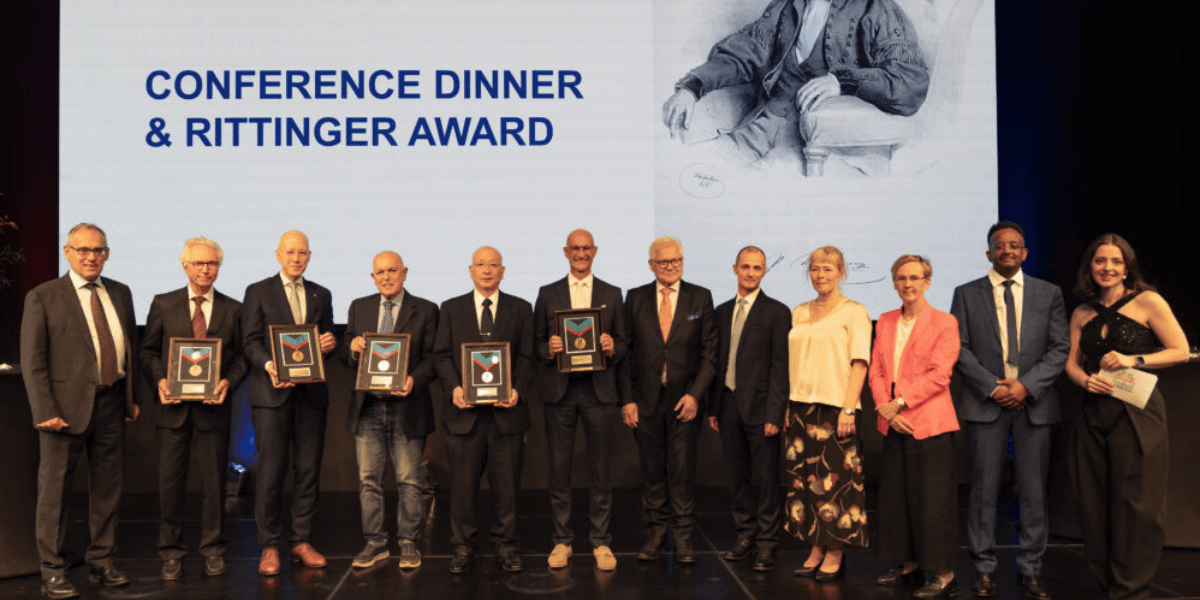
Image source: zerosottozero.it
Heat pumps are now a key technology for the energy transition , not only in the heating and air conditioning sector, but also in many industrial and refrigeration applications. Their ability to recover and transfer thermal energy with high levels of efficiency makes them a strategic solution for reducing consumption, emissions, and dependence on fossil fuels.
During the 15th IEA Heat Pump Conference , held in Vienna, the Peter Ritter von Rittinger International Heat Pump Awards 2026 were presented , an international recognition dedicated to the most significant contributions to the fields of heat pumps, air conditioning, and refrigeration. The 2026 edition honored five industry professionals: Björn Palm, Thomas Nowak, Graeme G. Maidment, Choyu Watanabe, and Renato Lazzarin.
An award for research, market and technological development
The prize is awarded every three years as part of the International IEA Heat Pump Conference and recognizes significant contributions in various areas: research, market development, energy policy, and applications of highly efficient heat pump technologies.
The awarded profiles confirm how the sector's evolution depends on diverse yet complementary skills. Scientific research contributes to the development of more efficient and reliable solutions; dialogue with industry enables innovation to be transformed into real-world applications; energy policies foster the diffusion of technologies; and training prepares technicians and professionals to manage increasingly complex systems.
For the HVAC/R industry, this integrated approach is particularly important. Heat pumps are no longer considered merely as alternatives to traditional systems, but as enabling technologies for decarbonization, capable of combining energy efficiency, electrification of consumption, heat recovery, and integration with renewable sources.
Heat pumps and refrigeration: an increasingly strategic relationship
The international recognition dedicated to heat pumps also recalls the profound connection between this technology and the world of refrigeration . Heat pumps operate on the same thermodynamic principles that govern refrigeration cycles: compression, evaporation, condensation, and heat transfer.
This technical proximity opens up increasingly interesting prospects for the refrigeration sector, especially in industrial and commercial settings. Heat pumps can help recover waste heat, reduce process energy consumption, and improve overall system efficiency .
The most relevant applications concern:
- heat recovery in industrial processes;
- integration between refrigeration and useful heat production ;
- decarbonisation of thermal consumption;
- support for more efficient and flexible energy networks ;
- reduction of operating costs thanks to highly efficient systems.
For designers, installers, and maintenance technicians, this means expanding their expertise beyond the individual machine, evaluating the system as a whole: thermal requirements, load profiles, operating temperatures, refrigerants, regulation, and service continuity.
From industrial origins to the challenges of energy transition
The award is named after Peter Ritter von Rittinger, an Austrian engineer considered one of the pioneers of heat pumps. In 1855, he designed and installed one of the first industrial systems based on heat recovery through vapor compression at a salt production plant in Ebensee, Austria.
This historical reference highlights an important aspect: heat pumps are born from an industrial logic of efficiency and energy recovery, the same logic that is once again at the heart of the transition. In a context where the demand to reduce emissions, consumption, and dependence on fossil fuels is growing, the ability to utilize already available thermal energy is becoming an increasingly strategic lever.
For the HVAC/R industry, the evolution of heat pumps therefore represents a dual opportunity: contributing to the decarbonization of buildings and, at the same time, developing more efficient solutions for industrial processes, refrigeration, and heat recovery.
The direction is clear: research, technical expertise, and concrete applications must proceed together. Only then can heat pumps fully realize their potential as a key technology for a more efficient, sustainable, and integrated HVAC/R sector.

Related Focus



FAQ – Domande frequenti
Because heat pumps must meet increasingly diverse application conditions: new buildings, renovations, industrial processes, heating networks, domestic hot water production, and systems with higher delivery temperatures. Research enables improvements in compressors, exchangers, refrigerants, electronic controls, and defrost strategies, increasing seasonal efficiency, reliability, and operating range even in harsh climates or in existing buildings that have not been fully retrofitted.
Performance depends on proper sizing for thermal loads, the temperature required by the terminals, the quality of the casing, domestic hot water production, control, and any integration with photovoltaic or storage systems. A heat pump that appears efficient on paper may perform poorly if installed in a system with excessively high flow temperatures, frequent on-off cycles, or poorly optimized control logic.
In addition to residential air conditioning, heat pumps are finding their way into commercial buildings, hotels, healthcare facilities, light industry, low- and medium-temperature processes, and heat recovery systems. The most interesting applications are those where the heat pump doesn't simply replace a generator, but is integrated with heat recovery, renewables, storage, and intelligent load management to reduce consumption, emissions, and operating costs.
