




Refrigerant regeneration: a resource for Europe
The HFC phase-down makes recovery and regeneration increasingly strategic for refrigerant service and the circular economy.
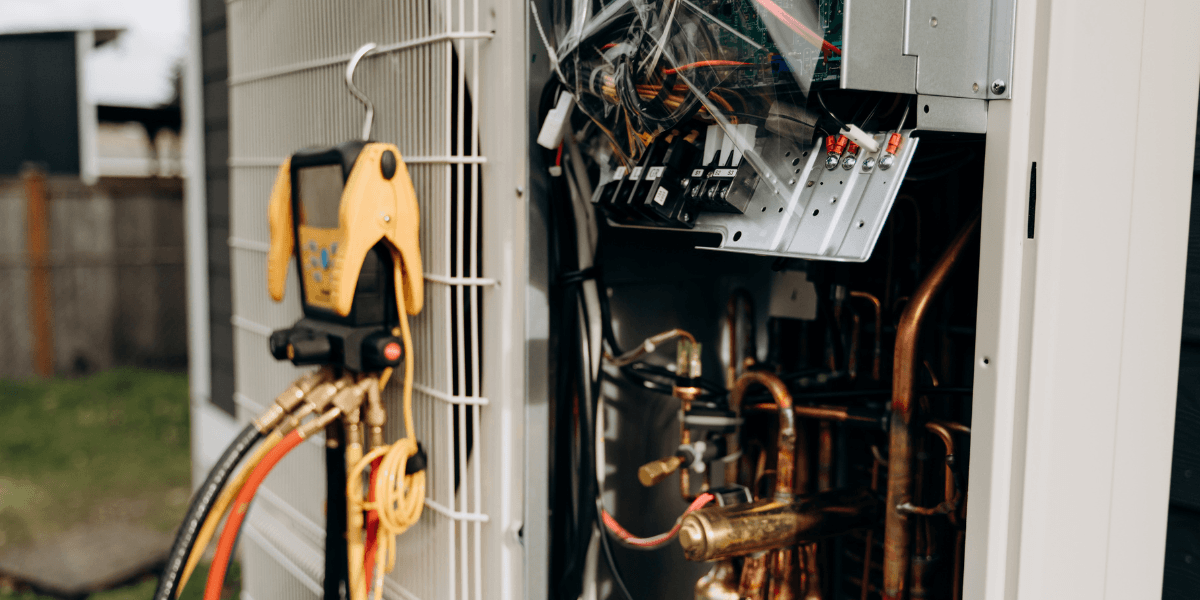
The progressive reduction in HFCs mandated by the new F-Gas Regulation is increasing the importance of refrigerant regeneration. With less virgin gas available on the market and an installed base that will continue to require maintenance for many years, recovering and restoring refrigerants already present in systems to adequate specifications is becoming an increasingly strategic lever for the European HVACR sector.
The principle is that of the circular economy applied to refrigerants : instead of considering recovered gas as a material necessarily destined for destruction, when conditions permit it can be treated, purified and put back into circulation.
The issue is particularly relevant because EU Regulation 2024/573 provides for a significant restriction on the quantities of HFCs that can be placed on the market : from 42.87 million tonnes of CO₂ equivalent in 2025-2026 to 21.67 million in 2027-2029, down to approximately 9.13 million in the period 2030-2032. From 2050, the expected quota will be zero.
Recovery, recycling, and regeneration: what are the differences?
In technical language the three terms are not equivalent.
The F-Gas Regulation defines recovery as the collection and storage of fluorinated gases from equipment or containers during maintenance, servicing or decommissioning .
Recycling , on the other hand, consists in reusing the refrigerant recovered after a basic cleaning treatment , such as filtration and drying.
Regeneration represents the next level: the recovered refrigerant is subjected to a treatment process at authorized facilities until it reaches performance equivalent to that of a virgin substance , taking into account the intended use.
The difference is important because it also determines the methods and possibilities of reuse.
Obtaining a regenerated refrigerant requires industrial processes capable of separating contaminants, moisture, oils, and, where necessary, unwanted components from the mixture. The result must also be verified to ensure the required quality level is achieved.
This makes regeneration a very different activity from the simple recovery performed during a maintenance intervention.
HFC phase-down increases the value of recovered refrigerants
The progressive reduction of European quotas makes the refrigerants already present in the systems an increasingly important resource .
Recycled and reclaimed HFCs are not subject to the quota system for placing new HFCs on the market, creating a significant advantage in a context of progressively decreasing availability of virgin gas.
For the refrigeration sector, this means being able to use recovered refrigerant as part of a strategy to manage the installed base during the transition.
The new F-Gas further strengthens this role through specific derogations for the service.
From 1 January 2032, the use of Annex I fluorinated gases with a GWP of 750 or higher will be prohibited for the maintenance and servicing of stationary refrigeration equipment , excluding chillers. However, the Regulation allows the use of reclaimed refrigerants with a GWP of 750 or higher in existing systems, provided they are correctly labeled; specific conditions also apply to recycled refrigerants.
Regeneration therefore becomes a possible lever for extending the operating life of still-functioning equipment , preventing the reduction of virgin HFCs from suddenly making service more difficult.
A European regeneration supply chain becomes strategic
For the circular economy of refrigerants to work, however, it is not enough to recover the gas from the system.
It is necessary to build a supply chain capable of :
- collect used refrigerant;
- avoid contamination between different fluids;
- correctly identify the contents of the cylinders;
- transport it to specialized facilities;
- analyze it and separate any contaminants;
- regenerate it according to adequate quality specifications;
- reintroduce it onto the market with correct traceability.
The availability of industrial treatment capacity therefore takes on strategic importance. The European Commission notes that regeneration facilities are not evenly distributed among Member States and that the cross-border movement of recovered refrigerants can also pose a challenge.
For this reason, a greater geographical diffusion of treatment plants can help reduce logistical distances and facilitate the collection of refrigerant from maintenance.
However, regeneration does not eliminate the need to gradually switch to lower-GWP fluids or natural refrigerants. Its primary role is to manage the transition phase more efficiently, leveraging the substances already present in the system.
The refrigeration engineer becomes the first link in the circular economy
The regeneration chain begins directly in the field.
During maintenance, retrofitting, and decommissioning, the quality of the recovered refrigerant depends greatly on how operations are performed . Mixing different gases or introducing contaminants can make subsequent treatment more complex, and sometimes less cost-effective.
The F-Gas Regulation requires that fluorinated gases present in affected equipment be recovered so that they can be recycled, reclaimed, or destroyed after decommissioning . Recovery must be carried out by personnel with the required certifications.
For installers and maintenance workers, the following are therefore becoming increasingly important:
- correct identification of the refrigerant;
- use of dedicated cylinders;
- prevention of contamination;
- traceability of recovered gas;
- correct storage management;
- sending the refrigerant to the appropriate channels.
The recovered refrigerant thus ceases to be considered simply a maintenance waste and becomes a potentially reusable secondary raw material.
With the phase-down process set to accelerate as early as 2027, Europe's refrigerant recovery and regeneration capacity could play an increasingly important role in service continuity. The transition to new fluids will continue, but for many years the industry will need to simultaneously manage new equipment and millions of existing systems.
In this scenario, recovery and regeneration represent one of the most concrete tools for reducing demand for virgin gas, limiting emissions, and supporting the evolution of European refrigeration in a more orderly manner.

Related Focus
FAQ – Domande frequenti
Recycled refrigerant is reused after a basic cleaning process, such as filtration and drying. Regeneration is a more thorough process, carried out in authorized facilities, which restores the recovered refrigerant to performance equivalent to that of a virgin substance for its intended use.
The phase-down progressively reduces the amount of virgin HFCs available in the European Union. Recovering and reclaiming the refrigerant already present in systems reduces the demand for new gas and can contribute to the maintenance of existing equipment during the transition to lower-GWP fluids.
For stationary refrigeration, excluding chillers, from 2032 it will be prohibited to use fluorinated gases listed in Annex I with a GWP equal to or greater than 750 for service purposes, but the Regulation provides for an exception for reclaimed gases used on existing equipment, subject to compliance with the required labelling conditions.
