





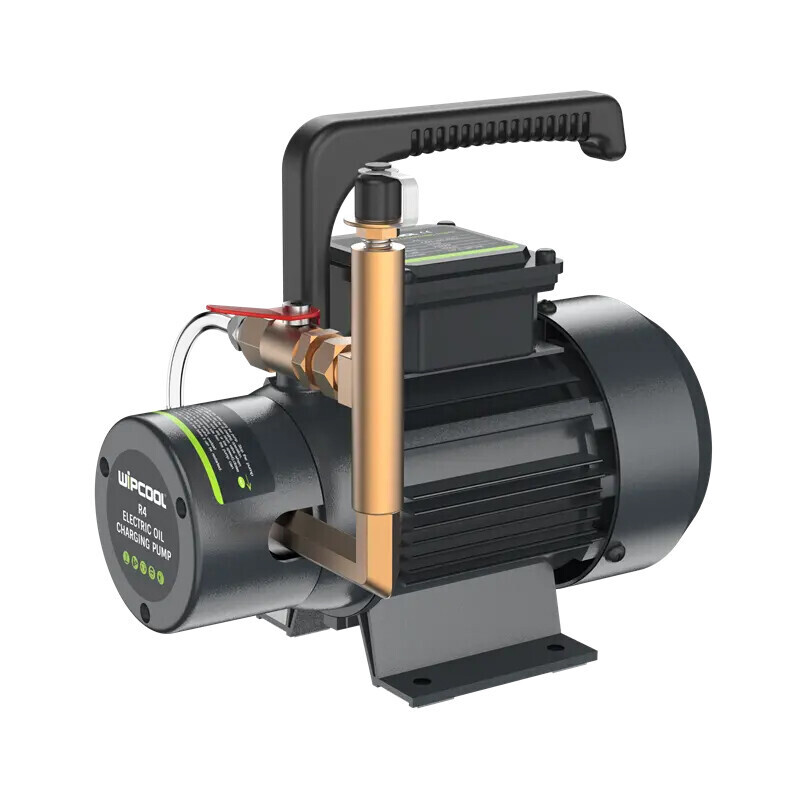
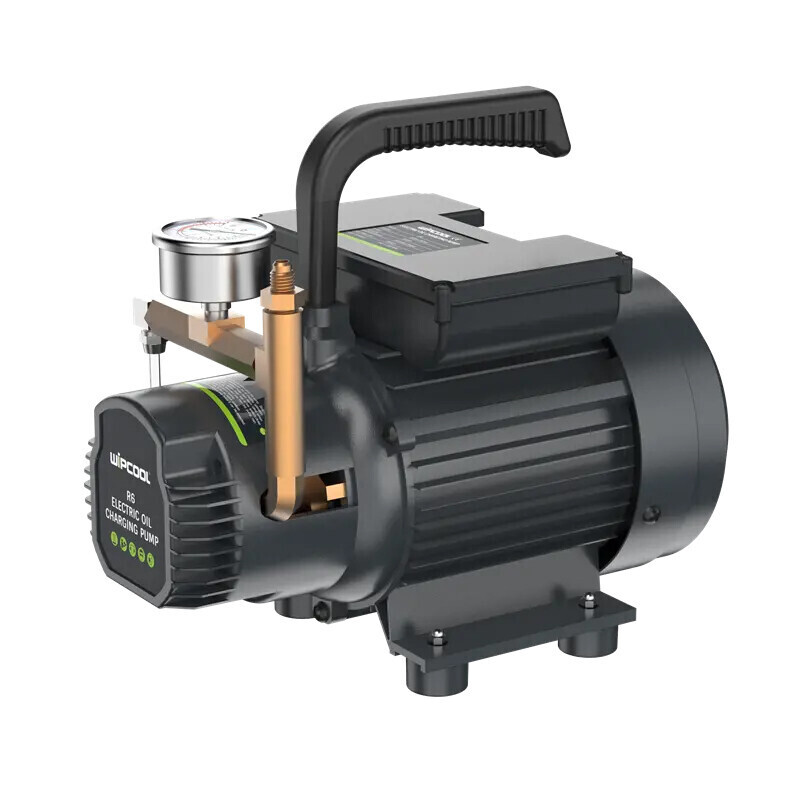
Electric Pumps for HVACR Oil Filling and Transfer Systems

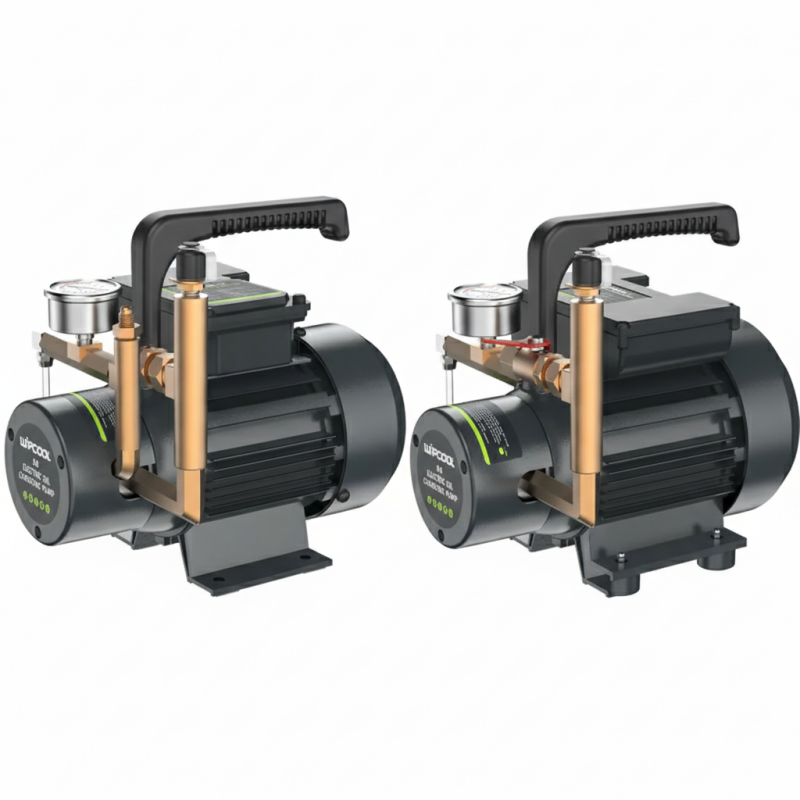
Electric oil filling and transfer pumps designed for HVACR systems, ideal for facilitating the refilling and transfer of lubricant oil into compressors, even under high backpressure conditions. Compatible with all types of refrigeration oils, they feature built-in protections for safe and reliable operation.
Description
Electric oil filling and transfer pumps for HVACR systems provide powerful and reliable solutions for refilling and maintenance of refrigeration and air conditioning units. Their specialized design allows easy extraction of oil from various container sizes (e.g., 1 L or 5 L cans) and enables handling of high backpressure during the filling process.
Both versions feature:
-
Patented system to facilitate oil refilling even at low temperatures.
-
Anti-backflow protection to safeguard the system against overpressure and backpressure.
-
Built-in thermal protection to prevent motor overload.
These pumps significantly improve operational efficiency and reduce manual effort during oil filling or transfer in HVACR systems, making them ideal tools for technicians and installers.
Technical features
| Function / Feature | General Specification |
|---|---|
| Compatibility | All types of refrigeration oil |
| Anti-backflow protection | ✔️ |
| Motor thermal protection | ✔️ |
| Suction hose | 0.8 m |
| Discharge hose | High-pressure 1.5 m |
| Connections | ¼" and 3/8" SAE |
Applications
Electric HVACR Oil Pumps – Available Versions
16 bar – 232 psi Version
-
Maximum pressure: 16 bar
-
Oil flow rate: 150 L/h
-
Electric motor: ⅓ HP (≈ 250 W)
-
Ideal for: standard applications with moderate backpressure in HVACR systems
25 bar – 362 psi Version
-
Maximum pressure: 25 bar
-
Oil flow rate: 350 L/h
-
Electric motor: ¾ HP (≈ 550 W)
-
Ideal for: high-backpressure applications and larger volumes of oil transfer
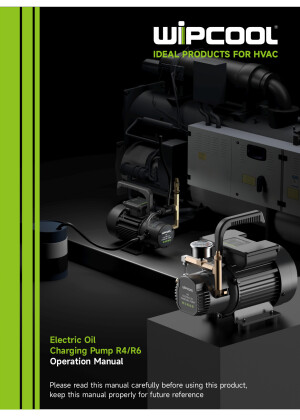
Available documents



Request information for:
Electric Pumps for HVACR Oil Filling and Transfer Systems