




Natural refrigerants: the transition becomes an opportunity for the Italian supply chain.
The Italian refrigeration supply chain can transform the transition to natural refrigerants into an opportunity for innovation, growth, and exports.
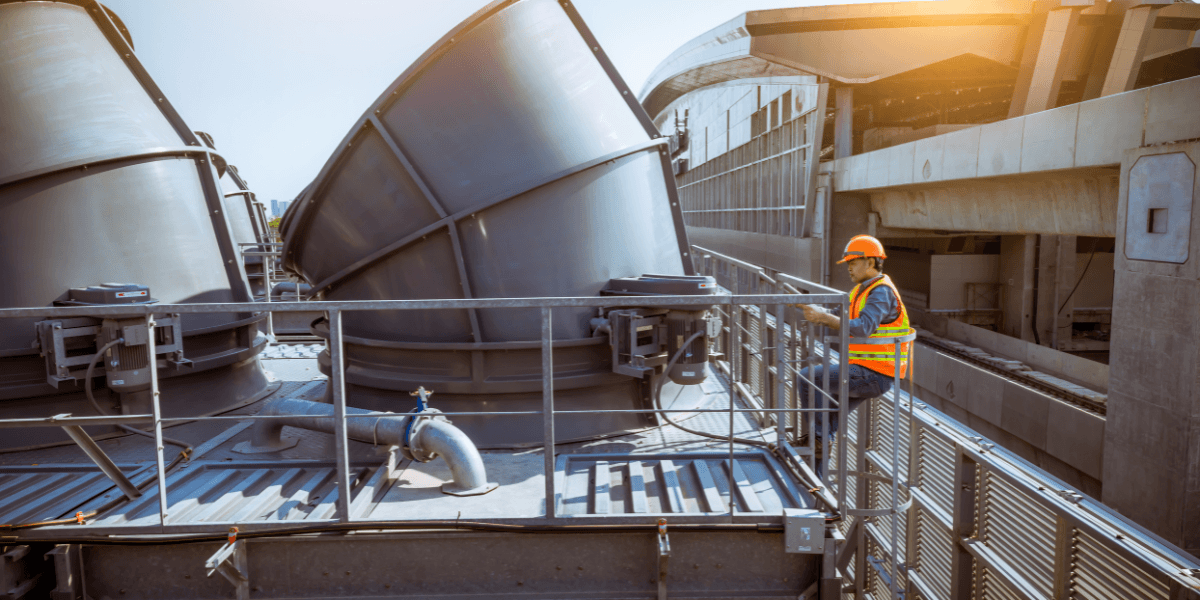
The progressive reduction of climate-impacting HFCs isn't just a regulatory challenge for the refrigeration industry. For the Italian industry, it could also become a significant opportunity for growth, innovation, and exports, thanks to a supply chain specialized in the design and production of technologies based on natural refrigerants.
In the Northeast and Lombardy, an ecosystem exists that includes manufacturers of refrigeration systems, compressors, heat exchangers, valves, electronic controls, and refrigerated cabinets. These skills are applied in food distribution, industry, cold storage logistics, and data centers—markets where energy efficiency and emissions reduction are becoming increasingly important.
A complete supply chain to address the F-Gas transition
The European F-Gas Regulation 2024/573 , applicable from 11 March 2024, has strengthened the reduction of the quantities of HFCs available on the European market and provides for their progressive phase-out through a quota system by 2050. This process is accompanied by specific bans for various categories of refrigeration, air conditioning and heat pump equipment.
In this scenario, the ability to internally develop components and systems compatible with CO₂, ammonia, and hydrocarbons can offer Italian companies a competitive advantage. The European Commission identifies these non-fluorinated fluids among the main alternatives available for numerous commercial and industrial refrigeration applications.
However, the value of the supply chain depends not only on machine production. The transition also requires specialized design, control electronics, sensors, installation, maintenance, and technical training. Distributed expertise along the entire chain can therefore facilitate the development of comprehensive solutions, rather than simply supplying individual components.
From supermarkets to data centers, demand for new solutions is growing.
Natural refrigerant technologies are finding their way into a growing number of applications. CO₂ is increasingly used in commercial refrigeration and supermarkets, while ammonia maintains a consolidated role in high-power industrial systems. Propane and isobutane, on the other hand, are used in compact equipment and systems with controlled charges.
The opportunities concern various sectors:
- food industry and product processing;
- temperature-controlled warehouses and logistics;
- large-scale retail trade;
- industrial process cooling;
- data centers and digital infrastructures;
- heat pumps and integrated systems for buildings.
The international demand for efficient, low-impact technologies can therefore open up new opportunities for Italian companies. Seizing these opportunities will require investment in research, production capacity, standardization, and professional skills, while also keeping safety, linked to the different properties of refrigerants, at the forefront.
Energy efficiency and refrigerant must go together
Reducing direct emissions isn't the only goal of the transition. The overall climate benefit also depends on the energy consumed during plant operation. According to the Montreal Protocol bodies, maintaining or improving energy efficiency during the HFC phase-down can significantly amplify the environmental benefits of new technologies.
The Montreal Protocol has already led to the elimination of nearly 99% of banned ozone-depleting substances, while the Kigali Amendment extended international action to reduce HFCs.
For the Italian refrigeration industry, this evolution could transform into a concrete industrial opportunity. Natural refrigerants, high efficiency, advanced controls, and technical expertise represent a set of technologies increasingly in demand in international markets. The transition should therefore not be viewed merely as an adjustment cost, but as a development opportunity for a sector in which Italy already has recognized manufacturing and design capabilities.

Related Focus


FAQ – Domande frequenti
Italy boasts a supply chain comprised of manufacturers of refrigeration systems, compressors, exchangers, valves, controls, and equipment. This structure allows it to offer comprehensive solutions for markets requiring climate-friendly technologies.
The main non-fluorinated alternatives include CO₂ R-744, ammonia R-717, propane R-290, and isobutane R-600a. The choice depends on the application, power, charge, and system safety requirements.
The main opportunities are in commercial and industrial refrigeration, the food industry, cold storage logistics, supermarkets, process cooling, and data centers. These sectors are experiencing increasing demand for efficiency and attention to the environmental impact of refrigerants.
