




HVAC/R Transition: Skills, Refrigerants, and Innovation at the Heart of Change
The HVAC/R transition requires updated skills, new refrigerants, certifications, and a supply chain ready to manage innovation and sustainability.
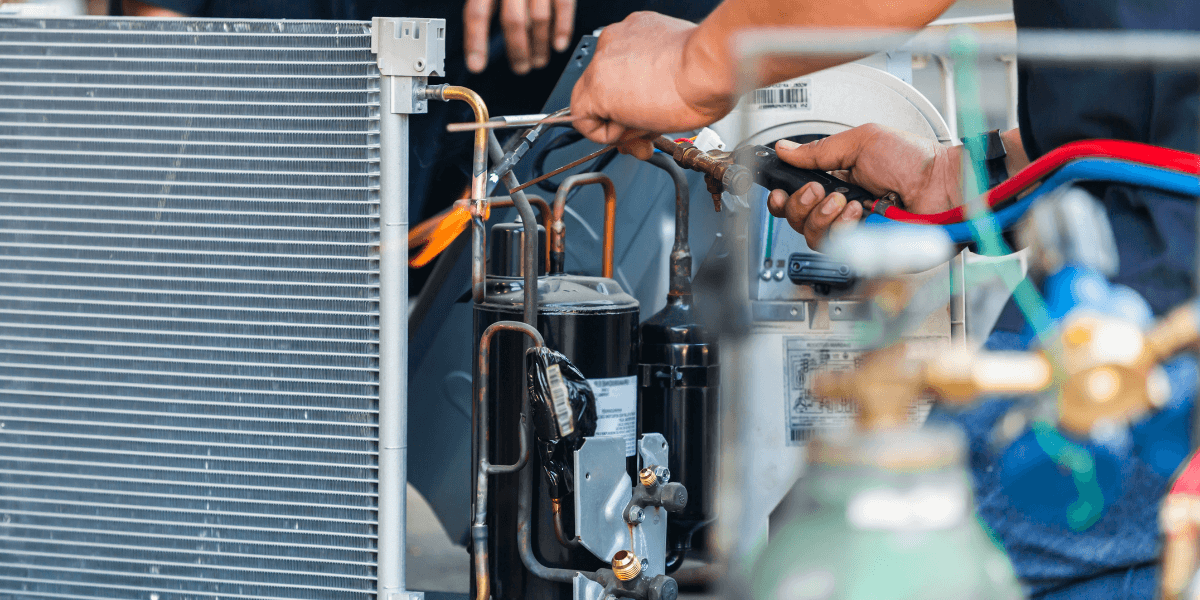
The transition of the European HVAC/R sector depends not only on technological advances, but also on the supply chain's ability to update skills, procedures, and operating models. Refrigeration, air conditioning, and heat pumps are now at the center of a process that encompasses environmental sustainability, safety, energy efficiency, and regulatory compliance.
Against this backdrop, the new 2025 Annual Report published by AREA , the European Air Conditioning and Refrigeration Association, captures a profoundly changing sector, where the role of contractors is becoming increasingly strategic. Designing, installing, and maintaining efficient and safe systems requires increasingly up-to-date technical expertise, especially in light of the evolution of the F-Gas Regulation, new certification requirements, and the growing popularity of alternative refrigerants.
New refrigerants and certifications: a supply chain called upon to update itself
One of the key issues concerns the implementation of the new F-Gas Regulation , which is redefining timelines, responsibilities, and requirements for industry operators. The progressive reduction of high-GWP fluorinated gases is accelerating the adoption of alternative refrigerants , but it also makes it essential to strengthen skills along the entire supply chain: designers, installers, maintenance technicians, distributors, and service companies.
The issue isn't just environmental. The use of flammable refrigerants, CO₂, and ammonia requires specific knowledge of safety, design, pressure management, leak testing, and operating procedures . For this reason, the new certification schemes and minimum training requirements represent a decisive step in guiding the market toward more sustainable solutions, without compromising system reliability and continuity.
For the professional refrigeration supply chain, this means working on some key aspects:
- continuous technical updating of operators;
- training on alternative refrigerants and their conditions of use ;
- correct application of safety procedures ;
- adaptation to new certification requirements ;
- greater awareness in the design and maintenance of systems .
The refrigerant transition, therefore, cannot be approached simply as a product change. It requires a more robust technical culture, capable of connecting regulations, safety, and actual system performance.
Efficiency, air quality, and heat pumps: the most relevant European issues
The report also highlights the growing importance of issues related to energy efficiency, sustainability, and decarbonization . The revision of Ecodesign regulations, the EPBD, indoor air quality, and European heating and cooling strategies are areas that directly impact the future of the HVAC/R sector.
For refrigeration and air conditioning professionals, these reports confirm the need for an increasingly integrated vision. Systems are no longer evaluated solely in terms of cooling output or specific performance, but rather within more complex systems, where consumption, emissions, comfort, air quality, maintenance, and the ability to communicate with increasingly efficient and digitalized buildings all play a role.
Heat pumps , in particular, continue to play a central role in the decarbonization of heating consumption. Their widespread adoption, however, requires a well-prepared supply chain, capable of properly designing systems, managing building integration, and ensuring installations consistent with real-world conditions.
Human capital and training: the key to skills in the HVAC/R sector
Alongside technological innovation, the issue of human capital remains one of the most sensitive issues. The HVAC/R sector faces a growing skills shortage, even as system complexity, regulatory requirements, and the demand for high-efficiency solutions increase.
Upskilling and reskilling therefore become essential tools to support the transition. Training courses dedicated to alternative refrigerants, Train-the-Trainers activities, and professional development initiatives help transfer practical knowledge to operators, promoting a safer and more informed application of new technologies.
Training , however, isn't limited to technicians already working in the field. It also involves new professionals, young operators, businesses, associations, and institutions, with the aim of building a more attractive, inclusive industry, ready to face the challenges of the coming years.
For the refrigeration market, the direction is clear: sustainability cannot be separated from expertise. Only a prepared, coordinated, and updated supply chain can truly make the transition to more efficient systems, lower-impact refrigerants, and solutions capable of meeting new energy and environmental needs effective.
Related Focus

FAQ – Domande frequenti
The evolution of the sector depends not only on the availability of new refrigerants or more efficient equipment, but also on the supply chain's ability to design, install, and manage increasingly complex technologies. The spread of natural refrigerants, digitalized systems, and high-efficiency solutions requires multidisciplinary skills ranging from thermodynamics to safety, data, and energy management. Without adequate professional development, the risk is slowing the adoption of available innovations.
The introduction of low-GWP and natural refrigerants requires a transformation of traditional technical skills. Today, designers, installers, and maintenance technicians must address issues related to flammability, high operating pressures, toxicity, and new environmental regulations. This requires not only specialized training, but also a greater ability to assess safety, reliability, and sustainability throughout the system's life cycle.
Innovation will not only concern products and refrigerants, but increasingly the ability to integrate digitalization, energy efficiency, and advanced services. Remote monitoring, predictive maintenance, artificial intelligence, and advanced energy management are transforming the value of HVAC/R systems. For companies in the sector, competitiveness will depend on the ability to combine technological innovation and specialized expertise, offering solutions that simultaneously meet regulatory, operational, and energy requirements.
