




Food retail, refrigeration between energy, regulations and AI
Energy, refrigerants, and digital controls are transforming the design and management of refrigeration in food retail.
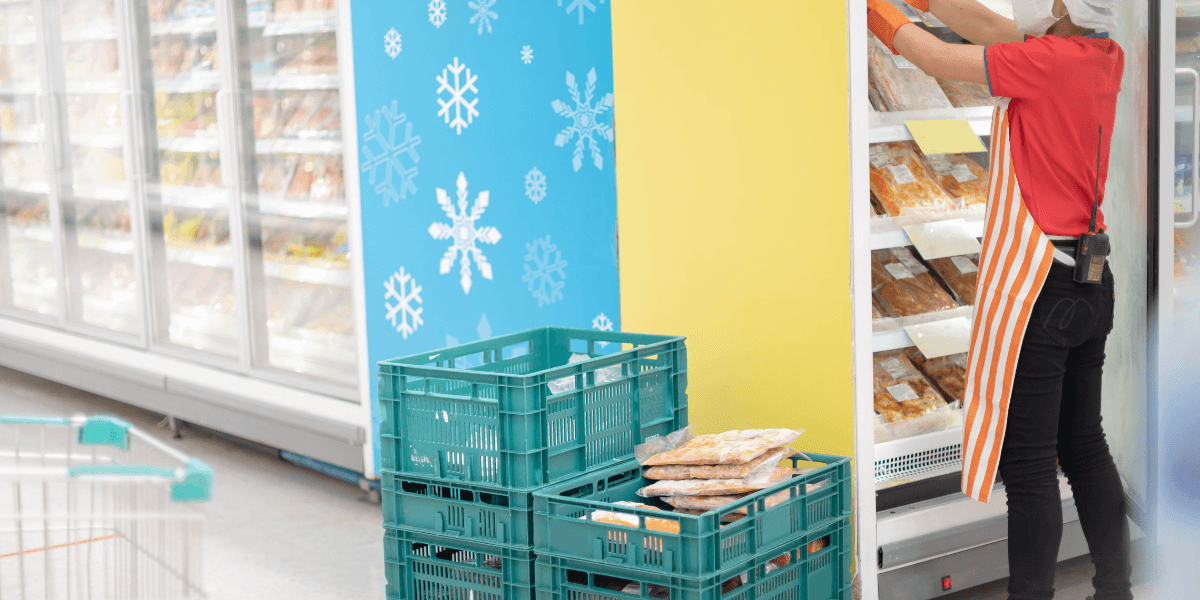
Designing food retail outlets is becoming increasingly complex. The need to ensure cold chain continuity is compounded by rising energy costs, the transition to lower-carbon refrigerants, evolving regulations, and the spread of digital systems for system control.
Energy, refrigeration, compliance, and artificial intelligence are the key factors expected to guide future investments in food retail. For retailers, designers, and refrigeration technicians, building or renovating a supermarket means developing a system capable of adapting to ever-evolving technological and regulatory requirements.
Efficiency starts with the design of the entire store
In supermarkets and grocery stores, refrigeration can account for up to 40% of the building's total energy consumption . Focusing solely on the refrigeration plant, without considering cabinets, cold rooms, air conditioning, and control systems, therefore risks limiting the return on investment.
The design must coordinate equipment and systems from the early stages, evaluating:
- efficiency of compressors, fans and exchangers;
- capacity regulation based on actual load;
- interaction between refrigeration and air conditioning;
- condensation heat recovery;
- monitoring of temperatures, pressures and consumption;
- accessibility of components for maintenance and repair.
Advanced controls can also modulate compressor operation, shifting some consumption away from peak hours, and identifying abnormal operating conditions. The store thus evolves from a collection of independent devices to a coordinated energy ecosystem, in which each component contributes to overall performance.
Refrigerants and compliance enter investment plans
The refrigerant transition has now become an operational issue. The use of CO₂ systems and A2L refrigerant-based solutions must be evaluated alongside investments, permits, safety, and retrofit strategies for existing stores.
The provisions include progressive GWP limits for various commercial refrigeration equipment. For centralized systems in supermarkets , the thresholds vary based on the load and configuration of the system, with an initial phase starting in 2027 and more stringent restrictions expected from 2032.
For retailers , the choice cannot therefore be based solely on the refrigerant available at the time of installation. The entire life cycle of the system must be considered , including:
- future availability of the fluid;
- skills required of technicians;
- refrigerant safety and classification;
- charge containment;
- leak prevention and detection;
- possibility of expanding or converting the system.
Circuit tightness remains a key aspect even in the most recent systems. Reducing charges, preventing leaks, and adopting advanced refrigeration technologies can reduce both direct emissions and the costs associated with refrigerant loss.
Data and artificial intelligence to manage consumption and anomalies
Digitalization is also changing the day-to-day management of supermarkets. Sensors, supervisors, and connected platforms can collect information from cabinets, cold rooms, refrigeration units, and HVAC systems, offering a more comprehensive view of store performance.
Artificial intelligence can be applied to processing this data to optimize adjustments, recognize consumption drifts, and support early fault detection. The U.S. Department of Energy, for example, is developing AI-based control technologies to improve refrigeration efficiency in existing supermarkets.
The value of digital technologies, however, depends on the quality of the sensors, the correct configuration of alarms, and the staff's ability to interpret the collected information. Automation, therefore, does not eliminate the role of technicians, but it makes refrigeration skills, data analysis, and qualified maintenance even more important.
The store of the future will be designed by integrating efficiency, refrigerants, compliance, and digital control from the outset. For food retail, this approach can reduce operating costs, improve equipment reliability, and make investments more resilient to future technological and regulatory changes.

Related Focus


FAQ – Domande frequenti
The design must simultaneously evaluate cooling loads, energy efficiency, refrigerant, safety, leak prevention, heat recovery and integration with store control systems.
The transition is supported by the progressive reduction of high-GWP HFCs and the introduction of new regulatory restrictions. The choice between CO₂, A2L, and other alternatives depends on the system configuration, safety, charge, and operating conditions.
Artificial intelligence can analyze data collected from systems to support consumption optimization, anomaly detection, and maintenance. However, it must be supported by reliable sensors, properly configured systems, and qualified technicians.
