



Flammable refrigerants: updated guide for choosing components
ASERCOM updates its guide on components for flammable refrigerants, with new clarifications on EN standards, risk assessment, ATEX and PED.
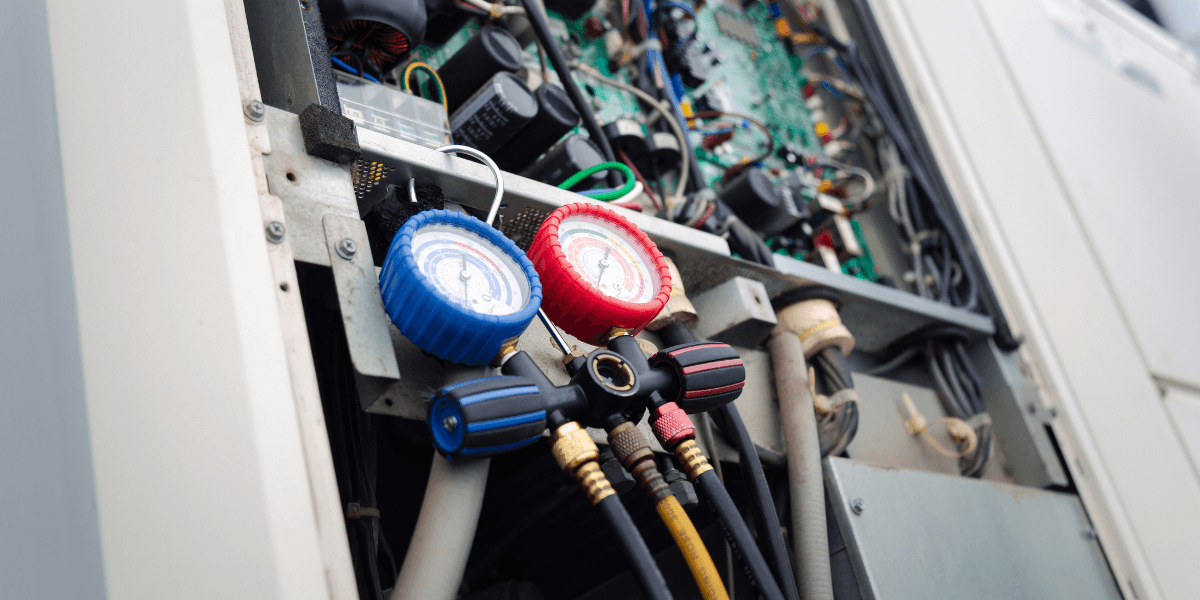
The growing use of flammable refrigerants is profoundly changing the design, installation, and maintenance of refrigeration, air conditioning, and heat pump systems.
In this context, in October 2026, ASERCOM published the fourth revision of the guide "Components for Systems Using Flammable Refrigerants," covering the requirements applicable to components used in vapor compression systems with flammable refrigerants. The document updates the framework with respect to evolving European standards and regulatory requirements, addressing topics such as EN safety standards, risk assessment, ATEX, the PED Directive, and mitigation measures.
The aim is to provide a common understanding of the technical requirements , avoiding both underestimation of risks and overly restrictive interpretations in the selection of valves, compressors, exchangers, electronic controls and other components.
For RACHP designers, manufacturers, and technicians, this is precisely the key point: the presence of a flammable refrigerant does not automatically mean that every component must be ATEX certified. Instead, the choice must be based on an analysis of the application, the component's location, the requirements of the applicable safety standard, and an overall system risk assessment.
Flammable refrigerants: safety must be assessed at the system level
The ASERCOM guide covers components included in vapour compression systems using refrigerants classified as 2L, 2 or 3 according to ISO 817. The scope includes valves, heat exchangers, compressors, mechanical components, electronic and electromechanical controls used in the main stationary RACHP applications.
The increasing use of low-GWP fluids makes this topic particularly relevant.
Refrigerants such as R290 and R32 , despite their different flammability characteristics, are playing an increasingly important role in the transition to systems with lower climate impact. However, their application requires that risk be considered from the early design stages.
In fact, European safety standards introduce requirements relating to:
- operator skills;
- refrigerant charge limits;
- surface temperature control;
- prevention of ignition sources;
- assessment of the possible consequences of a loss.
According to ASERCOM, risk assessment is therefore a central element of the entire regulatory and technical framework. Harmonized standards are the standard method for demonstrating compliance with essential safety requirements, but in certain circumstances, different solutions can also be adopted, provided they are adequately supported by a risk assessment.
A component does not automatically have to be ATEX
One of the most important clarifications of the new guide concerns the application of the ATEX regulation.
In fact, the market may tend to request components with higher specifications than those actually necessary, simply because the system uses a flammable refrigerant.
ASERCOM highlights that this interpretation may lead to requiring ATEX certification even when it is not required by the specific application .
The assessment must instead consider whether the component can actually be reached by the refrigerant in the event of a leak and whether it presents a potential ignition source.
European standards require particular attention to two elements in particular:
- surface temperatures , which must remain within the limits established in relation to the auto-ignition temperature of the refrigerant;
- ignition sources , such as arcs or sparks generated by some electrical and electromechanical components.
An electronic controller, for example, can be installed in a location where leaking refrigerant cannot reach it, or placed in an enclosure that separates it from a potentially flammable atmosphere. In these cases, safety also depends on how the component is integrated into the system, not just on its individual certification.
The component manufacturer and the system builder have different responsibilities
The guide also clearly distinguishes the tasks of the different parties involved.
The component manufacturer must indicate the scope of application, compatibility with the refrigerant and any specific approvals, including ATEX ones where present.
However, overall responsibility for safety remains with the system manufacturer , who must design the system so that the components are used under the expected conditions and in compliance with safety standards and local regulations.
This is a particularly important aspect because a suitable component, if installed in a position other than the one intended or in conditions not considered by the manufacturer, does not automatically guarantee the safety of the entire system.
For this reason, the evaluation must be conducted by considering the system as a whole:
- circuit architecture;
- amount of refrigerant;
- position of the components;
- destination of the environment;
- possibility of refrigerant accumulation;
- presence of potential ignition sources;
- ventilation systems or other mitigation measures.
Correct component selection then becomes part of a broader design strategy.
ATEX, PED and EN standards: different requirements to coordinate
The ASERCOM update pays particular attention to the interaction between different regulatory references.
These include EN safety standards, ATEX directives and the Pressure Equipment Directive (PED) .
The PED classifies components and equipment based on parameters such as pressure, size, and fluid type. With flammable refrigerants, the classification can therefore also impact design requirements and material certification.
On the ATEX front, however, it is necessary to distinguish between the directive relating to the safety of workers in environments where an explosive atmosphere may form and the one dedicated to equipment intended to operate in potentially explosive atmospheres.
The guide also highlights that, under the ATEX framework, flammable refrigerants are considered as substances capable of generating explosive atmospheres, without making the same distinction between classes A2L and A3 used in the classification of refrigerants.
For professionals, this means that it is not enough to consider a single regulation: product standards, risk assessments, PED and ATEX requirements must be read in a coordinated manner based on the actual application.
Sensors, valves and ventilation become mitigation measures
A specific section of the guide is dedicated to the components used as risk mitigation measures .
The purpose of these devices is to prevent, in the event of a leak, the refrigerant concentration from reaching levels that could create a flammable atmosphere in occupied spaces or technical rooms.
The components identified by ASERCOM include:
- safety shut-off valves ;
- gas detectors ;
- fans;
- air circulation systems.
These devices can be used to detect a leak, section off parts of the system or increase ventilation before the lower flammability limit (LFL) is reached.
A significant example is that of ventilated envelopes: the system can be designed so that a refrigerant sensor activates ventilation to the outside in the event of a leak, preventing the accumulation of the fluid inside the building.
Safety is therefore built through a combination of components, plant layout and mitigation systems , rather than entrusted to a single device.
From R290 to split systems: the guide goes into application cases
To make the interpretation of the requirements more concrete, ASERCOM has included several annexes with application examples in the fourth revision.
The document addresses cases relating to:
- R290 chiller ;
- split and multisplit systems, including reversible ones;
- self-contained commercial refrigeration equipment;
- remote condensing units;
- ducted rooftop equipment;
- systems installed inside ventilated enclosures.
There are also specific insights into the ATEX and PED directives.
This approach makes the document particularly interesting for designers and manufacturers, as it allows them to connect the regulatory requirements to the actual conditions of use of the components.
The choice varies depending on the machine's architecture, the installation location, the refrigerant charge, and the possibility of a leak reaching certain components.
With flammable refrigerants, increasingly conscious design is required
The updated ASERCOM guidance comes at a time when the RACHP industry is accelerating the adoption of low-GWP refrigerants.
This transition brings with it new technological opportunities, but also the need to avoid simplifications.
Using a flammable refrigerant does not automatically make a system dangerous, just as it does not mean having to indiscriminately use ATEX components.
The principle that emerges from the guide is rather that of safety designed on the basis of real risk .
For manufacturers, designers, installers and maintenance technicians, it is therefore essential to know the properties of the refrigerant, understand the applicable standards and correctly assess where a leak could occur and which components it could affect.
With the widespread use of R290, R32, and other low-GWP refrigerants, the ability to integrate regulations, design, component selection, and mitigation measures is increasingly becoming a core competency for the entire refrigeration value chain.
Related Focus
FAQ – Domande frequenti
No. According to the ASERCOM guide, the presence of a flammable refrigerant does not automatically require the use of ATEX-certified components at every point in the system. The choice depends on the applicable standards, the location of the component, the possibility of its being reached by the refrigerant in the event of a leak, and the system risk assessment.
The main measures recommended by ASERCOM include gas detectors, shut-off valves, fans, and air circulation systems. These devices can intervene before the refrigerant concentration reaches the lower flammability limit.
The component manufacturer must specify its scope of application and any certifications, but the responsibility for designing an overall safe system remains with the system builder, who must comply with applicable safety standards and regulations.
