




Heat exchangers: towards new certification criteria for refrigeration
New certification paths could distinguish between CO₂ and HFC/HFO exchangers and introduce specific criteria for dry coolers and adiabatic systems.
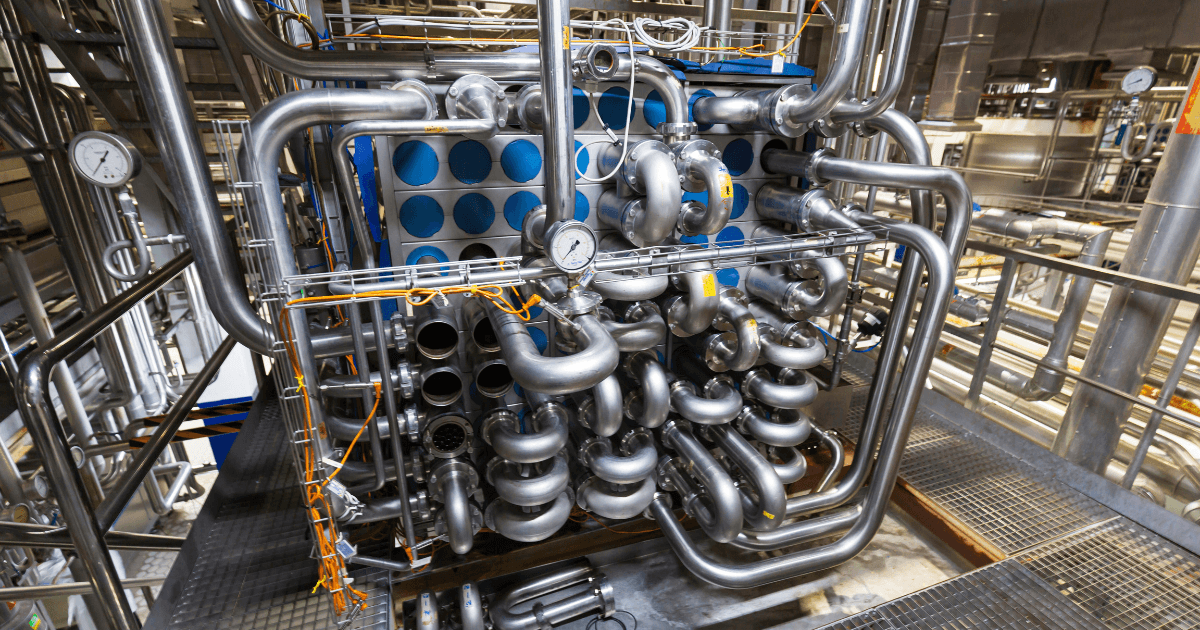
Performance certification of refrigeration heat exchangers could enter a new phase. A significant revision of the current certification programs has been proposed, with separate pathways for CO₂ and HFC/HFO equipment and new criteria dedicated to dry coolers and adiabatic dry coolers.
The goal is to adapt testing and control procedures to a rapidly changing HVACR market, both due to the widespread use of CO₂ in commercial refrigeration and the evolution of industrial applications and data center cooling.
The changes are still being proposed and discussed with the industry. However, the topic highlights an important trend: with increasingly complex refrigeration systems, performance certification must better represent the equipment's real-world operating conditions .
Separate certification for CO₂ and HFC/HFO exchangers
One of the key elements of the revision is the separation of the commercial refrigeration program into two specific tracks.
The first would be aimed at heat exchangers for CO₂ systems , including:
- direct expansion evaporators;
- air cooler;
- gas cooler for R744 systems .
The second would instead concern exchangers intended for systems with HFCs and HFOs , including direct expansion evaporators and air-cooled condensers.
The distinction reflects the different characteristics of the technologies.
In CO₂ systems, in particular, the gas cooler plays a fundamental role in the overall performance of the system, especially when the system operates under transcritical conditions. Air temperatures, pressures, and operating point can significantly affect heat dissipation capacity.
A dedicated program therefore allows you to define more specific test conditions , making it easier to compare equipment intended for the same type of application.
The proposal also includes the introduction of additional periodic testing conditions for gas coolers.
More controls on performance, production and quality continuity
The review does not only concern initial performance tests.
The planned changes also include a new frequency of surveillance tests and periodic checks on production facilities.
The orientation is to provide for annual factory audits , with checks designed to verify that the equipment actually produced maintains characteristics consistent with those declared and certified over time.
An important aspect concerns the relationship with the quality management systems already adopted by companies. Audits should be structured to complement and avoid unnecessary duplication of ISO 9001 audits .
For refrigeration manufacturers, designers and operators, continuity of certification is particularly important.
The declared performance of an exchanger in fact influences numerous aspects of the design:
- available cooling capacity;
- evaporation and condensation temperatures;
- system energy consumption;
- component sizing;
- operation under design conditions.
Having data verified by an independent party helps reduce uncertainty when comparing products and selecting the most suitable exchanger for the system.
Dry coolers and adiabatic systems towards a specific program
A second path concerns dry coolers and adiabatic dry coolers , which are increasingly used in industrial applications, manufacturing processes and data centers.
A separate program has been proposed for these devices, based on internationally shared testing criteria and accompanied by annual audits and market surveillance activities.
One of the most significant changes is the move from the “certify-all” principle to product line certification .
Instead of requiring all production in a given category to be automatically included in the program, the new approach would allow specific ranges to be certified.
This could make the system more flexible, especially for companies that produce numerous variants or equipment intended for very different applications.
There are also several ways to verify performance, including tests carried out at approved laboratories and field tests supervised by independent bodies .
A simplified entry path to the new program could also be introduced for dry cooler ranges already certified and supported by valid test reports.
Why performance certification is becoming more important
In the refrigeration sector, voluntary certification is becoming increasingly important because designers and manufacturers must compare equipment intended to operate in increasingly diverse conditions.
The transition to new refrigerants makes this even more evident.
In transcritical CO₂ systems, for example, gas cooler performance can directly influence operating pressures and overall efficiency. In adiabatic dry coolers, however, both thermal performance and the different operating conditions between dry and adiabatic modes come into play.
More representative test procedures can therefore make comparisons between equipment more reliable.
Certification, of course, doesn't replace design work. The choice of an exchanger must continue to take into account climatic conditions, refrigerant, cooling load, required temperatures, control methods, and the overall system configuration.
However, it can provide a common and verified basis for evaluating the performance declared by manufacturers .
The proposed revision will now need to be discussed with industry stakeholders before the new framework is finalized. If adopted, it could lead to more differentiated certification across technologies and more closely aligned with actual commercial and industrial refrigeration applications.

Related Focus


FAQ – Domande frequenti
CO₂ systems have different operating characteristics, particularly regarding gas coolers, pressures, and transcritical operation. A dedicated path allows for more specific test conditions for these applications.
The proposal includes a specific program for dry coolers and adiabatic dry coolers, with product line certification, periodic audits, and various performance verification options, including laboratory and field testing.
It allows independent verification that declared performance data is consistent with test results. It is therefore a useful tool for designers and manufacturers to compare and correctly size heat exchangers for refrigeration systems.
