



F-Gas 3.0: Certifications at Different Speeds in European Countries
The new F-Gas certifications are progressing at different speeds across Europe: several countries are already operational, while Italy is awaiting national compliance.
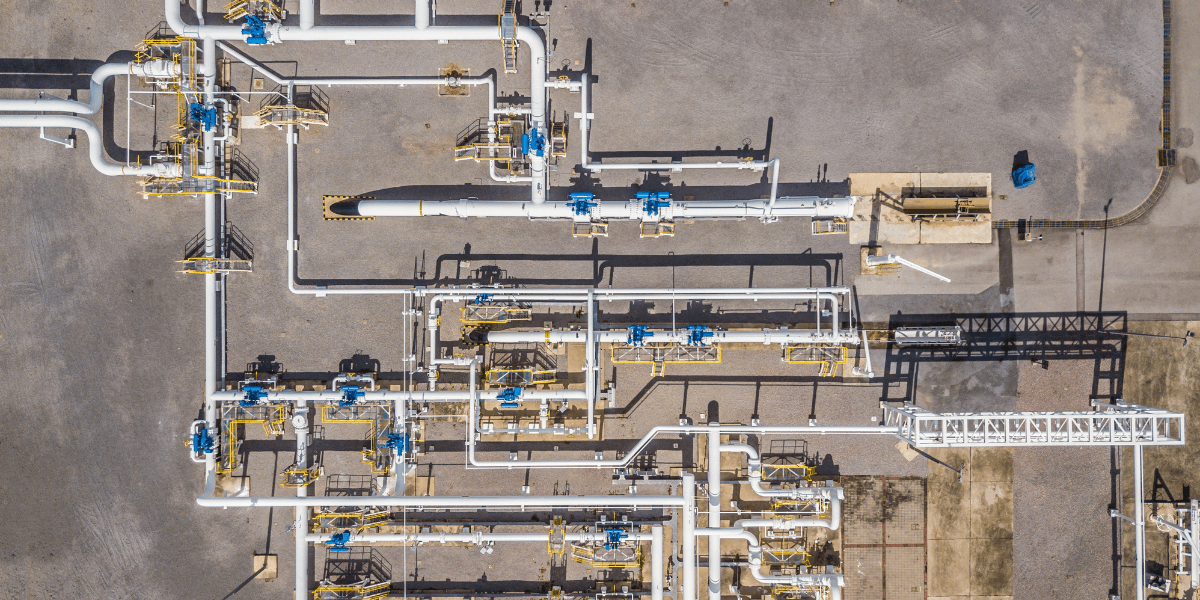
The implementation of the new certification system required by the F-Gas 3.0 regulation is proceeding at very different times in European countries.
The picture updated to October 2026, presented by AREA during the Board meeting organised in Nuremberg immediately after Chillventa, shows a Europe that is still heterogeneous: some states have already made the new certification system operational, others have only partially introduced it, while several countries – including Italy – have yet to complete the adaptation of national legislation .
For the refrigeration, air conditioning, and heat pump sectors, this isn't just an administrative issue. The new European framework expands the skills required of professionals and also links certification to the use of alternative refrigerants such as CO₂, ammonia, and hydrocarbons .
The speed with which the various national systems are fully operational therefore becomes an important factor for technicians and companies who must prepare to operate in a market characterized by the progressive reduction of fluorinated gases and the spread of technologies based on refrigerants with very different operational and safety characteristics.
F-Gas 3.0 Certifications: The European Framework Remains Uneven
The snapshot presented by AREA highlights significant differences in the implementation of the new system.
According to data updated to October 2026, Denmark, Hungary, the Netherlands, Portugal, Romania, and Slovakia already have the entire certification system indicated in the European overview.
The situation is partial in Croatia, the Czech Republic and Germany , where certifications A, B, D and E are operational, while the introduction of certificate C is indicated for 2027.
A significant portion of countries have yet to complete the adaptation of their national legislation. This situation applies to:
- Austria ;
- Bulgaria ;
- Greece ;
- Italy ;
- Poland ;
- Spain ;
- Norway;
- Türkiye.
For Belgium, AREA instead indicates the activation of the new system in the third quarter of 2027 .
European legislation establishes common requirements, but their concrete implementation requires the organization of respective national certification and training systems. It is precisely this shift that is generating different speeds among the various European markets.
From the old F-Gas license to extended skills in alternative refrigerants
One of the most significant aspects of the new regulation concerns the expansion of the scope of certification.
Implementing Regulation (EU) 2024/2215 establishes minimum requirements for the certification of persons and undertakings carrying out certain activities on refrigeration, air conditioning and heat pump equipment, extending the framework to some of the main alternatives to fluorinated gases.
The system provides for different types of certificates:
- A1 , for activities with fluorinated gases and hydrocarbons without limitations relating to the load;
- A2 , for fluorinated gases and hydrocarbons on equipment with a charge of less than 3 kg, or less than 6 kg for hermetically sealed and correctly labelled systems;
- B , dedicated to activities on CO₂ systems;
- C , dedicated to activities with ammonia (NH₃) ;
- D , relating to the recovery of fluorinated gases for certain equipment and charging limits;
- And , relating to leak control when the activity does not require opening the refrigeration circuit.
The change is significant because professional qualification is no longer exclusively linked to the management of F-gases.
The progressive diffusion of CO₂, ammonia, and hydrocarbons requires specific skills related to the characteristics of each refrigerant and the procedures necessary for installation, maintenance, repair, and decommissioning of the systems.
Natural refrigerants: training becomes part of the technological transition
The revision of the certification system accompanies one of the major changes underway in European refrigeration: the transition towards refrigerants with a lower climate impact.
The progressive reduction in the availability of HFCs and the bans introduced by the F-Gas legislation are pushing manufacturers, designers, installers and maintenance technicians towards new solutions.
But replacing a refrigerant doesn't simply mean using a different fluid.
CO₂, ammonia, and hydrocarbons have different properties and require specific technical knowledge. Therefore, Regulation 2024/2215 includes minimum requirements for both theoretical knowledge and practical skills of operators.
Training therefore becomes an integral part of the sector's transition.
For refrigeration professionals, this means preparing to work with increasingly diverse technologies, understanding aspects that may concern:
- characteristics and properties of different refrigerants;
- operation of refrigeration circuits;
- loss prevention;
- refrigerant recovery;
- installation and maintenance procedures;
- conditions necessary to operate safely.
The availability of adequately trained personnel thus becomes a crucial element in ensuring that the technological transition envisaged by European policies can occur without reducing safety and quality standards.
Italy still waiting for the new national system
In the framework presented by AREA, Italy is among the countries in which the new system has not yet been fully implemented .
For Italian installers, maintenance technicians, and businesses, this makes it particularly important to monitor regulatory developments over the coming months.
The European regulation has in fact defined the general framework and minimum requirements, but the concrete operation of the system also passes through the national organisation of certification and training programmes.
The adaptation should therefore allow professionals to acquire the skills required by the new system and obtain the certifications corresponding to the activities performed and the refrigerants used.
The issue becomes even more pressing considering the transformation already underway in the market. Applications with R290, CO₂, and other alternative refrigerants are playing an increasingly important role in various refrigeration and air conditioning segments.
The availability of trained technicians is therefore becoming not only a regulatory requirement, but also an increasingly operational one for companies intending to install and service these technologies.
Old F-Gas certificates remain valid, but periodic updates are coming.
Switching to the new system does not automatically result in the loss of validity of certifications already obtained.
Regulation (EU) 2024/573 establishes that the certificates and training attestations issued in accordance with the previous Regulation (EU) no. 517/2014 continue to be valid under the original conditions .
However, the ways in which skills will have to be kept up to date over time are changing.
Member States shall require certified natural persons to participate in a refresher course or complete an evaluation process at least every seven years .
For those who already have a certificate issued under the previous regulation, the first update or evaluation process must take place by March 12, 2029 .
This is an important step because it introduces a logic of continuous skills updating.
In an industry where refrigerants, technologies, and regulatory requirements are rapidly changing, certification is therefore not just considered a one-time requirement, but increasingly a tool for keeping professional knowledge aligned with market evolution.
Certifications and skills become central to the RACHP sector
The picture presented in Nuremberg therefore shows a transition that is still underway.
On the one hand, there is a European system that defines common requirements and extends competences to alternative refrigerants; on the other, national implementation still proceeds at different speeds .
For a highly international sector such as RACHP, this situation takes on particular relevance also because the European Regulation provides for the mutual recognition of training certificates and attestations issued by Member States according to the new framework .
The convergence of different national systems therefore becomes important to promote a common basis of professional skills in Europe.
Furthermore, in the coming years, the progressive reduction of HFCs will lead more and more operators to deal with refrigerants that require specific knowledge.
For installers, maintenance technicians, and refrigeration companies, training and certification thus become an integral part of the technological transformation of the sector , along with the ability to operate safely on new systems.
The evolution of the Italian system will therefore be one of the aspects to monitor most closely: not only to comply with new obligations, but to ensure that the availability of skills continues at the same pace as the transition to new refrigeration solutions.
Related Focus

FAQ – Domande frequenti
Implementing Regulation (EU) 2024/2215 provides for different certificates depending on the activities and refrigerants used. The system includes A1 and A2 for fluorinated gases and hydrocarbons, B for CO₂, C for ammonia, D for specific recovery activities, and E for certain leak checks.
In the AREA framework updated to October 2026, Italy is among the countries still awaiting the adaptation of national legislation necessary to implement the new certification system required by European legislation.
Yes. Certificates issued under the previous Regulation (EU) No. 517/2014 remain valid under the original conditions. However, holders must attend a refresher course or complete an assessment process by March 12, 2029, and at least every seven years thereafter.
