




Illegal refrigerant gases: traceability and safety become key
The new F-Gas regulation strengthens controls and traceability: illegal trade, recovery, and safety become central issues for refrigerants.
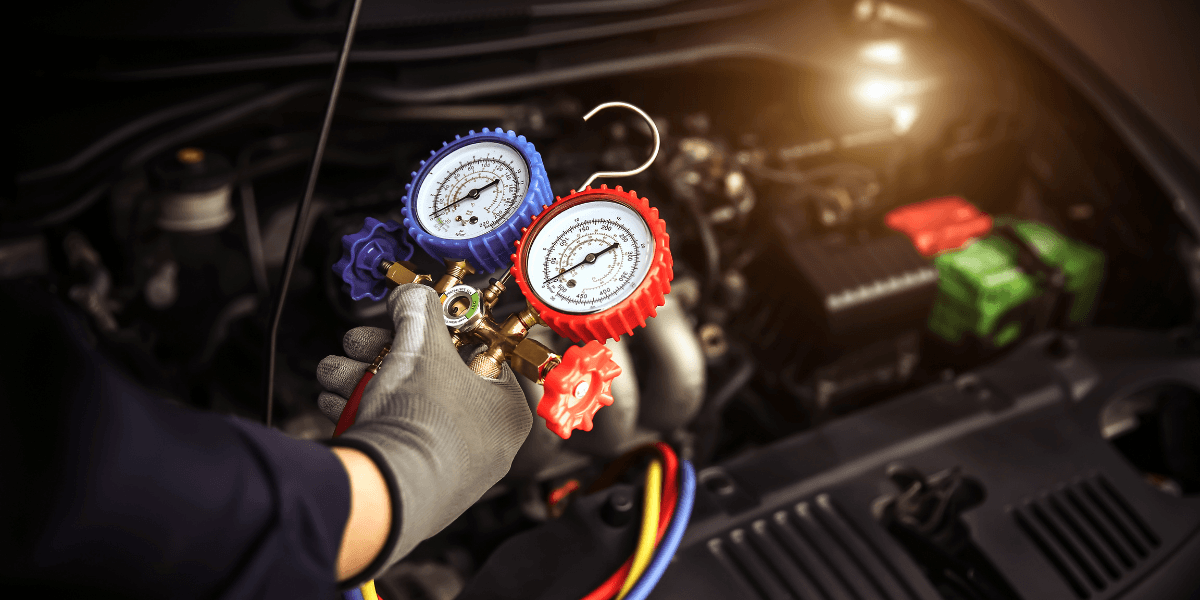
The European transition to refrigerants with a lower climate impact is profoundly changing the HVACR market. The new EU F-Gas Regulation 2024/573 accelerates the HFC phase-out , introduces new restrictions , and simultaneously strengthens controls, traceability, recovery, and training . However, the progressive reduction in the availability of traditional refrigerants is making another issue increasingly important: the illegal trade in refrigerant gases.
For the refrigeration industry, the problem isn't just environmental. Refrigerants introduced to the market without complying with quotas, authorizations, and regulatory requirements can compromise safety, competition, and maintenance reliability, as well as undermining the very objectives of the phase-down.
At the same time, the importance of a more structured management of refrigerants throughout their entire life cycle is growing: sourcing from authorized channels, traceability, recovery, recycling and regeneration are becoming increasingly central elements for refrigeration engineers, maintenance technicians and companies.
Illegal refrigerants: the problem remains real in Europe.
The illicit trade in F-gases is not a marginal phenomenon. Progressive restrictions on HFCs and the European quota system can create a significant economic differential between refrigerants legally placed on the market and products introduced by circumventing the rules.
OLAF, the European Anti-Fraud Office, considers combating illicit trafficking of F-gases an operational priority. In 2024, the joint customs operation KHIONE, conducted with authorities from 16 Member States, Turkey, and Ukraine, intercepted refrigerants equivalent to over 400,000 tonnes of CO₂, with a market value exceeding €4.5 million.
The phenomenon continued in 2025: OLAF reported investigations into refrigerants originating from Asia and over 150 suspicious declarations of fictitious re-export registered in several Member States.
The new F-Gas Regulation has strengthened the border control system . Imports and exports require a valid license, and the European F-Gas Portal is interconnected with the EU customs system to facilitate more automated checks. Customs and market surveillance authorities can also intervene on illegally imported products.
Refrigerant Traceability: Purchasing through Compliant Channels
Fighting the illegal market isn't just a matter of European borders. Once refrigerant enters the supply chain, it's essential to trace its origin, sale, and use.
For installers and maintenance technicians, the first element of protection is therefore procurement through authorized operators and proper verification of the documentation associated with the product.
This is a particularly sensitive issue because a competitively priced offer doesn't necessarily guarantee compliance. Illegally marketed refrigerants may be accompanied by irregular documentation or travel through channels that are difficult to monitor.
Among the aspects to be verified, the following therefore become important:
- origin of the refrigerant;
- distributor identification;
- correctness of labelling;
- container conformity;
- documentation required by law;
- recording of planned operations;
- compatibility of the refrigerant with the equipment.
The European Regulation also prohibits the placing on the market, import, supply and export of non-refillable containers intended for the fluorinated gases concerned, except for specific exceptions provided for in the text.
Penalties have also been strengthened : in the event of unlawful production, import, export, placing on the market, or use, Member States must provide for effective and proportionate penalties; the maximum administrative pecuniary penalties must reach at least five times the market value of the gases or equipment involved, rising to at least eight times in the event of a repeat offence within five years.
Recovery and regeneration reduce pressure on virgin refrigerants
The legality of the supply chain is directly linked to another pillar of the transition: the circular economy of refrigerants .
The new F-Gas Directive strengthens obligations regarding containment, recovery, recycling, reclamation, and destruction . The European Commission specifically identifies life cycle optimization as a key element of the legislation, with recovery obligations extended to a greater number of sectors.
For the refrigeration industry, this is particularly important because existing systems will continue to require maintenance even as the availability of virgin HFCs decreases.
A properly recovered refrigerant can , depending on its condition and applicable regulations, be sent for recycling or regeneration . In the latter case, it is treated so that it meets defined quality specifications again, allowing it to be used again.
A more effective management of the refrigerants already present in the systems therefore allows for:
- reduce the demand for new virgin gas;
- limit emissions during maintenance and decommissioning;
- support the service of the installed fleet;
- valorise still usable refrigerants;
- reduce the amount of gas destined for destruction.
Correctly recovering refrigerant is therefore not only a good environmental practice, but is gradually becoming a strategic resource for maintenance continuity.
New refrigerants, new safety skills
The transition to low-GWP solutions finally brings another challenge: safety .
The European Commission identifies refrigerants such as CO₂ (R744), propane (R290), and ammonia (R717) among the available alternatives for various refrigeration applications . These fluids significantly reduce direct climate impact, but have different operating characteristics: high pressures for CO₂, high flammability for propane, and specific toxicity aspects for ammonia.
For this reason, the new F-Gas Regulation also includes the safe use of non-fluorinated alternatives in its training and certification.
The transformation of European refrigeration is therefore moving on multiple fronts simultaneously. Reducing HFCs is not enough: it is necessary to ensure that refrigerants circulate through legal and traceable supply chains, that recoverable refrigerants are recycled, and that new alternatives are used by appropriately trained personnel.
Legality, circular economy, and security thus become part of the same transition.

Related Focus



FAQ – Domande frequenti
The progressive reduction of HFC quotas and European restrictions may maintain high demand for some refrigerants while decreasing their legal availability. This may incentivize their importation and marketing outside the systems established by the F-Gas Regulation. OLAF continues to consider illicit refrigerant trafficking an operational priority.
EU Regulation 2024/573 requires registration on the F-Gas Portal for affected businesses and provides for the portal's integration with European customs systems. Authorities can verify licenses, quotas, and documentation and take action on non-compliant imports.
With the progressive phase-out of virgin HFCs, recovering refrigerant from systems allows for emissions reduction and, where possible, recycling or regeneration. This way, the gas can contribute to the maintenance of installed equipment without necessarily requiring new quantities of virgin refrigerant. The new F-Gas strengthens the obligations related to life cycle management.
