




Chillers and heat pumps: natural refrigerants on the rise
Propane, CO₂, and ammonia are making gains in European commercial chillers and heat pumps, driven by the new F-Gas framework.
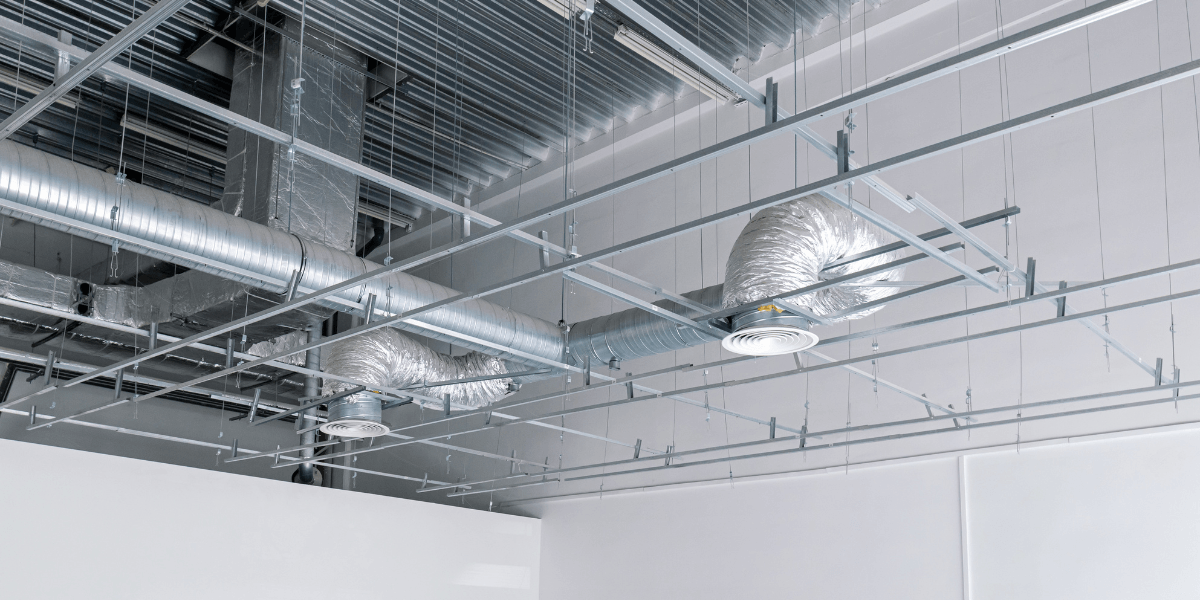
The European market for commercial chillers and heat pumps using natural refrigerants is entering a phase of rapid growth. Propane, CO₂ , and ammonia have been used for years in various applications, but the combination of technological advances, new F-Gas restrictions, and growing attention to GWP reduction is rapidly expanding the available offering.
A recent snapshot of the European market identifies over 300 commercial chillers and heat pumps powered by natural refrigerants , offered by more than 65 manufacturers and distributed across chillers, heat pumps, reversible units, and multipurpose four-pipe systems. The analysis considers equipment with capacities ranging from 30 to 400 kW and a European scope larger than the European Union alone.
Technological availability , however, does not yet coincide with widespread diffusion: at the end of 2025, approximately 27,000 commercial R290 and 1,000 CO₂ systems were estimated to be installed in Europe, representing less than 5% of the commercial stock of chillers and heat pumps.
Natural Refrigerants: R290 Prevails in Commercial Chillers
Among commercial chillers using natural refrigerants, propane emerges as the most popular fluid in the European offering .
Of the 131 products surveyed, 58.8% use R290, while R717 ammonia represents 33.6% and R744 CO₂ 6.9% . A residual share uses ammonia/CO₂ cascade configurations.
The distribution also varies depending on the type of machine . In air-cooled chillers, propane is particularly widespread, while in water-cooled solutions, ammonia's share increases, especially in the higher power ranges. The analysis also reveals the availability of models across almost the entire 30 to 400 kW range.
The table reflects the characteristics of different refrigerants . Propane can be used at operating pressures relatively close to those of many traditional systems, but the A3 classification requires special attention to flammability and allowable charges.
Ammonia, historically well-established in industrial refrigeration, is also finding applications in commercial systems thanks to the development of low-charge solutions. CO₂, on the other hand, operates at higher pressures but can offer interesting advantages when cooling, heating, and heat recovery are integrated into the same system.
Heat pumps: more space for CO₂ and multipurpose systems
The picture is even more diversified in the heat pump segment.
Of the 44 commercial heat pumps for heating considered in the analysis, 43.2% use R290, 36.4% CO₂, 13.6% isobutane, and 6.8% ammonia.
In reversible heat pumps , however, propane takes on a clearly dominant position: 89 of the 91 products surveyed, equal to 97.8%, use R290.
Also of interest is the segment of four-pipe or multipurpose systems , capable of managing heating and cooling simultaneously or in an integrated manner. In this case, CO₂ represents 56.1% of the 41 products surveyed, followed by propane at 36.6% and ammonia at 7.3%.
These configurations can be particularly interesting in applications characterized by simultaneous heating needs, such as hospitality facilities, commercial buildings, production processes and other users in which heat recovery allows the energy removed from the refrigeration circuit to be used to satisfy a heating or hot water demand.
The transition to natural refrigerants therefore does not only concern the fluid used, but can also foster an evolution of plant architectures towards systems capable of integrating cooling, heating, and energy recovery.
F-Gas: New thresholds for chillers and heat pumps from 2027
One of the main factors that can further accelerate the market is EU Regulation 2024/573.
For stationary chillers with a capacity greater than 12 kW, from 1 January 2027 the placing on the market of equipment containing fluorinated gases with a GWP equal to or greater than 750 will be prohibited , except in cases where such gases are necessary to meet safety requirements at the site of use.
The timetable for heat pumps is also becoming progressively more stringent. For monoblock and stand-alone units between 12 and 50 kW, the general limit will be GWP 150 starting in 2027, with exemptions for safety reasons. For other larger stand-alone heat pumps, the same threshold will apply starting in 2030.
The result is a framework in which the choice of refrigerant takes on an increasingly important role right from the design phase of new ranges and new systems.
Propane, CO₂ and ammonia can be placed well below the GWP thresholds set by the new regulation, but at the same time require a design consistent with their respective safety characteristics.
The market is ready, but the installed base still needs to grow
The European picture therefore shows a particular situation: the technological offering is now broad, while the installed base remains relatively limited .
The estimated 28,000 propane and CO₂ installations by the end of 2025 represented less than 5% of the total European commercial chillers and heat pumps. A similar estimate of installed capacity for ammonia was not possible.
This gap suggests that the decisive phase will be that of diffusion on a larger scale.
Factors that will continue to influence it include initial costs, designer and technical expertise, safety requirements, component availability, and knowledge of different technologies. Propane, CO₂, and ammonia are not perfectly interchangeable alternatives: each refrigerant is more suitable for specific configurations and operating conditions.
However, the direction of the European market appears increasingly clear. As the new F-Gas deadlines approach, the question will not only be which refrigerant will meet the upcoming regulatory thresholds, but which solution can guarantee safety, efficiency, and technological continuity over the long term.

Related Focus


FAQ – Domande frequenti
Among the commercial chillers using natural refrigerants analyzed in the European market, R290 propane is the most popular, followed by R717 ammonia and R744 CO₂. The choice depends on power, configuration, installation location, and safety requirements.
As of December 2025, there were an estimated 27,000 commercial chillers and heat pumps using R290 and 1,000 using CO₂. Together, they accounted for less than 5% of the European stock considered. An equivalent estimate for commercial ammonia equipment is not available.
From January 1, 2027, stationary chillers with a capacity greater than 12 kW in the EU will not be able to use fluorinated gases with a GWP equal to or greater than 750, except for specific safety reasons. The new thresholds therefore favor refrigerants with very low GWP, including R290, CO₂, and ammonia.
