



Cold storage: why over-sizing cooling can reduce efficiency
In cold storage, an oversized system can increase consumption and costs: real load, modularity, and maintenance become central to the project.
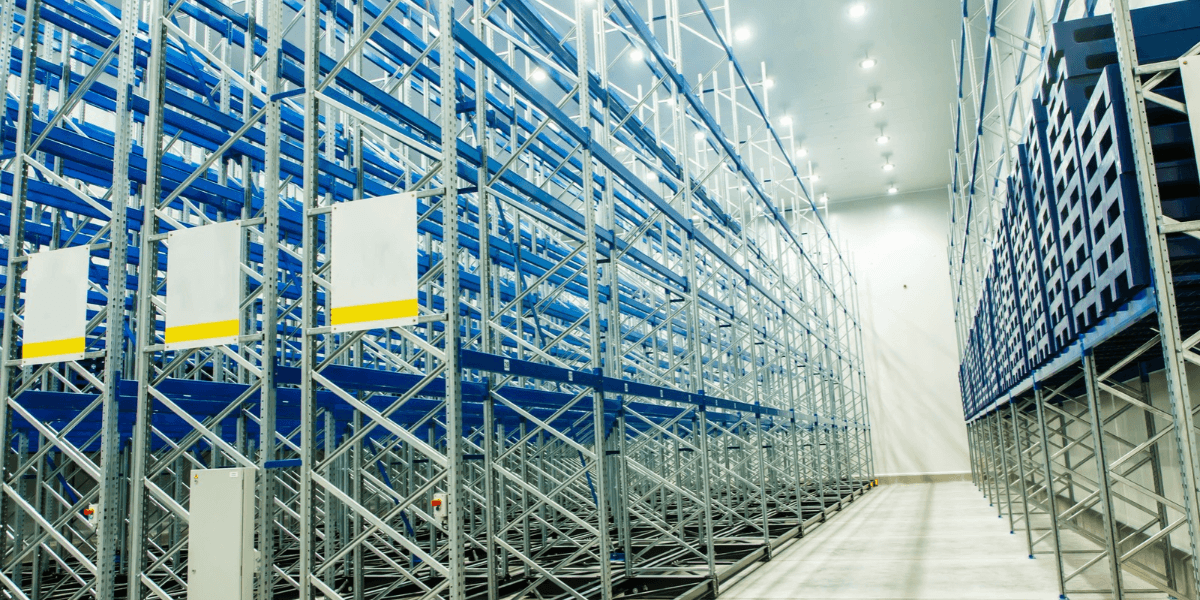
In cold storage facilities, continuous cooling is essential . A system downtime can compromise storage temperatures, lead to product losses, and directly impact the facility's operations. Therefore, when designing cold storage facilities, it's essential to plan for reserve capacity and redundancy.
But more power doesn't automatically mean greater reliability. An overly oversized heat rejection system can actually result in higher energy and water consumption, higher operating costs, and operating conditions that are far from optimal .
For industrial refrigeration designers and operators, this issue becomes particularly important in sites characterised by seasonal or highly variable loads: the most efficient solution is not necessarily the one with the highest nominal capacity, but the one capable of modulating operation while maintaining redundancy, efficiency and operational continuity .
Thermal load is not the only parameter to consider
Refrigerator load and required capacity are naturally the first elements to evaluate, but they cannot be the only ones.
Operating pressures, energy consumption, water usage, contamination risk, maintenance and future expansion capabilities must also be factored into the sizing of the heat rejection system.
A system designed solely for peak operation can spend a significant portion of the year operating at partial load. If the machine is unable to modulate effectively, the excess installed capacity risks becoming inefficient.
It therefore becomes important to analyze:
- real thermal load and its trend throughout the year;
- required temperature in refrigerated environments;
- climatic conditions of the site;
- refrigerant type;
- availability and cost of water;
- absorbed electrical power;
- redundancy needs;
- maintenance costs throughout the life of the system.
Correct sizing thus arises from a balance between peak performance and operation under the most frequent operating conditions .
Evaporative condenser or cooling tower: depends on the application
The choice of heat dissipation technology must also be linked to the characteristics of the project.
Evaporative condensers can be particularly suitable for large refrigeration systems, high-pressure applications, and cold storage facilities requiring very low temperatures. By integrating condensation and cooling into a single device, they also eliminate an intermediate heat exchange stage.
In other applications, especially smaller systems, retrofits, or sites with variable loads, a cooling tower combined with a heat exchanger can offer greater flexibility.
Separating the refrigerant circuit from the water circuit can also help limit problems such as scaling, sedimentation, and fouling to components that are easier to manage and replace.
Therefore, there is no single best technology: the choice must be consistent with the size of the system, refrigerant, pressures, load and actual operating modes .
Modularity and adjustment allow to follow the real load
In cold storage with variable demand, one of the most interesting strategies is to design the system so that it can adapt its capacity to actual needs.
Modular towers with multiple fans and VFD control allow, for example, to modify capacity based on load and seasonal conditions, switching off or on part of the system when necessary.
Redundancy can also be addressed more efficiently through N+1 configurations, where additional capacity is maintained to ensure continuity in the event of maintenance or failure without having to indiscriminately oversize the entire system.
Modularity also offers a long-term advantage: if site capacity increases, it may be easier to add new sections than to completely replace a large piece of equipment sized many years ago.
For designers and managers, the principle is therefore to move from "as large as possible" to "sized and modulated according to real needs" .
Efficiency means also considering water and maintenance
Energy costs are not the only indicator to evaluate in the long term.
In evaporative systems, water consumption, concentration cycles, droplet carryover, and treatment quality can also significantly impact performance and operating costs.
Fouling, sedimentation, and scaling can reduce heat transfer and increase the need for blowdowns and water make-up. At the same time, equipment that is difficult to inspect or maintain can lead to higher costs over the life of the system.
For this reason, sizing should consider not only the initial cost, but the total cost of operation , including energy, water, maintenance, spare parts and possible future expansions.
In cold storage, reliability and efficiency are not mutually exclusive objectives. Proper design can ensure reserve capacity and operational continuity while avoiding excessive power, which, under real-world conditions, ultimately increases consumption and costs.
Related Focus


FAQ – Domande frequenti
Because it can frequently operate outside of optimal conditions, increasing energy and water consumption and operating costs without necessarily offering a proportional advantage in terms of reliability.
It can be particularly suitable for large systems, high pressure applications and systems requiring very low temperatures, where it is useful to integrate condensation and heat rejection in a single step.
An N+1 configuration provides the capacity needed for operation plus an additional spare unit or section, so as to maintain operational continuity during failures or maintenance without indiscriminately oversizing the entire system.
