


Chillventa 2026: Refrigeration through AI, efficiency, and new skills
AI, data center cooling, efficiency, and new skills: Chillventa 2026 highlights the key transformations in professional refrigeration.
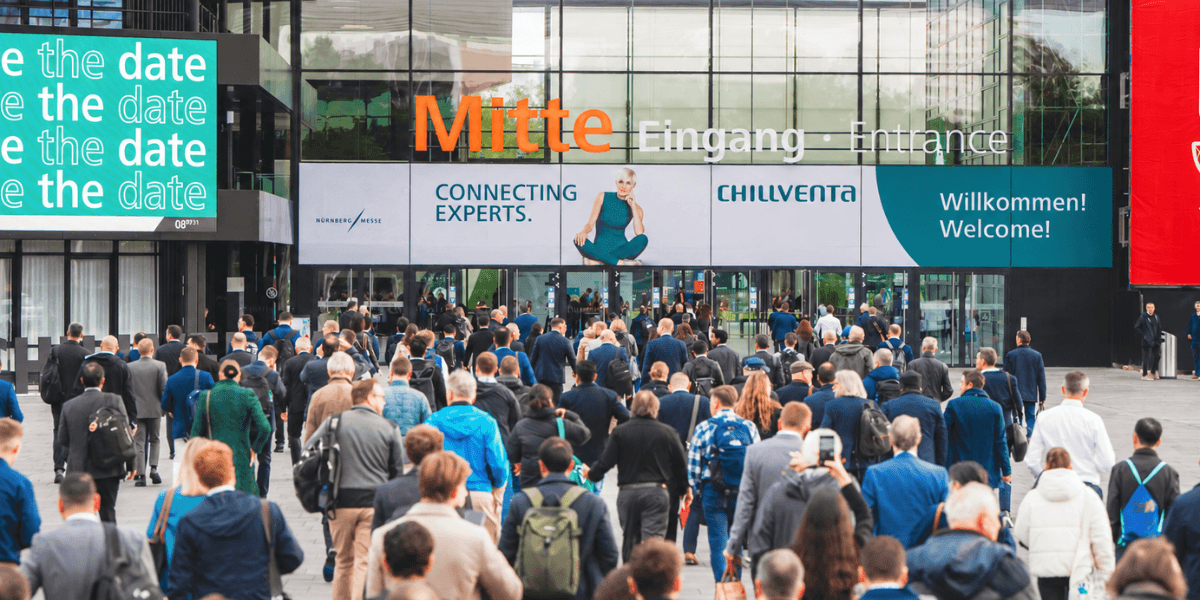
With over 1,150 exhibitors from more than 50 countries and over 200 technical events, Chillventa 2026 confirmed how rapidly the refrigeration industry is changing. The recently concluded edition in Nuremberg, from October 13th to 15th, focused not only on new equipment but, above all, the transformations that are transforming the design, installation, and management of refrigeration systems.
Among the most present topics in the program are artificial intelligence, energy efficiency, data center cooling, low-impact refrigerants, digitalization and technician training .
The emerging picture is one of increasingly integrated refrigeration with control, data, and energy, in which the performance of each individual component is as important as the ability to operate the entire system efficiently.
Artificial intelligence enters refrigeration management
One of the topics that has gained most space is that of artificial intelligence applied to refrigeration systems .
The digitalization of refrigeration has been underway for some time now through sensors, electronic controllers, remote monitoring, and cloud platforms. Artificial intelligence, however, introduces a further possibility: using data collected from systems to recognize operating patterns, identify anomalies, and automatically adjust certain operating parameters.
Potential applications include, for example:
- early detection of malfunctions;
- consumption analysis;
- detection of behaviors consistent with refrigerant leaks;
- pressure optimization;
- coordinated management of compressors;
- regulation according to the actual load;
- predictive maintenance.
The important shift is from a predominantly reactive control to a management in which the system can anticipate certain conditions of inefficiency before they turn into an operational problem.
For installers and maintenance personnel, this doesn't eliminate the importance of technical expertise. On the contrary, it makes it increasingly important to correctly interpret the data provided by digital systems.
Data center cooling: the importance of high-density refrigeration is growing.
Data center cooling was another key topic.
The growth of artificial intelligence and high-performance computing is increasing the power concentrated in racks and, consequently, the amount of heat that must be continuously and reliably removed.
For this reason, the industry is increasingly evaluating architectures that complement or replace traditional air cooling.
Among the most interesting technologies are:
- liquid cooling ;
- direct-to-chip systems;
- dedicated secondary circuits;
- free cooling;
- air-liquid hybrid configurations;
- heat recovery.
The issue isn't just about cooling capacity. Redundancy, service continuity, water consumption, electricity availability, and efficiency in different climates also become crucial in data centers.
For the refrigeration industry, it therefore represents a market in which skills traditionally linked to industrial refrigeration can find new applications.
Energy efficiency: real-world operation matters more and more
Another cross-cutting element of the 2026 edition is the attention to the efficiency of the entire system .
The simple nominal efficiency of a machine is not sufficient to describe how much a system will actually consume during the year.
Partial load, outside temperature, control, auxiliary components and operating conditions can significantly affect performance.
The trend is therefore towards systems capable of continuously modulating their own functioning through:
- variable capacity compressors;
- electronic fans;
- advanced control valves;
- coordinated controls;
- supervision systems;
- heat recovery;
- free cooling when available.
Ecodesign legislation is also increasing attention towards performance measured according to criteria more representative of real-world use.
Refrigeration design is thus becoming less and less tied to a single nominal point and more and more oriented towards efficiency throughout the entire operating profile.
Refrigerants and sustainability remain central
Despite the growing focus on AI and digitalization, the refrigerant transition remains one of the industry's key technology drivers.
CO₂, propane, ammonia, and low-GWP solutions are requiring new architectures, specific components, and different expertise.
The transition doesn't just concern the GWP value. It's also important to consider:
- energy efficiency;
- refrigerant charge;
- safety;
- operating pressures;
- flammability;
- recovery and end-of-life management;
- future availability of fluids.
The goal therefore becomes to reduce climate impact without compromising reliability and performance.
In this context, the issue of sustainability also extends to the lifespan of the system, maintenance and the possibility of recovering and reusing refrigerants and components .
Electrical quality and new components require greater attention
Among the more technical aspects that emerged from the program was the quality of the electrical power supply of modern systems.
The growing presence of inverters, electronic motors and power devices brings new needs to the verification of electrical systems.
Phenomena such as harmonic distortions, neutral conductor overloads and neutral point variations can become significant in systems with numerous electronic loads.
It's a topic that clearly shows how the refrigeration technician's skills are expanding.
Modern refrigeration requires increasingly more knowledge that includes not only the refrigeration circuit and thermodynamics , but also electronics, automation, digital communication and electrical diagnostics.
The shortage of technicians becomes a technological issue
Chillventa 2026 also paid particular attention to the training and availability of qualified personnel .
The growing complexity of systems makes this topic increasingly strategic.
A technician called to work on next-generation equipment may find themselves dealing with high-pressure CO₂, flammable refrigerants, inverters, Modbus networks, cloud systems, and digital diagnostics.
Consequently, continuing education becomes an integral part of the technological transition.
The need to attract new professionals to the sector is therefore accompanied by that of updating those already working in the field, with greater integration between theoretical training, practical exercises and new digital skills .
Chillventa 2026 showcases increasingly multidisciplinary refrigeration
More than a single dominant technology, the 2026 edition highlights an overall transformation.
Low-GWP refrigerants, AI, data centers, electronics, energy efficiency, and new skills are converging in the same plant.
For designers, manufacturers and engineers this means moving from a vision based primarily on the refrigeration circuit to an approach in which refrigeration, electricity, automation, data and energy management must be considered together .
This is probably the most significant change: the future of refrigeration will not be determined only by which refrigerant is used, but by the ability to design and manage increasingly efficient, connected and adaptable systems to real operating conditions .
Related Focus

FAQ – Domande frequenti
The program placed particular emphasis on artificial intelligence, digitalization, energy efficiency, data center cooling, low-GWP refrigerants, and technician training.
AI can use system data to identify anomalies, optimize regulation, analyze consumption, and support predictive maintenance, integrating with sensors and supervision systems.
Modern systems integrate refrigerants with different characteristics, power electronics, inverters, digital communication, and supervision. Technicians must therefore combine traditional refrigeration skills with electrical, electronic, and digital knowledge.
