



Refrigeration technician training: increasingly shared and specialized skills are needed
New refrigerants and technologies require ongoing, hands-on training that is increasingly shared among refrigeration technicians and trainers.
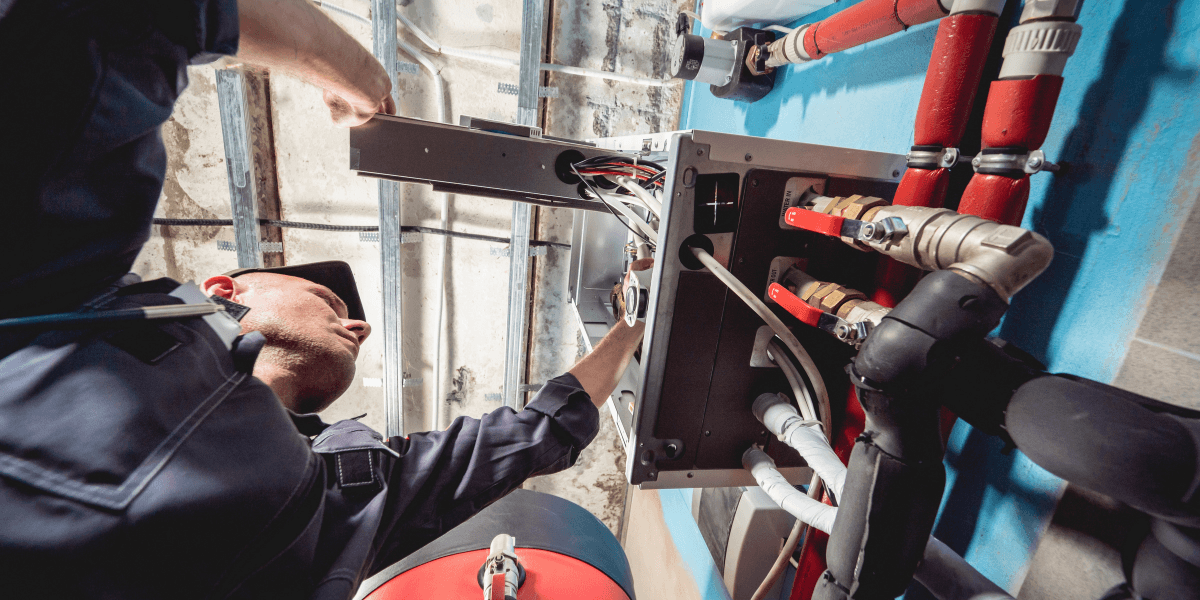
The refrigeration transition to low-GWP refrigerants and new technologies is also changing the way technicians, installers, and maintenance personnel are trained. Occasional refreshers on a new fluid are no longer enough: the industry requires training programs that continuously adapt to evolving regulations, safety, and technologies.
The spread of CO₂, hydrocarbons, and A2L refrigerants , along with the new European F-Gas framework, also makes it increasingly important to have comparable expertise across countries and operators. This is driving growing interest in international programs, training of trainers, and shared teaching tools.
For the cold chain, the issue is strategic: the speed with which new solutions can spread also depends on the availability of professionals truly prepared to install, start up and maintain them safely .
From occasional courses to continuous training
The technological transformation of the HVACR sector is making a model based exclusively on initial qualification increasingly less effective.
Refrigeration technicians today work with equipment and refrigerants with widely varying properties. Depending on the system, operating pressures, charging procedures, required equipment, and safety measures may vary.
Professional development must therefore simultaneously include:
- characteristics of alternative refrigerants ;
- new installation procedures;
- leak detection and management;
- refrigerant recovery;
- diagnostics;
- safety;
- electronic regulation;
- energy efficiency;
- regulatory evolution.
Training thus becomes an ongoing process, directly linked to the evolution of the systems present on the market.
This is particularly important in service, where for many years systems of different generations will continue to coexist, with traditional refrigerants and new low GWP solutions.
CO₂, A2L and A3 require different practical paths
One of the main reasons why training needs to evolve is the increasing diversification of refrigerants.
With CO₂ (R744) , high pressures, transcritical cycle behavior, charging and starting procedures, and management of downtime conditions are of particular importance.
With A2Ls , however, the technician must know the implications of mild flammability, permissible quantities, ventilation, management of possible ignition sources and the use of compatible equipment.
A3s , such as propane R290, require an even greater level of attention in managing flammability risk.
It's therefore not enough to simply impart theoretical knowledge. Training must include practical exercises on real systems or simulators , allowing technicians to become familiar with the procedures, tools, and situations they may encounter in the field.
The laboratory thus becomes an essential component of professional training.
Train trainers to multiply skills
Another increasingly important element is the train-the-trainer model, that is, the specific training of technicians and teachers who in turn will train other professionals.
This approach allows for a more rapid expansion of the dissemination of skills and, above all, for greater uniformity in the content transmitted.
Training the trainers can help create common methodologies on aspects such as:
- safety procedures;
- equipment to be used;
- refrigerant management;
- practical tests;
- skills assessment;
- diagnostics;
- maintenance.
For the refrigeration sector, having a network of up-to-date trainers means being able to more effectively support the diffusion of new technologies even as market changes accelerate.
It also becomes important to periodically update the same training programs: a course developed a few years ago may no longer reflect refrigerants, equipment, or requirements on the market.
Shared skills for an increasingly international market
Refrigeration is a highly international industry. Components and equipment can be manufactured in one country, installed in another, and serviced by technicians trained in different systems.
This is why the value of shared training programs and skills that are recognizable beyond national borders is growing.
The goal is not to make all training systems identical, but to create a common technical basis that allows professionals to consistently address issues such as safety, alternative refrigerants, and good installation practices.
International cooperation can also be particularly useful for spreading expertise in markets where technological transition is proceeding faster than the availability of qualified personnel.
In this sense, training and cooperation also become tools to accelerate the sector's environmental transition: a technology that is available but not safely installable remains, in fact, difficult to adopt .
Skills shortages may slow down the transition
The transition towards refrigerants with a lower climate impact will therefore not depend exclusively on regulatory deadlines.
Manufacturers and designers can develop new equipment, but to make it truly usable on a large scale, technicians capable of handling installation, commissioning, maintenance and end-of-life are needed.
A shortage of qualified personnel can result in:
- greater difficulty in adopting new technologies;
- longer intervention times;
- less effective maintenance;
- increased risk of errors;
- energy performance lower than expected;
- security issues.
The availability of skills therefore becomes a real infrastructure for the refrigeration transition.
In the coming years, the competitiveness of the supply chain will also depend on the ability to build continuous, practical, and shared training courses , capable of following a sector in which refrigerants, regulations, and technologies are changing simultaneously.
Related Focus

FAQ – Domande frequenti
Refrigerants, components, regulations, and safety procedures are evolving rapidly. Technicians must therefore regularly update their skills to properly work on systems of different generations and technologies.
It depends on the fluid used. CO₂ requires specific knowledge of high pressures, while A2L and A3 introduce different levels of flammability. Therefore, expertise in safety, charging, recovery, diagnostics, and maintenance procedures is required.
The train-the-trainer model allows for the faster dissemination of updated skills and the more uniformity of teaching methods and content. It is particularly useful when new technologies need to be introduced on a large scale and qualified and trained technicians are needed quickly.
