




Sustainable refrigeration: training and skills become crucial
New refrigerants and technologies require increasingly trained technicians in the safety, recovery, maintenance, and efficiency of refrigeration systems.
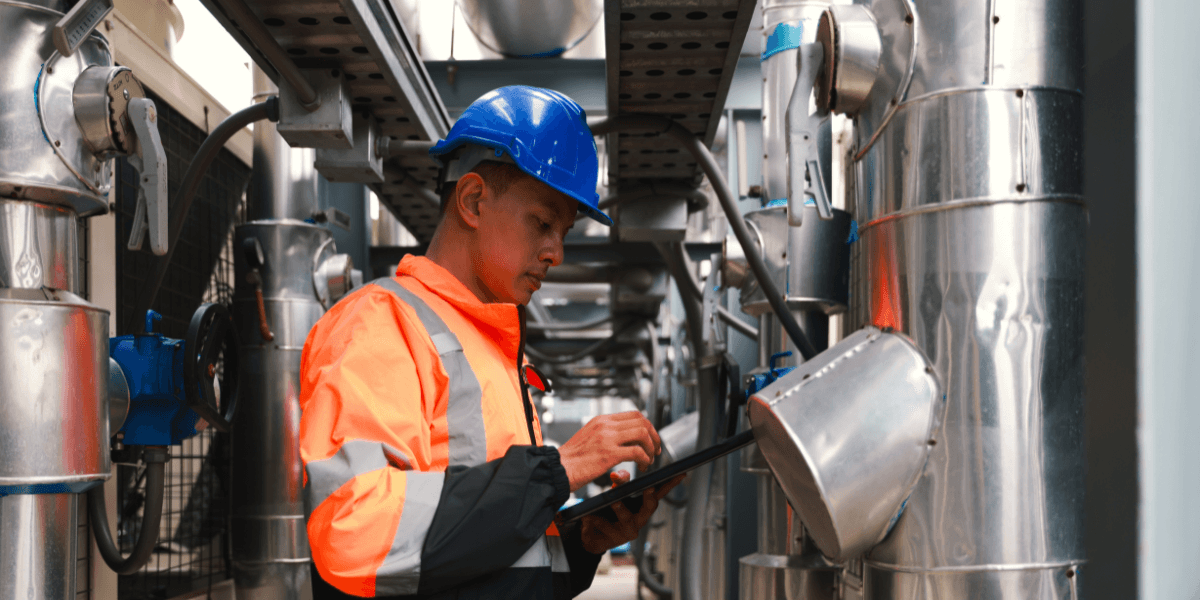
The transition to more sustainable refrigeration depends not only on the availability of new refrigerants and more efficient technologies. An equally important role is played by the skills of technicians , who are required to install, commission, and maintain systems that have increasingly different characteristics from traditional systems.
The widespread use of low-climate refrigerants brings with it new requirements for safety, fluid recovery, leak prevention, diagnostics, and maintenance . Added to these is the need to improve the energy efficiency of systems throughout their entire life cycle.
Training therefore becomes one of the fundamental elements of the HVACR transition: introducing new technologies without simultaneously developing the skills necessary to use them correctly risks limiting their performance, reliability, and safety.
New refrigerants, new skills for refrigeration technicians
The progressive reduction in the use of high-GWP refrigerants is expanding the use of fluids with different characteristics.
Flammable refrigerants, fluids operating at high pressures, and new mixtures require specific procedures and in-depth knowledge of the system's operating conditions.
Training must therefore go beyond theoretical knowledge of the refrigerant and include operational activities such as:
- recovery and correct management of refrigerants ;
- loss detection and prevention;
- circuit evacuation;
- charging procedures;
- brazing;
- diagnostics;
- maintenance;
- assessment of risks related to flammability, toxicity and high pressures.
The quality of technical intervention thus becomes increasingly important. A technology designed to reduce environmental impact can lose some of its benefits if installed or maintained incorrectly.
Preventing losses is part of sustainability
One of the central aspects concerns the sealing of the refrigeration circuits .
The sustainability of a system depends not only on the nominal GWP of the refrigerant used. The amount of fluid that can be lost during operation, maintenance, and the end-of-life of the equipment must also be considered.
Proper installation, quality brazing, leak testing, and effective diagnostics can reduce the risk of leaks while simultaneously improving reliability and efficiency.
Refrigerant recovery during maintenance and at the end of the system's life also plays a fundamental role. The fluid should not be considered a material to be automatically dispersed or disposed of, but rather a resource that, when technically possible, can be recovered, recycled, or regenerated .
The refrigeration technician therefore becomes one of the main players in the circular economy applied to refrigeration.
Safety: A2L, A3 and CO₂ require specific procedures
The transition to refrigerants with a lower climate impact also entails a greater diversification of risks to be managed.
With refrigerants belonging to classes A2L and A3 , for example, training must include the management of flammability, possible ignition sources, ventilation and the procedures to be followed during maintenance and interventions on the circuit.
In CO₂ (R744) systems, operating pressures and correct procedures for charging, recovery, diagnostics and commissioning become particularly important.
Safety cannot therefore be relied solely on the characteristics of the component or equipment. It must be supported by operating procedures, adequate tools, and trained personnel .
As the variety of refrigerants used on the market increases, the technician will also need to be able to quickly recognize the fluid present in the system and adapt tools, procedures and risk assessments accordingly.
Energy efficiency: maintenance impacts performance
Technical skills are also important from an energy perspective.
A refrigeration system can be designed with highly efficient components, but maintaining good performance over time requires proper system management.
Incorrect charging, dirty exchangers, pressures outside the optimal values, incorrect adjustments or degraded components can significantly increase consumption.
Maintenance must therefore include not only the repair of faults, but also the monitoring of the actual performance of the system .
Items to check include:
- conditions of the exchangers;
- refrigerant charge;
- operating pressures and temperatures;
- operation of compressors and fans;
- regulation and setpoint;
- presence of leaks;
- overall efficiency of the system.
Training and diagnostics thus become tools to simultaneously reduce consumption, indirect emissions and operating costs.
Cold chain and refrigeration: expertise is needed throughout the supply chain.
The availability of qualified technicians is particularly important in sectors where refrigeration plays an essential role.
The cold chain is necessary for food preservation, distribution, logistics, industry, pharmaceuticals and numerous healthcare applications.
A failure or inefficient management of the system therefore not only leads to increased energy consumption, but can also have consequences on product conservation and business continuity.
For this reason, the development of sustainable refrigeration requires an approach that combines technology, training, maintenance, safety and energy efficiency .
Cooperation between institutions, associations, training centers, and businesses can also help create more structured paths for professional development.
The sector's transition is therefore not measured solely by the number of systems using low-GWP refrigerants. An equally important indicator will be the availability of technicians capable of installing and maintaining them safely and efficiently .
Related Focus



FAQ – Domande frequenti
The deployment of refrigerants with characteristics different from traditional HFCs requires specific knowledge of flammability, high pressures, recovery, charging, leak detection, and maintenance. Adequate training is therefore essential to safely use new technologies.
In addition to traditional installation and maintenance activities, diagnostics, leak prevention, refrigerant recovery, evacuation, brazing, and risk management associated with various fluids are becoming increasingly important.
Yes. Improper charging, dirty components, incorrect adjustments, and undetected anomalies can increase consumption. Properly trained technicians can identify these problems and help maintain the system's energy performance over time.
