




Chillventa 2026: What to expect from natural refrigerants, CO₂, and digitalization
At Chillventa 2026, natural refrigerants, CO₂, digitalization, safety, and new refrigeration technologies will be the protagonists.
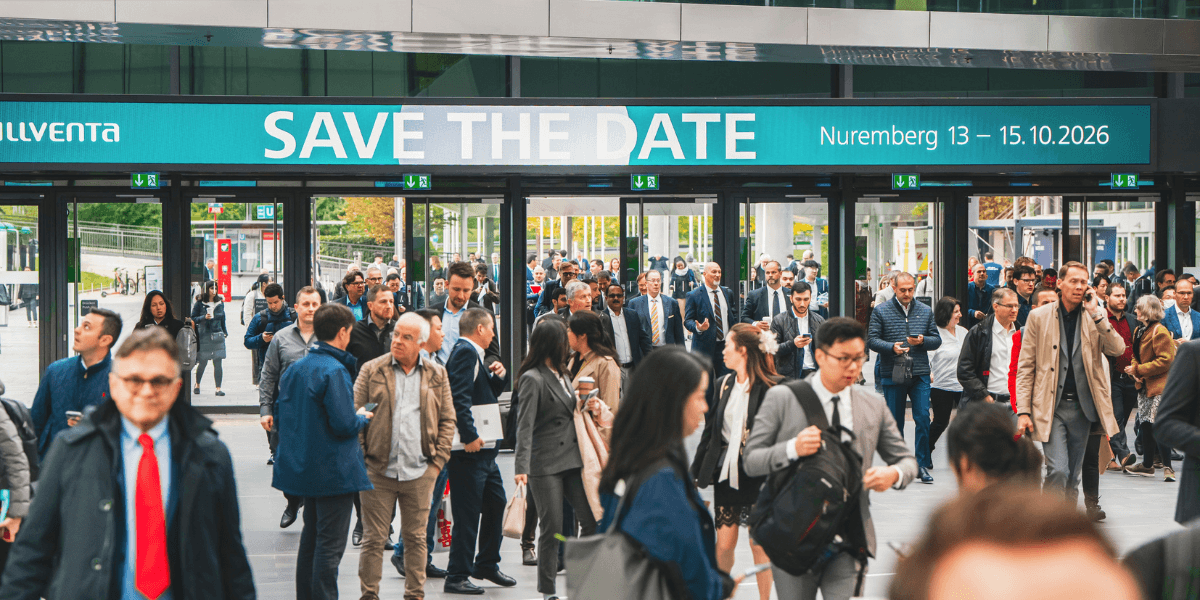
From October 13 to 15, 2026, Nuremberg will return to the center of the international refrigeration industry with Chillventa, a biennial event dedicated to refrigeration, air conditioning, ventilation, and heat pumps. The 2026 edition will bring together over 1,100 exhibitors from over 50 countries , with an expanded exhibition area compared to the previous edition.
No single technology seems destined to dominate the show in the pavilions. Rather, the common thread will be the evolution of the entire refrigeration system: natural refrigerants, charge reduction, CO₂ efficiency, digital controls, artificial intelligence, safety, and new cooling applications .
For refrigeration professionals, Chillventa 2026 will therefore be above all an opportunity to observe how the transition from traditional refrigerants is simultaneously modifying components, system architectures, maintenance and system management methods.
Natural refrigerants towards increasingly diversified applications
CO₂, propane, and ammonia will be among the main protagonists of the event, but the most interesting aspect will probably be the expansion of their range of applications.
R744 continues to spread in commercial refrigeration, but new solutions are increasingly aimed at small sales outlets, single cabinets, cold rooms and small-sized units .
At the same time, R290 propane is finding its way into new configurations for refrigerated cabinets, monoblocks, cold rooms and chillers, while ammonia continues to represent an important technology, especially in industrial refrigeration and higher-power applications.
Evolution, therefore, is not just about replacing one refrigerant with another. Compressors, valves, exchangers, controls, and architectures specifically designed to exploit these natural fluids are being developed.
Another closely related issue is the amount of refrigerant contained in the system. Reducing the charge allows for improvements in safety, environmental impact, and design, especially in applications using flammable fluids.
CO₂: from the diffusion of R744 to the optimization of efficiency
Chillventa 2026 will also allow us to observe a second phase in the evolution of CO₂ refrigeration .
Technology is no longer developed solely with the goal of expanding the number of available applications. A growing portion of innovation focuses on the efficiency of the transcritical cycle , its ability to adapt to operating conditions, and the recovery of energy that is dissipated in traditional cycles.
The strategies include, for example:
- energy recovery during expansion;
- optimization of evaporation temperature;
- dynamic overheating regulation;
- capacity modulation;
- pressure control;
- adaptation to environmental conditions and refrigeration load.
This consolidates an approach in which hardware and software work together to keep the system close to the most efficient operating point.
This is a particularly important trend for CO₂ systems, where environmental conditions can significantly impact performance. The goal is no longer simply to make R744 usable, but to increase its efficiency in an ever-increasing range of climates and applications.
Control, data and AI are increasingly entering the refrigeration system
Another central theme will be the increasing integration between refrigeration, electronics and data management .
Controllers, sensors, and supervisory systems are progressively evolving into platforms capable of collecting information from the entire plant, analyzing it, and supporting operational decisions.
Applications that are gaining increasing importance include:
- remote monitoring;
- centralized alarm management;
- control of refrigeration plants;
- HACCP reporting;
- consumption analysis;
- predictive maintenance;
- automated diagnostics;
- algorithms based on artificial intelligence .
The change primarily concerns the relationship between the various components. Compressor, fan, exchanger, and valve are no longer considered solely as independent devices, but as elements of a connected and data-driven system .
For installers and maintenance technicians, this evolution also requires new skills: in addition to traditional refrigeration, electronics, communications, software, and operational data interpretation are becoming increasingly important.
Data centers, heat exchange and new cooling needs
Data center cooling is also one of the fastest growing applications.
Increasing computing power and thermal densities are making cooling a critical component of new digital infrastructures. Alongside traditional air systems, there is growing interest in liquid cooling, Cooling Distribution Units, dry coolers, adiabatic systems, and dedicated heat exchangers .
The data center sector represents an increasingly evident intersection between refrigeration, air conditioning, electronics, and control.
Even in the most traditional refrigeration applications, however, the evolution of exchangers, fans and heat dissipation systems will continue.
The pursuit of performance isn't just about thermal capacity. Equally important are:
- reduction of electrical consumption;
- less noise;
- clutter reduction;
- water management;
- refrigerant charge limitation;
- prevention of condensation and ice formation.
The system's performance is therefore increasingly evaluated as a result of the interaction between multiple components.
Safety and service change along with refrigerants
The spread of R290 and A2L refrigerants inevitably brings safety to the forefront.
Leak detection, sensors capable of recognizing different refrigerants, and systems for monitoring circuit operations will be among the technologies to watch.
Security is in fact moving from a logic concentrated on the single device to a vision that includes circuit construction, quality of connections, monitoring, traceability of interventions and maintenance .
Pipe connection methods and flame-free technologies also become particularly important when working with flammable refrigerants.
At the same time, service for installed assets is changing. Retrofitting existing components, adding new control and connectivity features, detecting leaks, and managing refrigerant throughout its lifecycle will become increasingly important issues.
The recovery, regeneration, and reuse of refrigerants are part of a more circular service management approach, which is set to gain further importance with the progressive reduction of virgin HFCs.
Chillventa 2026 will therefore showcase a refrigeration industry in which change no longer concerns only the fluid used. The real evolution is taking place in the integration of refrigerant, components, control, safety, software, and maintenance .
And this is probably the main element to observe in the Nuremberg pavilions: how quickly the sector is moving from the innovation of the single component to that of the entire refrigeration system.
Related Focus

FAQ – Domande frequenti
Chillventa 2026 will take place in Nuremberg from 13 to 15 October 2026 and will be dedicated to refrigeration, air conditioning, ventilation and heat pump technologies.
Key topics will include CO₂, R290 and ammonia, refrigerant charge reduction, energy efficiency, digital control, AI, data centers, security, and new service solutions.
The event offers an overview of how the transition to low-GWP refrigerants is changing not only fluids, but also compressors, heat exchangers, controls, sensors, software, safety, and maintenance, offering an overview of the overall evolution of the supply chain.
