




Industrial refrigeration in plastic molding: why temperature control is crucial
Chillers, free cooling, and intelligent temperature control make refrigeration a key element in plastic molding processes.
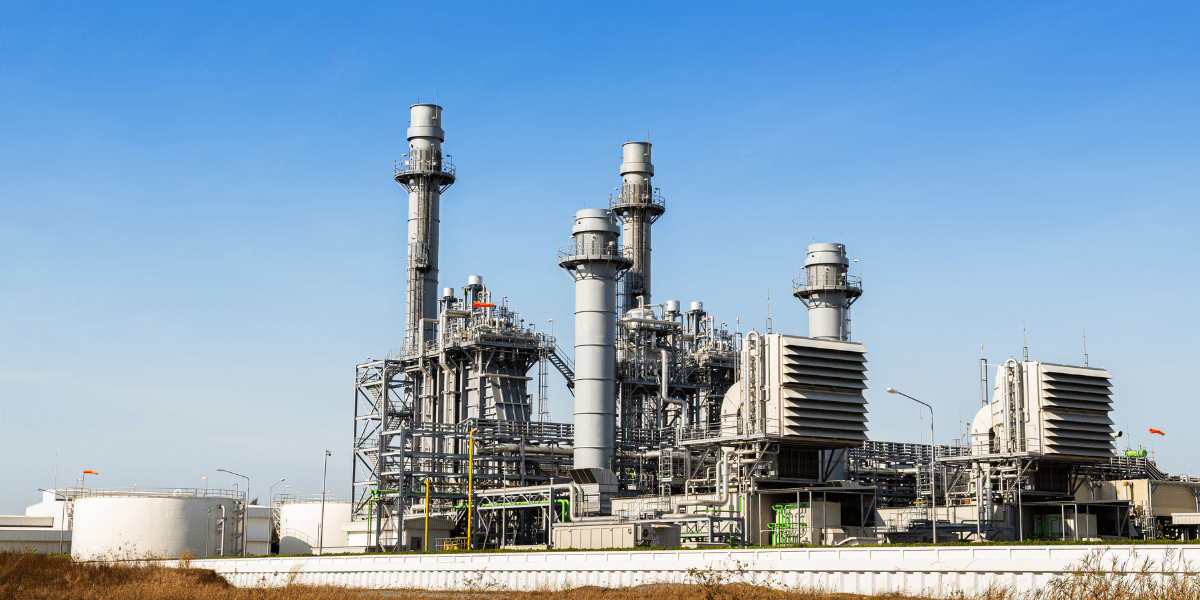
In plastic molding , cooling is not simply an ancillary step in the production process. The ability to precisely control temperatures directly impacts the quality of the product, production continuity, and the duration of processing cycles.
For this reason, industrial refrigeration systems are increasingly integrated with process machinery. Chillers, hydraulic circuits, control systems, and free cooling solutions are designed to supply water at the required temperature and adapt cooling capacity to actual operating conditions.
The goal is not only to produce cold, but to maintain a stable and repeatable thermal balance , while at the same time reducing energy consumption and waste.
Why temperature is so important in plastic molding
During polymer transformation, the material is brought to the conditions necessary for processing and must subsequently be cooled in a controlled manner.
In injection molding , for example, the mold must remove heat from the material so that the piece can solidify and reach the appropriate dimensional and physical characteristics before being ejected.
Uneven temperature management can impact process stability and production repeatability. Therefore, the refrigeration system must be able to maintain consistent operating conditions even when load, line speed, or environmental conditions change.
Cooling may also concern other system components. Machines used in plastics processing may employ hydraulic drives , for which it is necessary to prevent the oil from overheating through proper thermal management.
Temperature control thus becomes an integral part of the entire production process.
Industrial chillers and cooling circuits
Among the most used solutions are industrial water chillers , which produce chilled water for the molds or other users in the line.
The system configuration must be chosen based on the characteristics of the process, considering factors such as:
- required cooling capacity;
- process water temperature;
- required flow rate;
- continuity of operation;
- load variations;
- climatic conditions of the production site;
- possibility of subsequently expanding the system.
In industrial applications with variable needs, it may be useful to adopt a modular configuration, in which multiple units contribute to the refrigeration production and can be activated according to demand.
This way, the installed capacity can better adapt to actual production needs, avoiding having the system continuously operate under the same conditions regardless of the load.
Reduce cycle times through more effective cooling
One of the main goals in plastic molding is to limit the time required to complete each cycle without compromising product quality.
The cooling phase can represent a significant portion of the process. A system capable of removing heat in a stable and controlled manner can therefore help reduce cycle times and increase line productivity .
It doesn't simply mean using more cooling power.
Correct sizing must simultaneously consider exchanger capacity, water temperature, flow rate, fluid distribution, and mold behavior. An oversized or ineffectively regulated system can generate consumption without producing proportionate benefits.
Industrial refrigeration must therefore be designed as part of the process, and not as an independent machine connected to the production line.
Free cooling to reduce the work of the refrigeration circuit
When weather conditions allow, free cooling can become one of the most interesting tools for reducing energy consumption.
The principle consists in using external air directly to cool the process fluid, reducing or avoiding the operation of refrigeration compressors when the ambient temperature is sufficiently low.
In integrated systems, the switch between mechanical refrigeration and free cooling can be managed automatically based on external conditions and the temperature required by the process.
This strategy is particularly interesting for productions that:
- they work during most of the year;
- they require cooling even in the cold months;
- use water temperatures compatible with external conditions;
- they present relatively constant thermal loads.
The potential benefit naturally increases in areas characterized by prolonged periods of low ambient temperatures.
Refrigeration and smart factories: increasingly integrated systems
The evolution of industrial refrigeration also concerns control.
Refrigeration systems can now be integrated with other machines in the line through PLCs, machine-to-machine communication and supervision systems , allowing the exchange of data on process operation.
The availability of information allows you to check parameters such as temperatures, pressures, operating conditions and unit status, also facilitating diagnostics and preventative maintenance activities.
In an increasingly interconnected factory, therefore, the chiller is no longer necessarily an isolated unit: it can become one of the elements of the production process control system.
The integration also allows cooling to be modulated based on the actual needs of the machines, helping to avoid unnecessary consumption.
Energy efficiency and productivity must be evaluated together
In plastic molding, the efficiency of the refrigeration system cannot be evaluated simply by observing the electricity consumption of the chiller.
The really important parameter is the relationship between energy used, process stability and quantity of product produced .
An efficient cooling system can in fact contribute simultaneously to:
- maintain product quality stable;
- reduce cycle times;
- prevent overheating;
- reduce compressor work when free cooling is available;
- adapt the cooling power to production;
- improve business continuity.
For this reason, when designing a plant for polymer processing, refrigeration and the production process should be analyzed together.
The evolution of the sector is going precisely in this direction: more modular, controllable cooling systems integrated with production machinery , in which cold becomes a fundamental variable for improving both energy efficiency and plant performance.

Related Focus

FAQ – Domande frequenti
Cooling allows you to control the temperature of the molds and other process components, promoting material solidification and more stable and repeatable production conditions.
When the outside temperature is low enough, free cooling uses ambient air to extract heat from the circuit, reducing the operation of the refrigeration compressors and therefore electricity consumption.
Modularity allows the cooling capacity to be adapted to the actual load and facilitates any expansions of the system, making the system more flexible with respect to production variations.
