




Transcritical CO₂ and high temperatures: design choices that improve efficiency
Gas coolers, parallel compression, and advanced control allow transcritical CO₂ systems to maintain good performance even at high temperatures.
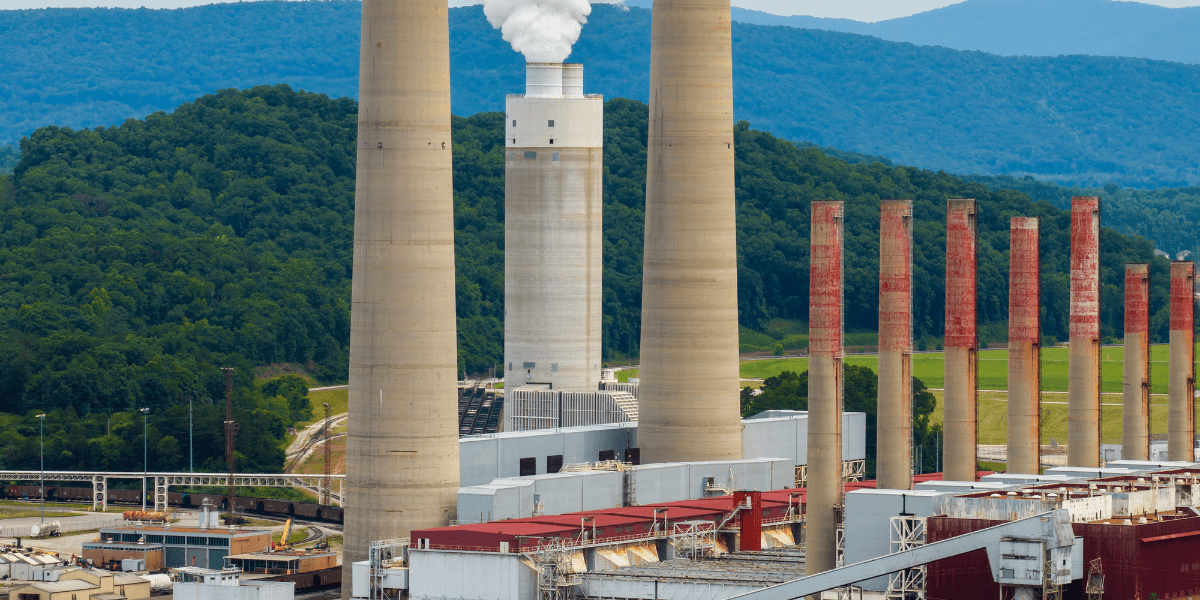
The spread of CO₂ (R744) in commercial refrigeration has progressively overcome one of the limitations that had conditioned its use for years: the difficulty of maintaining high performance when the external temperature increases.
The critical point of CO₂, around 31°C , makes heat rejection management particularly important. Above this threshold, the refrigerant operates in transcritical conditions, and the system's behavior changes significantly compared to that of a traditional refrigeration system.
Experience gained in recent years, however, shows that high temperatures don't necessarily represent an obstacle. The outcome depends primarily on the sizing of gas coolers, compressors, fans, and controls , and on the system's ability to adapt to real-world operating conditions.
The gas cooler must be sized for the most severe conditions
One of the first elements to consider is the gas cooler , which in transcritical systems replaces the traditional condenser during operation above the critical point.
Design should not only be based on the average annual temperature of the site, but should also consider the peak environmental conditions under which the system will need to continue to provide the required cooling capacity.
In fact, when the air temperature increases, it becomes more difficult to dissipate heat and the pressure required on the high side increases.
Correct sizing of the gas cooler must therefore be accompanied by effective management of the air flow rate and the temperature difference between the CO₂ exiting the exchanger and the outside air.
Among the most useful tools are variable speed fans , which allow you to adapt the operation to actual conditions instead of maintaining a constant setting.
The goal is not simply to increase the size of the exchanger, but to design a system capable of maintaining adequate performance precisely when the thermal load is highest.
Parallel compression to better manage flash gas
Another important solution is parallel compression .
In transcritical systems, some of the refrigerant in the receiver can be converted into flash gas. In a traditional configuration, this gas is returned to the low-pressure side, increasing the work required of the main compressors.
With parallel compression, however, the flash gas is drawn directly at an intermediate pressure through dedicated compressors.
This allows you to:
- reduce the load on the main compressors;
- limit part of the energy losses;
- improve operation under the most demanding conditions;
- increase the overall efficiency of the system.
The advantage becomes particularly interesting when the external temperature rises, because precisely in these conditions the quantity of flash gas increases and the transcritical system is put under greater stress.
Parallel compression thus becomes one of the tools available to adapt the CO₂ architecture to high temperatures , rather than considering the hot climate as an intrinsic limitation of the refrigerant.
High pressures: component selection is crucial
CO₂ refrigeration also requires particular attention to operating pressures .
On the high side, components can be designed for pressures of the order of 130 bar , and during transcritical operation, pressures can be several times higher than those typical of traditional HFC systems.
This makes the correct selection of:
- valves;
- pipes;
- fittings;
- exchangers;
- regulating devices;
- components installed on the high pressure side.
The design must therefore start from the conditions that the system will actually encounter during its operational life.
Installation and service also require specific skills. Using appropriate components isn't enough if piping, adjustments, or commissioning aren't performed correctly.
In R744 systems, design, components and installation quality are closely linked .
Adiabatic pre-cooling under the most difficult conditions
In particularly hot areas , adiabatic pre-cooling of the air destined for the gas cooler can also be considered.
The principle consists in cooling the incoming air through the evaporation of water before it reaches the exchanger.
By reducing the air temperature, the gas cooler can operate under more favorable conditions, helping to improve system performance during hotter periods.
The solution, however, presents an obvious compromise: improving energy efficiency requires water consumption .
The choice must therefore be evaluated on a case-by-case basis, considering:
- outside temperature;
- humidity;
- water availability;
- number of hours of annual use;
- achievable energy savings;
- maintenance needs.
The adiabatic system therefore does not represent an automatic solution for every CO₂ system, but one of the design tools available when climatic conditions make it convenient.
CO₂ efficiency: the whole system counts
High temperatures are just one of the variables to consider.
The best configuration also depends on the cooling load profile, energy cost, water availability, staff ability to operate the system, heat recovery capabilities, and business continuity requirements .
Heat recovery can also help improve the overall balance of the system by using part of the heat normally dissipated for other users.
A configuration designed for peak outdoor conditions around 38°C , with parallel compression, modulating fans and heat recovery, achieved a COP approximately 34% higher than a comparable R404A system .
This data doesn't mean the same result can be automatically replicated in any installation. However, it does demonstrate how CO₂ performance depends on the overall architecture and the conditions for which the system is designed.
The concept of a geographical limit beyond which transcritical CO₂ would not be cost-effective is therefore progressively losing its meaning.
The design question becomes another: analyzing the real site conditions and choosing the most suitable gas cooler, compression, regulation and heat rejection strategies .

Related Focus

FAQ – Domande frequenti
CO₂ has a critical point of approximately 31°C. Above this temperature, the refrigerant does not condense normally, and the system must manage heat rejection in a transcritical state, with higher pressures and greater attention to regulation.
Parallel compression allows the flash gas to be compressed directly from an intermediate pressure, avoiding the need to return it completely to the low-pressure side. This reduces the work required of the main compressors and can improve efficiency.
No. It can improve performance in hotter conditions, but it consumes water and requires additional management and maintenance. Its suitability therefore depends on the climate and the specific characteristics of the installation.
