




Transcritical CO₂ in Hot Climates: How to Design Efficient Systems
Gas coolers, parallel compression, and advanced control allow transcritical CO₂ systems to maintain efficiency even in the hottest climates.
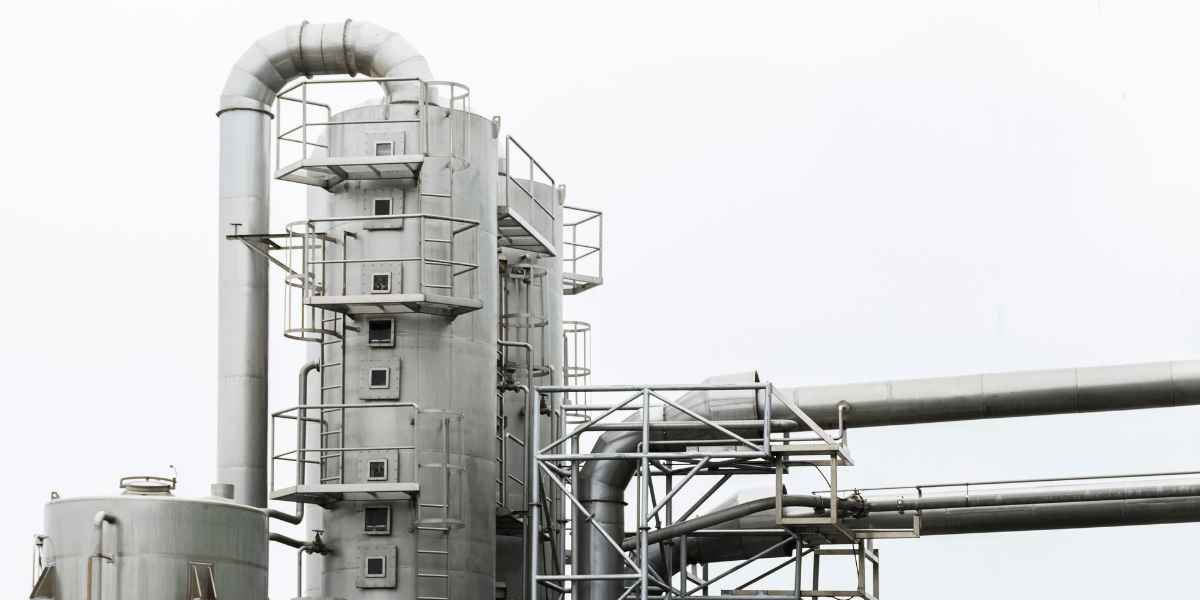
The use of CO₂ (R744) in commercial refrigeration is no longer limited to moderate-temperature markets. Advances in design, controls, and components are making transcritical systems a viable solution even in areas where outside temperatures can frequently exceed 30°C.
The central question is therefore not whether CO₂ can work in hot climates, but how to design the system to maintain cooling capacity and efficiency under the most severe conditions .
Properly sized gas coolers, modulating fans, parallel compression, pressure control, and, where appropriate, adiabatic systems can significantly improve performance. For supermarkets and other commercial refrigeration applications, it is therefore essential to design the entire system based on the actual climatic conditions of the site.
Why high temperatures challenge CO₂
CO₂ has a critical point of approximately 31°C . Below this temperature, it can condense similarly to a conventional refrigerant; however, when operating conditions exceed the critical point, the system operates in a transcritical state.
Under these conditions, the refrigerant does not condense in the traditional condenser, but releases heat through a gas cooler . As the external temperature increases, the importance of managing the high-pressure side and the ability to dissipate heat effectively increases.
It is precisely this aspect that in the past had fueled the concept of the so-called “CO₂ equator”, according to which above certain ambient temperatures transcritical systems would be uneconomical.
Technological evolution, however, has progressively reduced this limitation. In modern designs, performance depends less and less on the external temperature alone and more and more on the overall configuration of the system .
For applications in areas with hot summers, such as the Mediterranean, this means paying particular attention to peak conditions and not just average annual temperatures.
Gas cooler and parallel compression: designing for peak conditions
One of the main elements is the sizing of the gas cooler .
The design must consider the maximum temperature at which the system will actually be required to operate. Sizing the exchanger based on overly favorable climatic conditions can reduce cooling capacity precisely when the system's load is greatest.
This doesn't necessarily mean installing larger components. The goal is to achieve a system designed to be consistent with the climate, simultaneously addressing heat exchange, air flow, and regulation.
Among the most important solutions are:
- gas cooler sized for peak external temperatures ;
- variable speed fans;
- control of the approach temperature between outgoing CO₂ and outside air;
- parallel compression ;
- advanced high blood pressure regulation;
- component redundancy in applications where business continuity is a priority.
Parallel compression , in particular, represents one of the most interesting technologies for improving the performance of transcritical systems. Flash gas is managed at an intermediate pressure through dedicated compressors, reducing the load on the main compressors and mitigating some of the inefficiencies that increase with external temperatures.
A commercial system designed to operate at peak outside temperatures of approximately 38°C, combining parallel compression, variable speed control and heat recovery, showed a COP approximately 34% higher than a comparable R404A system .
The data highlights how a hot climate does not necessarily represent an obstacle to the use of CO₂, as long as the architecture is specifically developed for those operating conditions.
High pressures: components and installation become crucial
However, transcritical systems also require specific expertise in terms of safety and components.
On the high-pressure side, components can be designed for pressures of the order of 130 bar . During operation, transcritical CO₂ pressures are significantly higher than those typical of systems based on traditional refrigerants.
Valves, pipes, fittings and components must therefore be specifically selected for the expected operating conditions.
For installers and maintenance workers the following become essential:
- correct sizing of pipes;
- components certified for the expected pressures;
- correct management of high pressure valves;
- specific start-up and maintenance procedures;
- pressure and temperature monitoring;
- technical training on the operation of R744 systems.
The performance of a CO₂ system therefore also depends on the quality of its installation and control. A properly sized project can lose some of its benefits if controls, components, or commissioning are not suited to real-world conditions.
Adiabatic cooling: more efficient, but be careful with water
In warmer climates , adiabatic pre-cooling of the air passing through the gas cooler can also be considered.
The principle consists in lowering the temperature of the incoming air through the evaporation of water, thus reducing the temperature against which the refrigeration system has to work.
This may improve performance on hotter days, but introduces an additional parameter to consider: water consumption .
The choice must therefore be made by simultaneously considering:
- site temperature and humidity;
- water availability;
- number of hours per year in which the adiabatic system would actually be necessary;
- water quality;
- maintenance;
- energy savings achievable.
In hot, dry climates the benefit can be significant, while in other conditions water usage may make different strategies preferable.
Climate is only part of the design
External temperatures are a fundamental parameter, but they cannot be considered in isolation.
Choosing the best configuration for a CO₂ system must also take into account the cooling load profile, energy cost, water availability, local maintenance expertise, heat recovery capabilities, and the continuity required by the business .
For example, heat recovery can further enhance the system by using the heat normally dissipated for domestic hot water or other users in the store.
Design must therefore move from an evaluation based exclusively on the initial investment to a logic of cost and performance throughout the entire life cycle .
For commercial refrigeration, the message is clear: in warmer climates, CO₂ requires more careful design, but modern transcritical architectures overcome many of the limitations that previously limited its use.
The question is no longer simply whether R744 is suitable for high temperatures, but what configuration allows it to work efficiently under the actual climatic conditions of the site .

Related Focus


FAQ – Domande frequenti
Yes. High temperatures require specific design, but properly sized gas coolers, parallel compression, and advanced controls allow modern transcritical systems to operate effectively even in severe climate conditions.
CO₂ has a critical point of approximately 31°C. Above certain conditions, the system operates in a transcritical regime, and managing pressure and heat dissipation becomes more challenging. Proper design can limit these penalties.
Parallel compression allows flash gas to be managed at an intermediate pressure instead of being sent to the low-pressure side. This reduces the work required of the main compressors and can improve efficiency, especially as external temperatures and operating pressures increase.
