




AI Data Center Cooling: How Cooling Is Changing
AI and high-density racks are transforming data center cooling, including liquid cooling, modulation, heat recovery, and efficiency.
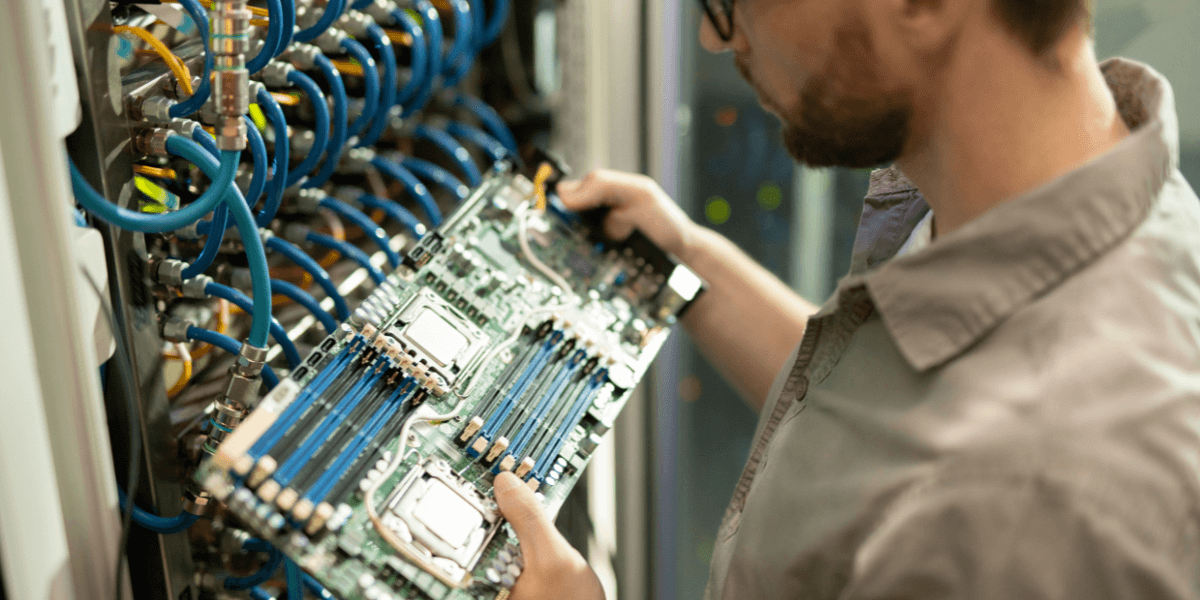
The growth of artificial intelligence and high-density computing is transforming one of the most critical aspects of data centers : heat management . As the power concentrated in the racks increases, so does the amount of thermal energy that needs to be removed, making it increasingly important to rethink refrigeration architectures, cold distribution, and control systems.
This opens up a market for the refrigeration sector in which not only cooling capacity and operational continuity count, but also modulation, efficiency at partial loads, heat recovery, reduction of the refrigerant charge and integration with liquid cooling .
In Europe, the issue takes on even greater weight. The Energy Efficiency Directive has introduced monitoring requirements for data centers with IT demand exceeding 500 kW, and the Commission is developing a common rating system and future minimum performance standards. The indicators considered include energy consumption, water use, temperatures, renewable sources, and waste heat reuse.
AI and high density are changing data center cooling.
In traditional data centers, the heat generated by servers is typically transferred to the air and then removed through air conditioning and refrigeration systems.
However, increasing computational density makes it more challenging to transfer large amounts of heat through air alone. This is precisely where AI infrastructures are accelerating interest in systems where heat is intercepted closer to the electronic components.
Among the solutions gaining importance is direct-to-chip liquid cooling , in which a heat transfer fluid circulates through cold plates installed near the CPU and GPU. Coolant Distribution Units, or CDUs, manage the exchange between the internal circuit of the racks and the secondary circuit of the refrigeration infrastructure.
In 2026, dedicated CDU solutions for AI data centers were already introduced to the European market together with chiller free cooling , a sign of how this architecture is rapidly moving from a specialized application to an increasingly important component of new high-density projects.
This doesn't necessarily mean the demise of air cooling. Different technologies can coexist in data centers, with hybrid air-liquid configurations chosen based on rack density, IT equipment type, and climate conditions.
Modulation and partial loads become central
AI also introduces another important feature: the heat load is not necessarily constant .
Computing activity can change rapidly depending on workloads, making the ability of the refrigeration system to adapt to demand without losing efficiency critical.
The starting source highlights the importance of modulating compressors, inverters and systems capable of adapting cooling capacity to load variations.
From a refrigeration perspective, this increases the value of technologies such as:
- variable capacity compressors;
- inverter;
- dynamic temperature regulation;
- free cooling when external conditions allow;
- efficient exchangers at partial loads;
- advanced supervision systems;
- algorithms for coordination between IT load and cooling.
The goal is not simply to maintain the temperature within certain limits . It is to do so with the least possible energy under all operating conditions .
One of the most widely used indicators in the industry is PUE, Power Usage Effectiveness, which relates the overall energy absorbed by the data center to that used directly by the IT equipment.
European policy, however, is gradually broadening the scope of observation. The Energy Efficiency Directive requires consideration of parameters related to water consumption, operating temperatures, use of renewable energy, and heat recovery.
Recovering heat produced by servers
Data center cooling has a special feature: a very high proportion of the electricity used by IT equipment is ultimately converted into heat.
Normally, this heat must be dissipated externally. But if available at the right temperatures, it can become a resource to be recovered.
The use of liquid circuits and higher operating temperatures can facilitate this operation, allowing the heat to be transferred to district heating networks, nearby buildings or other processes that require thermal energy.
European legislation has paid increasing attention to this aspect. The Energy Efficiency Directive explicitly includes waste heat reuse among the sustainability indicators for data centers and calls on Member States to promote measures to increase its recovery.
The Commission is also working on a Data Center Energy Efficiency Package, which includes a European rating system and a path towards minimum performance standards. Objectives include reducing energy and water consumption, increasing the use of renewables, and maximizing the use of heat produced by digital infrastructure.
For the refrigeration industry, this means that the refrigeration system will no longer have to be evaluated solely for its ability to eliminate heat, but also for how that heat is managed and, where possible, recovered.
Refrigerants, water, and efficiency: cooling becomes an integrated system
Ultimately, data center cooling sustainability requires looking at the entire system.
Increasing cooling capacity cannot simply translate into a proportional increase in consumption. Design must simultaneously consider energy efficiency, water consumption, refrigerants, redundancy, operational continuity, and heat recovery.
For refrigeration circuits, the European transition to refrigerants with progressively lower GWPs also comes into play. In new systems, the choice of fluid must therefore be coordinated with operating temperatures, chiller architecture, safety, and long-term regulatory perspectives.
AI is making this evolution faster by simultaneously increasing computing power and thermal density.
The challenge for refrigeration, therefore, will not simply be to produce more cold. It will be to remove large amounts of heat with less energy, adapt quickly to loads, reduce environmental impact, and transform waste heat into a resource whenever possible.

Related Focus



FAQ – Domande frequenti
AI systems utilize high-density computing infrastructures that concentrate large amounts of power in racks and, consequently, generate greater thermal loads. This increases the need for solutions capable of removing heat near the electronic components, making liquid cooling increasingly attractive alongside traditional air cooling systems.
Liquid cooling uses a fluid to transfer the heat produced by IT equipment. In direct-to-chip systems, the liquid reaches cold plates installed near the CPU and GPU, while a Coolant Distribution Unit manages the heat exchange with the infrastructure's cooling circuit. It is particularly attractive for high-density racks.
The European Energy Efficiency Directive requires monitoring and reporting requirements for data centers with IT demand exceeding 500 kW. The parameters considered include energy, water use, temperatures, renewables, and heat recovery. The Commission is also developing a European rating system and future minimum performance standards.
