




Data Centers and Cooling: New Opportunities for the HVAC/R Industry
The growth of data centers opens up new opportunities for the HVAC/R supply chain, but requires advanced expertise in cooling, business continuity, and liquid cooling.
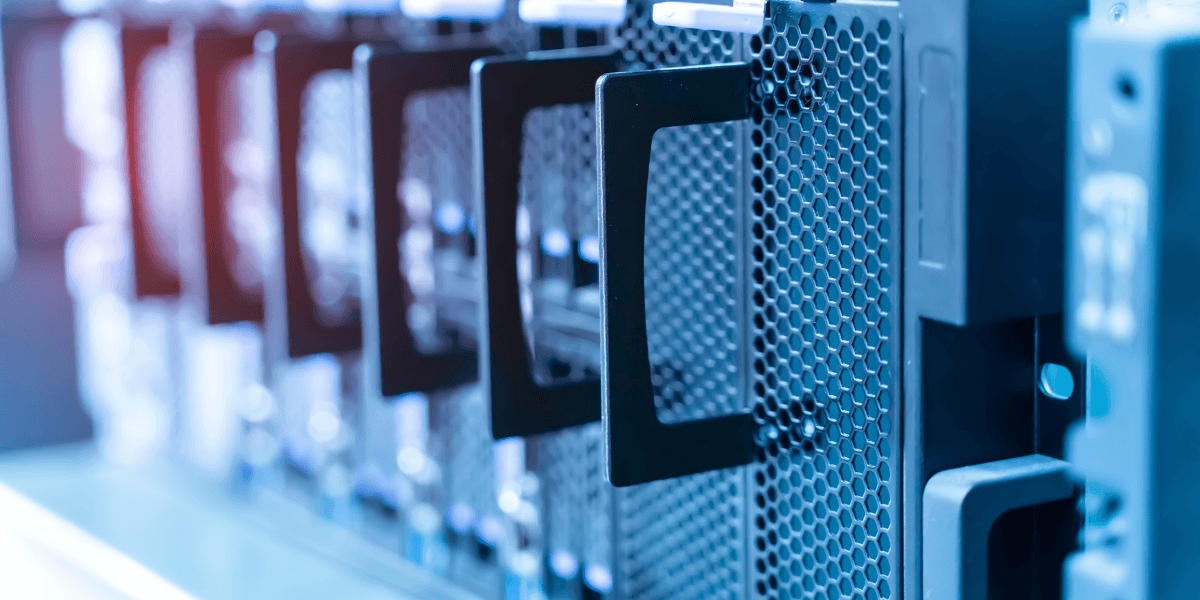
The growth of artificial intelligence, cloud computing, and digital infrastructure is placing data centers at the center of the HVAC/R industry's evolution. It's a rapidly expanding market, but also a highly specialized field, where cooling, business continuity, environmental control, and rapid response are of strategic importance.
Unlike many traditional commercial buildings, data centers operate 24/7 with high and constant thermal loads. Any change in temperature, humidity, or airflow can impact the performance of IT equipment, while a system downtime can have significant financial consequences. Therefore, data center cooling requires a different approach than conventional HVAC systems.
Business continuity and accuracy: why data centers are different
In data center cooling , reliability isn't an afterthought, but the very foundation of design and maintenance. Digital infrastructures house servers and sensitive systems that must operate under controlled conditions, with very narrow margins of tolerance.
The HVAC/R industry's work in this area therefore requires specific expertise in redundant systems, precise control of environmental parameters, load management, and rapid response in the event of an anomaly. Alongside traditional air conditioning systems, data centers also employ dedicated equipment such as CRAH, CRAC, chillers, dry coolers, pumping systems, VFDs, and refrigerant distribution units .
For technicians and contractors, entering this market means dealing with a higher level of complexity, where each component must be selected and managed for operational continuity. The choice of motors, inverters, pumps, valves, and control systems cannot be based solely on initial cost, but must also consider reliability, efficiency, spare parts availability, and long-term support.
From air cooling to liquid cooling: rapidly evolving technologies
The increasing density of IT loads is also changing cooling technologies . In many data centers, air-cooled systems remain common, but the growth of AI and high-performance computing is pushing the need for more advanced solutions capable of removing ever-increasing amounts of heat in more compact spaces.
Among the most significant technologies gaining ground are liquid cooling systems , supported by liquid distribution units, dedicated circuits, and hybrid architectures that combine air and liquid cooling. These solutions can reduce the load on the facility's HVAC systems, improve server thermal management, and increase overall efficiency.
For the HVAC/R supply chain, this evolution opens up new operational needs :
- knowledge of hydronic systems and liquid circuits;
- expertise on chillers, dry coolers and CDU units;
- fluid quality control and circuit cleanliness;
- early detection of leaks;
- commissioning and integrated testing before putting into service;
- scheduled maintenance with rapid response times.
Specialization therefore becomes a competitive factor. Knowing commercial air conditioning isn't enough: you need cross-disciplinary skills in precision cooling, automation, redundancy, testing, maintenance, and risk management.
Skills, partnerships, and maintenance: how to enter a highly critical market
For HVAC/R operators, data centers represent a significant opportunity, but not a market to enter unprepared. The most accessible activities may involve service, maintenance, commissioning, and construction support for new systems , but credibility is built through demonstrable expertise, reliable processes, and the ability to meet critical deadlines.
Partnerships with OEMs, designers, engineers, and data center operators are becoming crucial. In an industry where many facilities replicate layouts and system solutions across multiple locations, the ability to ensure consistent standards, local presence, and rapid response can become a differentiating factor.
At the same time, it's essential to avoid overly generic approaches. The complexity of data centers requires planning, dedicated training, and a realistic assessment of your operational capacity. Promising unsustainable timeframes or services can undermine trust in a market where reputation is built on the quality of interventions and continuity of service.
For refrigeration and technical cooling, data centers confirm a clear direction: the demand for cooling is growing not only in the food chain or industrial processes, but also in digital infrastructure . The ability to manage high thermal loads, redundant systems, and advanced cooling technologies will be increasingly crucial for an HVAC/R supply chain called upon to support the growth of the digital economy.

Related Focus

FAQ – Domande frequenti
The choice depends on installed power, rack density, external climate, required redundancy, and efficiency objectives. In addition to air-cooled systems with hot/cold aisles, free cooling, and CRAC/CRAH units, liquid solutions such as rear-door heat exchangers, direct-to-chip, and immersion cooling are gaining popularity. In the most energy-intensive data centers, liquid cooling can improve the management of high heat loads and reduce the need for air movement.
Priorities include business continuity, redundancy, precise temperature and humidity control, seasonal efficiency, security, and maintenance without service interruption. The design must consider current and future IT loads, room layout, air or fluid distribution, monitoring of critical parameters, backup power supply, and integration with BMS/DCIM systems. In this context, cooling is not an ancillary system, but an essential component of the reliability of the digital infrastructure.
Cooling can account for a significant portion of data center energy consumption, so efficient solutions reduce operating costs and environmental impact. Free cooling, high-efficiency chillers, modulating control, airflow limitation, heat recovery, and intelligent load management help improve metrics such as PUE and water consumption. Sustainability also requires attention to low-GWP refrigerants, water availability, integration with renewables, and the ability to reuse waste heat.
