




CO₂ Refrigeration in Large-Scale Retail: Efficiency and Reduction of Energy Costs
CO₂ refrigeration can help large-scale retail trade reduce energy costs, dependence on HFCs, and the environmental impact of their facilities.
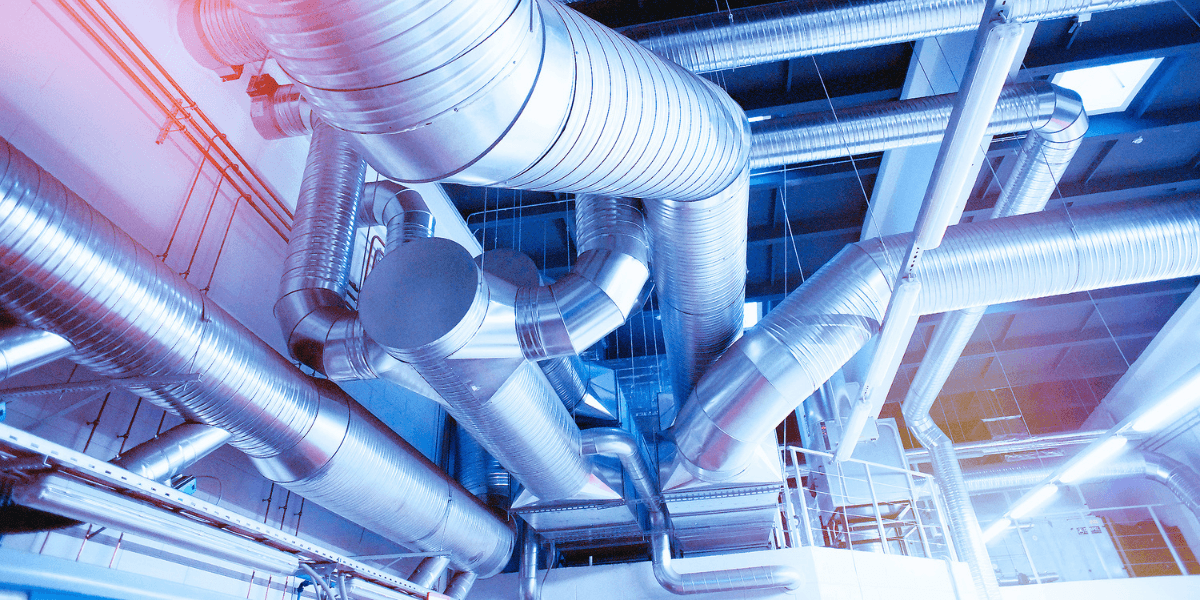
Rising energy costs are placing increasing pressure on food distribution , a sector where margins are often slim and refrigeration represents one of the largest operating costs. For supermarkets, grocery stores, and food outlets, improving the efficiency of refrigeration systems is therefore not just a technical choice, but an economic and management strategy.
In this scenario, CO₂ refrigeration is emerging as an increasingly attractive solution for reducing the environmental impact of systems and containing operating costs . The most recent systems have overcome many of the critical issues associated with early applications and can now offer efficient performance even in complex climates, especially when integrated with advanced technologies for energy recovery and optimization.
Obsolete systems and the hidden costs of traditional refrigeration
Many traditional refrigeration systems can continue to operate for years, but that doesn't mean they're still energy- and cost-effective. Over time, components, compressors, and refrigeration circuits lose efficiency, requiring more frequent maintenance, and can lead to unpredictable downtime.
The problem is particularly evident in HFC-based systems , where the progressive reduction in the availability of high-GWP refrigerants and rising operating costs make it increasingly costly to maintain aging systems. Added to this are refrigerant leaks, which can impact both operating costs and the overall sustainability of the point of sale.
For commercial refrigeration , postponing the replacement of an obsolete system may seem like a cost-effective option in the short term, but it risks becoming more expensive in the medium to long term. The assessment should not be limited to the initial investment, but should also consider energy consumption, maintenance, reliability, refrigerant availability, and service continuity.
CO₂, parallel compression and heat recovery: technologies to increase efficiency
CO₂ refrigeration, based on the use of R744 , has undergone significant evolution in recent years. The latest transcritical systems are no longer solutions suited only to certain markets or specific climate conditions, but increasingly flexible technologies for different store formats.
Performance can be further improved through dedicated energy optimization solutions. These include:
- low-pressure ejectors, which recover part of the internal energy of the system and can help reduce the workload of the compressors;
- parallel compression , useful for managing flash gas, increasing cooling capacity and improving overall efficiency;
- heat recovery , which allows the heat generated by the refrigeration system to be reused for heating rooms or for other needs of the point of sale;
- advanced controls and regulation systems , essential for adapting the system's operation to real operating conditions.
Heat recovery, in particular, represents a strategic element for large-scale retail trade: the heat produced by the refrigeration system can help reduce or replace the use of auxiliary systems based on fossil fuels or electric resistances, improving the overall energy balance of the commercial building.
Efficiency, maintenance, and design: the role of the technical supply chain
Choosing a CO₂ system requires specific skills and careful planning . Operating pressures, store configuration, local climate, cooling loads, cabinet layout, heating needs, and consumption profile must be comprehensively assessed to achieve real benefits in terms of efficiency and return on investment.
Along with replacing systems, there are also more immediate interventions that can help reduce consumption , such as installing doors on open refrigerated cabinets, upgrading lighting with LED systems, and improving control logic. These actions aren't a substitute for a complete redevelopment, but they can reduce the strain on the system and improve the store's performance.
For installers, designers, and maintenance technicians, the spread of CO₂ in commercial refrigeration is ushering in a phase of significant specialization . The goal is not simply to replace one refrigerant with another, but to build more efficient, reliable systems capable of meeting the economic demands of food distribution.
CO₂ refrigeration can help reduce energy costs, environmental impact, and dependence on HFCs, but it requires a well-prepared supply chain and a design approach focused on the system's life cycle. In a market where efficiency and sustainability are becoming competitive factors, the technical quality of refrigeration solutions will be increasingly crucial to the future of large-scale retail.

Related Focus

FAQ – Domande frequenti
CO₂ refrigeration is suitable for supermarkets, grocery stores, and food outlets that need to reduce energy consumption, HFC dependence, and the environmental impact of their systems. It is particularly attractive when the existing system is obsolete, requires frequent maintenance, uses high-GWP refrigerants, or generates high operating costs. The evaluation must consider not only the initial investment, but also energy consumption, service continuity, future refrigerant availability, and the system's life cycle.
Transcritical CO₂ systems based on R744 have achieved greater application flexibility and can be used in various store formats, even in more complex climates. Performance improves when the system integrates technologies such as low-pressure ejectors, parallel compression, heat recovery, and advanced controls, which help reduce compressor workload and adapt operation to actual loads.
The design must take into account operating pressures, local climate, refrigeration loads, cabinet layout, consumption profile, heating needs, and store configuration. CO₂ should not be considered a simple refrigerant replacement, but rather a system choice that requires proper system architecture, precise regulation, components suited to the operating pressures, and specialized maintenance. Only an integrated approach can achieve efficiency, reliability, and a return on investment.
