




Automatic refrigerated vending machines: the cold is getting smarter.
Refrigerated vending is growing thanks to fresh products, IoT, and remote monitoring, opening up new opportunities for commercial refrigeration.
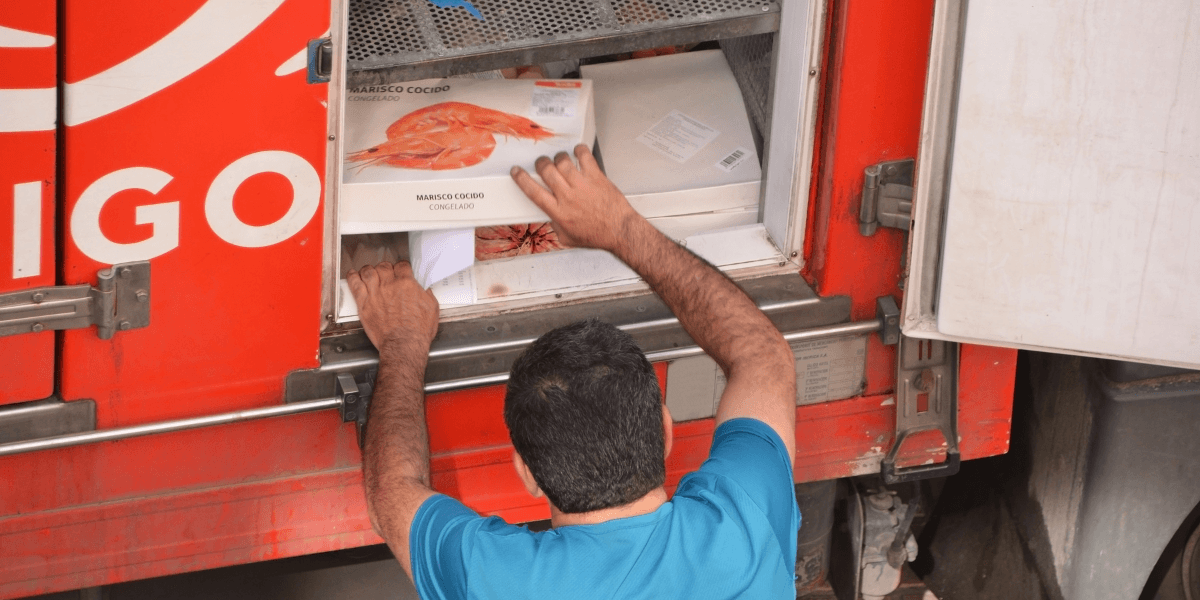
Refrigerated vending machines are evolving from simple beverage and snack machines to true automated retail outlets, capable of storing and dispensing fresh foods, ready meals, dairy products, frozen foods, and even pharmaceutical products.
The global market, valued at approximately $6.5 billion in 2024, could reach $11.4 billion by 2032, with an average annual growth rate of 7.3%. This expansion is primarily driven by the demand for fresh and ready-to-eat products, the development of automated retail, and the integration of IoT technologies for equipment control, management, and monitoring .
This opens up a market for the refrigeration sector in which energy efficiency, cold chain reliability, and digital management are becoming increasingly important elements.
From fresh drinks to an ever-expanding food offering
Beverages continue to be one of the main applications of refrigerated vending, but the offering is rapidly diversifying. This evolution includes dairy products, fruits and vegetables, ready meals, frozen foods, and temperature-sensitive products, expanding the environments in which these devices can be installed.
Offices, stations, airports, healthcare facilities, universities, and commercial spaces can thus offer fresh products without the constant presence of staff, guaranteeing a service potentially available 24 hours a day.
This transformation, however, also increases technical requirements. If a vending machine contains perishable products, temperature is no longer simply a prerequisite for offering a cold drink, but becomes an essential parameter for product preservation and safety.
The refrigeration system must therefore maintain stable conditions despite frequent openings, ambient temperature variations, machine fillings, and different thermal loads . Efficiency and reliability become particularly important in installations characterized by continuous operation.
IoT and remote monitoring transform vending refrigeration
One of the most significant changes concerns connectivity . By 2024, vending machines classified as smart already represented 58.4% of the market based on their operating mode, according to data reported in the Credence Research analysis.
Connecting your equipment allows you to gather information that goes far beyond sales. A smart refrigerated vending machine can allow you to remotely monitor:
- internal temperature and storage conditions;
- any anomalies in the refrigeration system;
- product availability and rotation;
- need for technical interventions;
- consumption and operating performance;
- opening of doors or other abnormal conditions.
For operators, this means being able to intervene before a failure compromises stored products. Continuous monitoring can also reduce unnecessary visits, improve maintenance scheduling, and provide useful data to monitor equipment performance over time.
Refrigeration is thus becoming increasingly similar to that already prevalent in supermarkets and more structured commercial installations: remote control, alarms, and data-driven maintenance are becoming an integral part of cold management.
Energy efficiency and reliability become competitive factors
The expansion of refrigerated vending machines also raises the issue of energy consumption . Unlike other automatic systems, these devices must continuously feed the refrigeration circuit to keep products within the required temperature range.
Efficiency depends on numerous factors: insulation quality, circuit sizing, ventilation management, compressor performance, electronic control and the conditions of the environment in which the machine is placed.
With thousands of devices distributed across the country, even a relatively small reduction in consumption at a single dispenser can translate into significant improvements across the fleet. Manufacturers and operators are therefore increasingly interested in high-efficiency components, more advanced control systems, and intelligent temperature management strategies.
The complexity of thermal control and maintenance remains, in fact, one of the critical issues identified for the development of this market, along with the higher initial investment required by the most advanced equipment.
A new segment for commercial refrigeration
The expected growth isn't limited to the vending industry. It's also an example of how commercial refrigeration is embracing new distribution models.
In 2024 , Europe accounted for approximately 28.3% of the global market , behind North America, while the Asia-Pacific region also plays a significant role. The expansion of automated retail and digital payments is also driving the development of these solutions in new markets.
For the refrigeration sector, this means new opportunities for manufacturers of components, control systems, sensors, and maintenance services.
The direction seems clear: the refrigerated vending machine of the future will be less and less an isolated machine and more and more a connected cold chain system, in which refrigeration, monitoring, and digital management must work together to ensure product quality, service continuity, and efficiency.

Related Focus



FAQ – Domande frequenti
The global market was worth approximately $6.5 billion in 2024 and, according to available forecasts, could reach approximately $11.4 billion by 2032, with an average annual growth of 7.3%.
IoT connectivity allows remote monitoring of temperatures, inventory, and operating conditions. Operators can thus identify anomalies, schedule interventions, and more easily ensure proper product storage.
In addition to beverages, these appliances are used for dairy products, fresh produce, ready-to-eat meals, frozen foods, and some pharmaceutical applications, increasing the demands on temperature control and refrigeration system reliability.
