



Right to repair: what's changing for refrigeration appliances?
The new right to repair strengthens obligations regarding assistance, spare parts, and technical information for appliances covered by European repairability requirements.
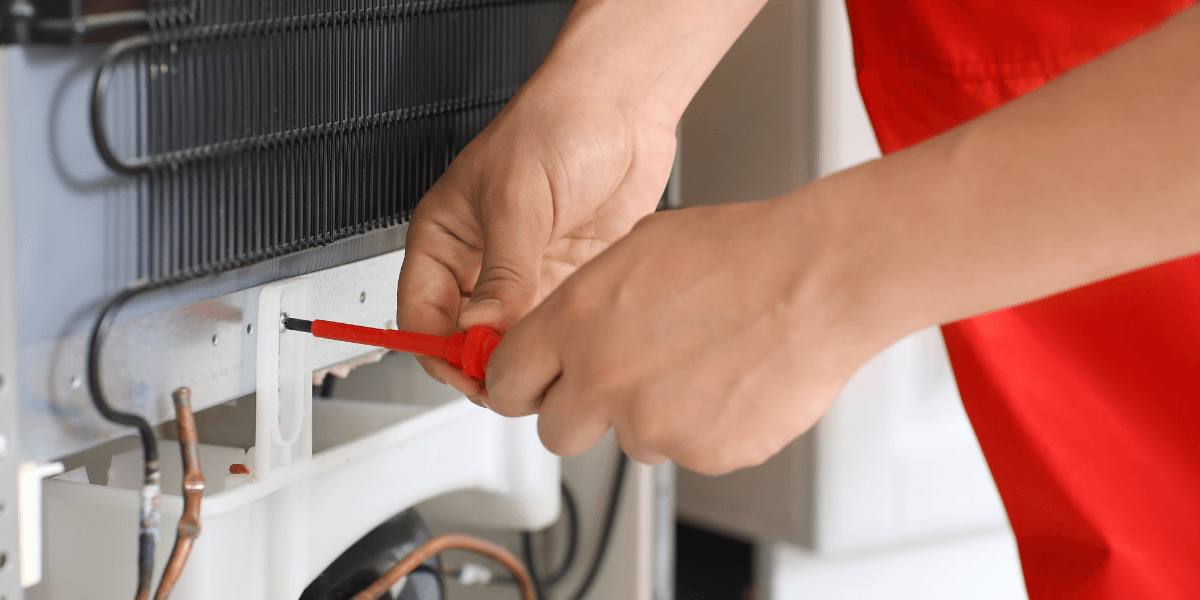
The new framework on the right to repair, introduced by Legislative Decree 176/2026 in implementation of European Directive 2024/1799, has been in force in Italy since October 22, 2026. The aim is to encourage product repair over early replacement, extending their useful life and reducing resource consumption and waste production.
For the HVAC/R sector, this is a particularly interesting topic because the products affected include refrigeration appliances subject to European repairability requirements . However, it's important to clarify the scope of the regulation: it's not a general obligation that automatically applies to all commercial or industrial refrigeration systems, but rather provisions applicable to products identified by the relevant European legislation.
For the technical assistance supply chain, the change reinforces a principle that is already central to the sector: repairing, maintaining, and extending the life of equipment becomes an integral part of circular economy strategies , with greater responsibility also in terms of the availability of spare parts, tools, and technical information.
Repair before replacing: the new European principle
The new framework introduces the possibility for consumers to request the manufacturer to repair goods covered by the legislation even after the legal guarantee has expired, provided that the repair is technically possible.
The intervention must be carried out free of charge or at a reasonable price and within a reasonable timeframe . If the manufacturer is not established in the European Union, the obligation may fall, as applicable, on the authorized representative, the importer, or the distributor.
Even during the warranty period, the incentive to repair is strengthened: when the consumer chooses to repair the product to restore its conformity, the seller's liability period is extended once by a further twelve months .
The principle is therefore to make repair a concretely practicable solution, avoiding that replacing the equipment automatically represents the simplest or most convenient option.
Spare parts, tools and information become central
One of the most important aspects concerns access to the resources needed to carry out the repair.
When European legislation includes specific repairability requirements, manufacturers providing spare parts and tools must offer them at prices that do not discourage repairs. They must also make information on repair services and their indicative prices easily accessible.
The regulation also limits the use of contractual clauses or hardware and software technologies that could unjustifiably prevent repairs.
The framework also provides that, within the limits of safety and intellectual property requirements, the use by independent repairers of original, compatible, second-hand or 3D-printed spare parts should not be hindered.
For the refrigeration industry, this step is particularly significant. The ability to service a piece of equipment depends not only on the technician's expertise, but also on the timely availability of components, documentation, diagnostic tools, and access to electronic systems.
Maintenance and repair take on a new environmental value
The right to repair also strengthens the role of maintenance within sustainability strategies.
Extending the life of an appliance means reducing the need to produce a new one , limiting material consumption, embodied energy, and waste. In the case of refrigeration equipment, proper repair can also prevent a relatively minor fault from requiring the premature replacement of the entire product.
For technicians and service centers, the value of activities such as diagnosis, component replacement, performance verification and restoration of correct functionality therefore increases.
The topic is also directly linked to the technological evolution of the sector: increasingly digitalised and connected equipment requires that repairability be considered together with software accessibility, updates and the availability of technical information .
The right to repair does not automatically apply to all HVAC/R
However, it is essential for the supply chain to avoid overly broad interpretations.
The Legislative Decree specifies that the repair obligation applies only to goods for which the European acts indicated by the legislation provide repairability specifications . These include refrigeration appliances governed by EU Regulation 2019/2019.
However, the text does not include a general extension to any air conditioner, heat pump, or professional refrigeration system.
For RefriExpo, however, the interesting point is broader: repairability, availability of spare parts and extension of useful life are becoming increasingly important criteria in the design and management of equipment .
For manufacturers, distributors and technical support professionals, the new regulatory framework therefore reinforces a trend that is destined to grow: moving from a model based primarily on replacement to one in which maintenance, repair and reuse of components become an integral part of the circular economy of the HVAC/R sector .
Related Focus



FAQ – Domande frequenti
The new framework allows consumers to request repairs for products covered by European repairability requirements, even beyond the legal warranty, provided the repair is technically feasible. Repairs must be free of charge or at a reasonable price and within a reasonable timeframe.
No. The specific obligations apply to goods identified by European legislation that establishes repairability requirements. Therefore, this regulation does not automatically apply to all commercial or industrial refrigeration systems, air conditioners, or heat pumps.
For the products concerned, the framework aims to make spare parts, tools, and information needed for repairs more accessible, limiting practices that unjustifiably hinder interventions and also promoting the activity of independent repairers.
