



Natural refrigerants: the transition requires plant redesign
The transition to natural refrigerants requires rethinking cycles, components, and safety by designing the system around the properties of the fluid.
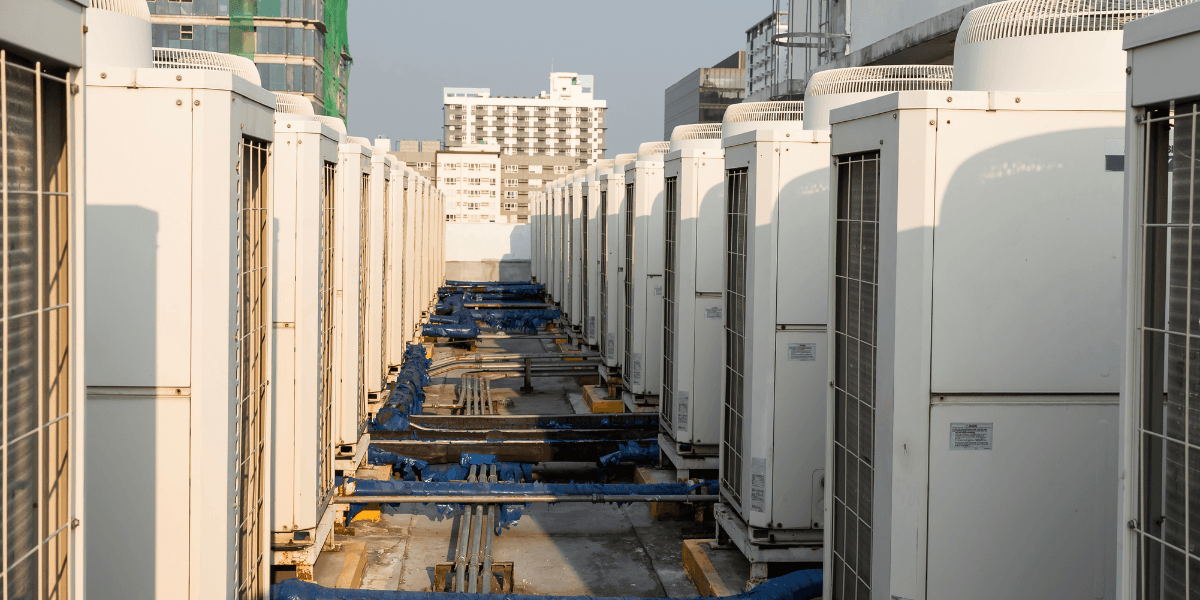
The progressive reduction of fluorinated gases is pushing the HVAC/R sector toward an ever-increasing use of natural refrigerants such as CO₂, ammonia, and hydrocarbons . However, the transition cannot be approached as a simple fluid replacement within systems designed according to logics developed for F-gases.
The characteristics that favored the spread of fluorinated refrigerants for decades were in fact closely linked to their flexibility: through their chemical composition, it was possible to obtain fluids with operating pressures, refrigeration capacities, flammability levels, and performance levels suitable for numerous types of systems. Natural alternatives, on the other hand, have more specific properties, requiring components, refrigeration architectures, and safety strategies to be adapted to the chosen refrigerant .
For designers, manufacturers, and refrigeration technicians, the very approach to design is therefore changing: no longer choosing the refrigerant that best suits a pre-defined machine, but building the system around the physical and thermodynamic characteristics of the fluid.
CO₂, ammonia and hydrocarbons require different systems
There is no single design model that applies to all natural refrigerants.
CO₂ (R744) operates at much higher pressures than many traditional refrigerants and, in many applications, operates transcritically. This requires specific components, advanced control systems, and strategies capable of maintaining high performance even in adverse environmental conditions.
Ammonia (R717) offers excellent thermodynamic properties and has been used for decades in industrial refrigeration, but its toxicity requires particular attention to technical rooms, leak detection, ventilation and safety management.
Hydrocarbons , including propane R290, on the other hand, present the issue of flammability. The design must therefore consider the refrigerant charge, possible ignition sources, ventilation, and installation conditions.
The favorable environmental characteristics of these fluids must therefore be accompanied by technical solutions specifically developed to manage their pressures, flammability or toxicity .
Compressors, exchangers and refrigeration cycles become part of the choice of refrigerant
The change in approach also directly affects the main components of the system.
Compressors, heat exchangers, valves, and control systems must be selected and sized considering the fluid's properties. In some cases, it may also be necessary to modify the refrigeration cycle architecture, introducing transcritical configurations, cascade systems, multistage compression, or circuits with reduced loads .
Exchanger design also plays a key role. Reducing the internal volume can help reduce the refrigerant charge, while proper sizing improves heat exchange and limits energy losses.
Electronic control is also becoming more important: pressures, temperatures and operating conditions must be precisely managed to maintain system efficiency and stability.
The transition to natural refrigerants therefore does not only concern the refrigerant, but may involve a redesign of the entire chain of components and operating logic .
From universal refrigerant to the most suitable solution for the application
One of the most interesting effects of the transition could be the progressive overcoming of the idea of a single refrigerant suitable for almost all applications.
The different properties of CO₂, ammonia, hydrocarbons, water and other natural fluids make it more likely that the market will be chosen based on the required temperature, power, system configuration, installation location and operating conditions .
For commercial refrigeration, for example, CO₂ and hydrocarbons are already finding application in numerous configurations; in industrial applications, ammonia maintains a consolidated role, often even in combined systems with CO₂.
The selection criterion therefore becomes less and less that of identifying a direct replacement for the previous F-gas and more and more that of identifying the refrigeration architecture best suited to the required service .
The transition requires design innovation, not just new refrigerants
A gradual phase-out of fluorinated gases is technically possible, but it involves a more profound transformation than simply replacing the refrigerant.
For the HVAC/R supply chain, this means developing new components, revising refrigeration cycles, improving control systems, and integrating safety from the earliest stages of the project.
The result could be an industry characterized by greater technological diversification, in which the refrigerant and the system are designed as a single system .
For designers and manufacturers, this evolution represents a challenge, but also an opportunity: making the most of the characteristics of natural refrigerants means not necessarily trying to replicate past solutions, but rather developing machines and systems capable of achieving efficiency and safety based on the fluid's actual properties.
Related Focus



FAQ – Domande frequenti
Because CO₂, ammonia, and hydrocarbons have different pressure, flammability, and toxicity characteristics than fluorinated refrigerants, and therefore require specific components, cycles, and safety measures.
There's no single best refrigerant. The choice depends on temperature, power, application, installation location, system configuration, and safety requirements.
Not always. In many applications, the transition requires modifications to compressors, heat exchangers, valves, control systems, or the entire refrigeration cycle. Therefore, the transition must be evaluated at the system level and not simply as a fluid replacement.
