



CO₂ refrigeration: digital controls and sensors become central to efficiency and reliability
In CO₂ systems, controllers, sensors, and digital instruments become essential to coordinate the system, improve efficiency, and anticipate anomalies.
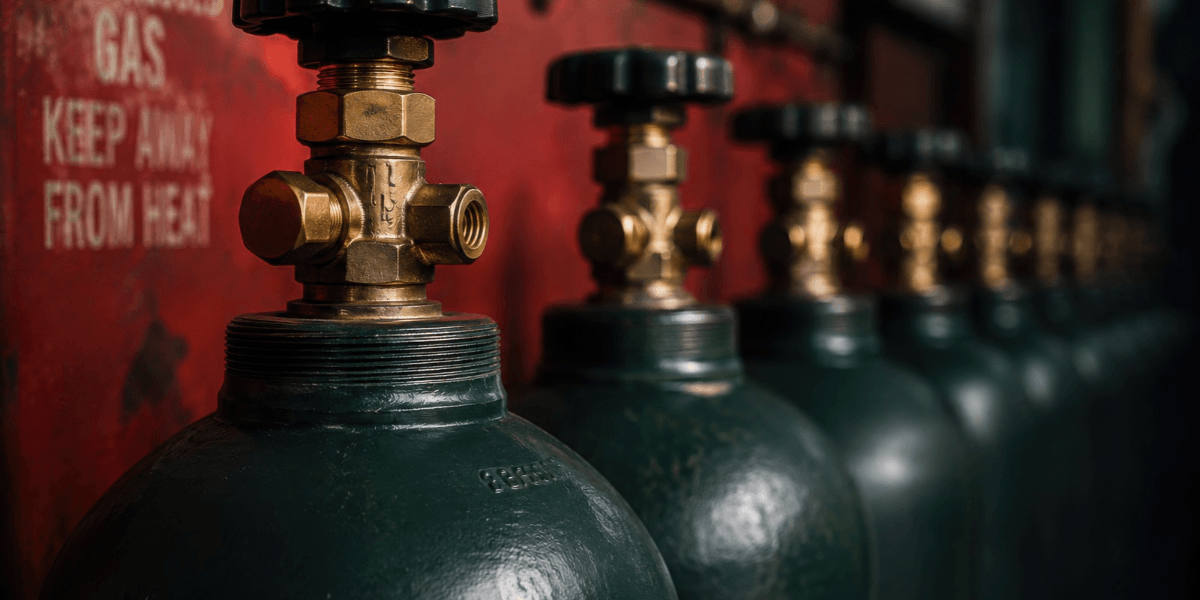
The spread of CO₂ in commercial and industrial refrigeration is changing not only the architecture of systems but also the role of electronics and control systems.
The thermodynamic characteristics of R744, its high operating pressures, and the need to coordinate multiple pressure levels require precise and continuous regulation. Controllers, sensors, electronic valves, and supervision systems thus become an integral part of the system's operation , helping to maintain stability, energy efficiency, and operational safety.
CO₂ refrigeration is therefore evolving towards increasingly connected systems, in which performance does not depend exclusively on the refrigeration components, but on the ability to make them work together based on environmental conditions and actual load.
Control must coordinate multiple levels of pressure
In a CO₂ system, the central controller must simultaneously manage numerous components and adapt their operation to the operating conditions.
In the high pressure section, for example, the regulation must coordinate the high pressure valve, gas cooler and any ejectors , continuously identifying the most suitable setpoint based on the external temperature, the temperature leaving the gas cooler and the cooling demand.
Intermediate pressure also requires dynamic management. In systems using flash gas bypass and parallel compression , the controller must determine when the bypass valve is sufficient and when it is convenient to activate the parallel compressors to recover the flash gas and improve overall efficiency.
The same logic extends to the low-pressure side, where coordination between the refrigeration plant, evaporators, and utilities allows operation to be adapted to actual demand.
The result is a system in which regulation no longer intervenes simply to maintain a pressure or temperature , but continuously optimizes the interaction between multiple components.
Accurate sensors: small errors can impact the entire system
The more automated the system becomes, the greater the importance of the quality of the data used by the controller.
Temperatures, pressures, and operating conditions are detected through a network of sensors and transducers. If any of these values are inaccurate, the control algorithm can also make suboptimal decisions.
An error in reading the ambient temperature or the gas cooler outlet temperature, for example, can lead to an incorrect pressure setpoint , with consequences on consumption and performance.
Maintenance of CO₂ systems must therefore increasingly also include:
- sensor calibration;
- pressure transducer check;
- control of communications between devices;
- alarm management;
- checking controller configurations;
- updating and backup of control systems.
The refrigeration technician must therefore be able to interpret not only the refrigeration circuit, but also the data that describes its operation .
From local control to entire plant supervision
The growing connection between controllers allows the refrigeration plant to be coordinated with evaporators and distributed users.
One possible strategy is to float the suction pressure , which allows the setpoint to be adjusted based on the actual load. When conditions permit, increasing the suction pressure can reduce the work required by the compressors while still maintaining the temperatures necessary for product preservation.
Communication between controllers can also become important during abnormal conditions. If pressure exceeds expected values, the control panel and utilities can adopt coordinated strategies to limit the consequences and keep product temperatures as stable as possible until normal operation is restored.
The evolution is therefore towards system regulation , in which each component no longer works in isolation but shares information with the other elements of the system.
Remote monitoring and predictive maintenance are changing the work of refrigeration engineers.
Digitalization is increasingly affecting the management and maintenance phase as well.
Supervision systems can collect alarms, temperatures, pressures, operating trends, performance and energy consumption , making this information available remotely through centralized platforms or BMS systems.
The continuous availability of data allows us to compare the system's behavior over time and progressively identify signs of anomalous operation.
In this way, maintenance can evolve from a predominantly reactive model towards a more predictive approach: anomalous variations in pressures, compressor performance or valve behaviour can become early indicators of a problem .
At the same time, however, the skills required of operators are also growing. Communication network diagnostics, firmware updates, backup management, controller configuration, and cybersecurity are gradually becoming part of the maintenance activities for connected refrigeration systems.
Refrigeration expertise also goes digital
In new-generation CO₂ systems, electronics and the refrigeration circuit are increasingly less separable.
A seemingly refrigeration problem could be caused by a miscalibrated sensor, a communication failure, or an incorrect controller configuration. Likewise, proper tuning can allow already efficient components to perform better.
For the refrigeration supply chain, this entails an evolution in professional skills: knowing pressures, temperatures and the refrigeration cycle remains fundamental, but it is becoming increasingly important to also understand networks, controllers and digital diagnostic tools .
IoT, data analytics, and automatic anomaly detection systems are also paving the way for systems capable of identifying problems early and increasingly adapting their operations to actual conditions.
Digitalization therefore does not replace the refrigeration technician's expertise: it expands it. In CO₂ systems, electronic control and technical expertise become two elements of the same system management process .
Related Focus
FAQ – Domande frequenti
Because they must manage multiple pressure levels and coordinate numerous components, such as valves, compressors, gas coolers and any ejectors, continuously adapting operation to load and temperature conditions.
Controllers make decisions based on information received from sensors. An incorrect temperature or pressure reading can therefore lead to suboptimal regulation, increasing consumption or reducing system stability.
Alongside traditional refrigeration skills, network monitoring, sensor diagnostics, alarm management, controller configuration, data backup and analysis become important, also promoting predictive maintenance strategies.
