



Data Centers and Liquid Cooling: Digital Twin Enters Thermal Design
Digital twins allow you to simulate and optimize liquid cooling in data centers, anticipating critical issues and reducing energy consumption.
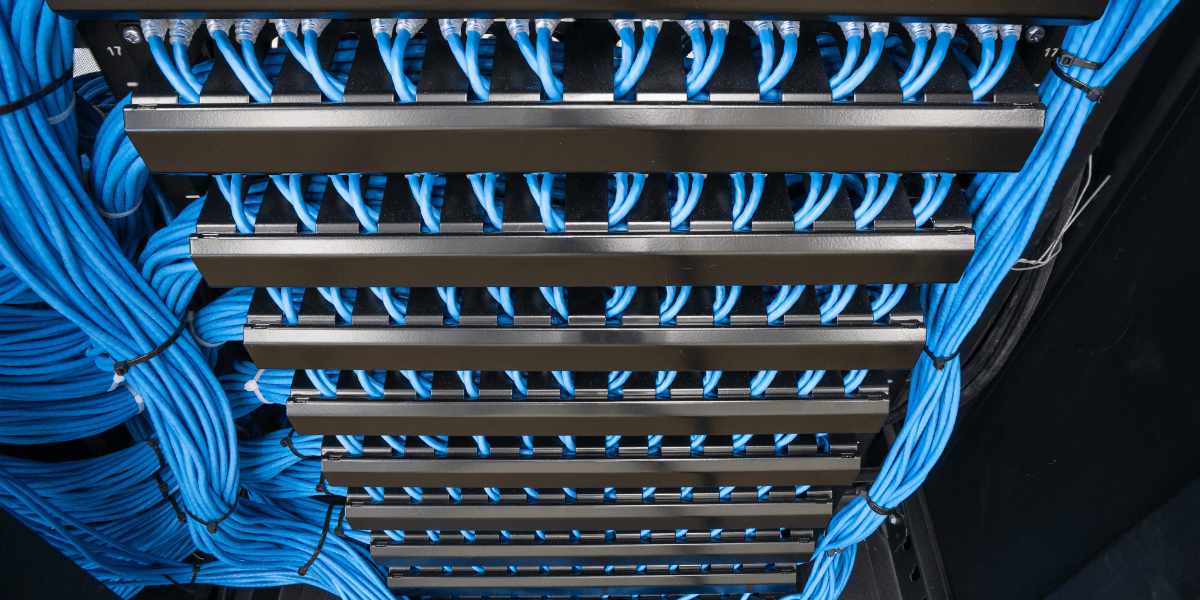
The increasing computing power required by artificial intelligence is also rapidly transforming data center cooling . Ever-dense racks generate high and variable thermal loads, making it more difficult to maintain proper operating temperatures without excessively increasing energy consumption.
In this scenario, interest in digital twins is growing, digital models capable of reproducing the thermal and cooling behavior of infrastructure before it is even built or modified. One example comes from the COLLINS research project, launched in 2026 with the goal of developing a validated digital twin of the entire liquid cooling chain of a data center for AI applications: from the cold plates installed on the chips to the final heat dissipation.
For refrigeration designers and operators, the potential is significant: simulating system behavior in advance allows them to compare configurations, verify redundancies and regulation strategies, and identify possible critical issues before intervening on the real system .
Ever-increasing AI loads are changing the way servers are cooled.
The growth of artificial intelligence is rapidly increasing the power density of IT infrastructure. In high-density data centers, air-only cooling can become more complex to manage and is gradually giving way to solutions where heat is transferred directly to a liquid circuit.
Direct-to-chip systems, for example, use liquid-cooled plates installed in contact with the CPU and GPU to capture heat close to the source. From there, the thermal energy is transferred to the outside through hydraulic circuits, coolant distribution units, heat exchangers, and dissipation systems.
The challenge is not only removing large amounts of heat, but doing so under loads that can vary rapidly depending on the computing activity .
For thermal design, it is therefore increasingly important to understand how the entire cooling chain reacts to these variations, avoiding oversizing but maintaining sufficient safety margins.
The digital twin allows you to test the system before modifying it
A digital twin isn't simply a static simulation. The model is fed and calibrated using data from real equipment, so it can more accurately reproduce the system's behavior under different operating conditions.
In the case of data center cooling, this allows for the simultaneous analysis of temperatures, flow rates, heat exchange, regulation and response of the various components .
Applications may include:
- verifying response to rapid changes in IT load;
- comparison of different cooling architectures;
- redundancy assessment;
- optimization of control logic;
- simulation of faults or abnormal conditions;
- maintenance planning;
- heat recovery evaluation.
The advantage is being able to test configurations and strategies without directly intervening on the operational infrastructure, where an error can have significant consequences on service continuity.
From reactive control to predictive cooling
One of the most interesting developments concerns the shift from reactive regulation to predictive management.
Traditionally, many systems intervene when a temperature exceeds a certain threshold. A digital model updated with real data can instead predict the evolution of thermal conditions and preemptively adjust flow rates, fan speeds, water temperatures, or valve openings .
This way, cooling can be adapted more precisely to the actual load, avoiding having to continuously keep the system at maximum capacity.
For the refrigeration sector, this means moving towards a management system in which the physical plant, sensors, digital model and control work as a single system .
Efficiency and heat recovery become part of the same model
The digital twin can also be used to evaluate what happens to heat after it has been removed from servers.
In liquid-cooled data centers, fluid temperatures can make heat recovery more attractive, for example to district heating networks, external processes, or other compatible consumers.
Simulating the entire chain, from the chip to external disposal, therefore allows us to evaluate not only the required refrigeration capacity, but also possible recovery strategies and the conditions under which these can be truly effective.
For HVAC/R designers and operators, the digital twin thus becomes a tool that can simultaneously support sizing, energy efficiency, operational continuity and waste heat recovery .
As computing density increases, data center cooling design will become increasingly digital and predictive. The digital twin doesn't replace refrigeration design, but it can become a tool for verifying and optimizing it before intervening on the actual infrastructure.
Related Focus

FAQ – Domande frequenti
It is a digital model of the thermal and cooling system, calibrated using real data, which allows you to simulate the system's behavior under different operating conditions and evaluate changes before applying them to the physical infrastructure.
AI servers can achieve very high power densities. Liquid cooling allows heat to be captured directly near the CPU and GPU and transferred more efficiently than air-only configurations.
The model can predict the evolution of thermal loads and allow for dynamic adjustment of flow rates, fans, valves, and fluid temperatures, avoiding maintaining the system at higher cooling conditions than actually necessary.
