




Commercial and industrial refrigeration: natural refrigerants become the global standard
Natural refrigerants are becoming the standard in commercial and industrial refrigeration, with global growth driven by sustainability and regulation.
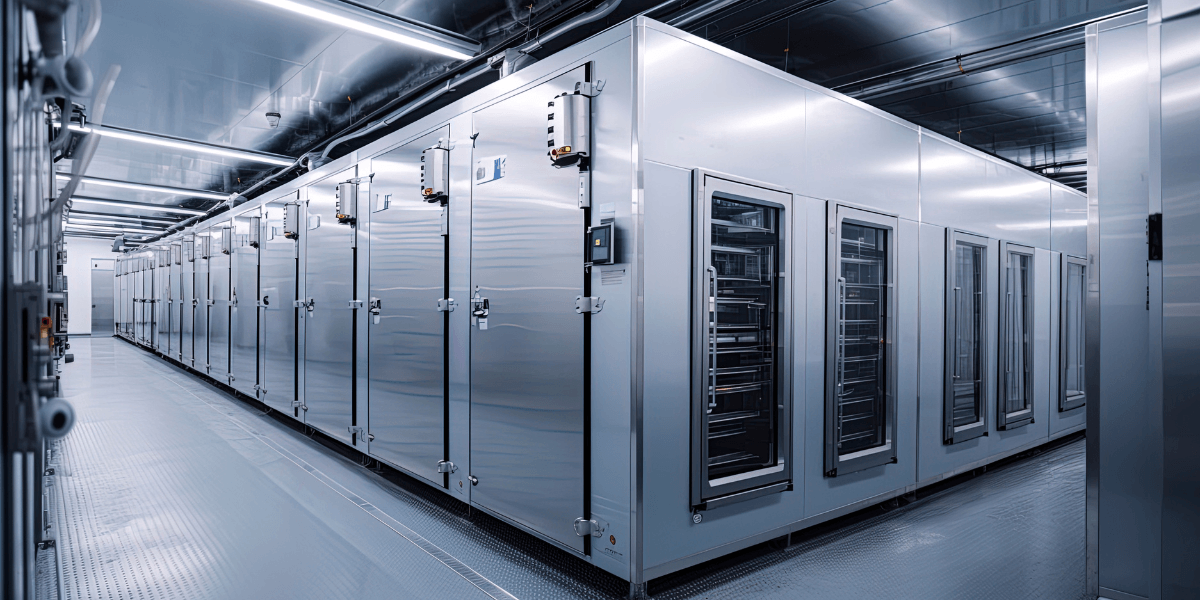
In the commercial and industrial refrigeration sector , the transition to low-impact solutions is no longer a future prospect, but an ongoing reality. Regulatory pressures, combined with growing attention to sustainability and energy costs, are accelerating the adoption of alternative technologies to synthetic refrigerants.
In this context, natural refrigerants – such as CO₂ , ammonia and hydrocarbons – are redefining design choices throughout the HVAC/R supply chain, transforming the way cold is produced and managed.
A growing and increasingly structured global market
The latest analyses confirm a clear trend: the diffusion of natural refrigerants in commercial and industrial refrigeration is constantly increasing globally .
The report published by ATMOsphere highlights how the markets of Europe, North America and Asia show consolidated growth, with increasingly widespread applications in supermarkets, cold storage logistics and industrial plants.
In particular, there has been a significant increase in:
- transcritical CO₂ systems in large-scale retail trade
- hydrocarbon solutions for plug-in applications
- low ammonia industrial plants
These technologies are gradually becoming the reference standard, thanks to reliable performance and a significantly lower environmental impact than traditional refrigerants.
From sustainability to operational competitiveness
The transition to natural refrigerants is driven not only by regulatory requirements, but also by economic and operational factors.
These solutions offer high energy efficiency and greater long-term stability, helping to reduce system operating costs. Furthermore, the use of refrigerants with zero or very low GWP allows companies to anticipate regulatory restrictions and improve their ESG positioning.
For the refrigeration sector, this means a structural shift: natural technologies are no longer a niche, but an increasingly widespread and competitive choice.
Applications and perspectives in refrigeration
The adoption of natural refrigerants today covers a wide range of applications, from commercial refrigeration in retail outlets to industrial refrigeration for production processes and cold chains.
In particular:
- CO₂ establishes itself as a consolidated solution in large-scale retail trade
- hydrocarbons find space in compact and plug-in units
- Ammonia remains a reference for large-scale industrial applications
According to market analyses, the natural refrigerant sector will continue to grow in the coming years, supported by more stringent regulations and growing demand for sustainable solutions.
For HVAC/R designers and operators, the challenge will be to integrate these technologies into increasingly complex systems, ensuring safety, efficiency and reliability.
Related Focus



FAQ
Natural refrigerants are becoming the standard, especially in large-scale retail, cold chain logistics, and industrial refrigeration, where CO₂ and ammonia offer proven solutions. Transcritical CO₂ systems are now widely used in supermarkets, while in industrial settings, ammonia remains the benchmark for efficiency and reliability. This transition is driven by stringent regulations and the need to reduce GWP, making these solutions the preferred design choice for new systems.
Natural refrigerants offer a near-zero GWP, eliminating the regulatory risk associated with phase-downs and future restrictions. Furthermore, they guarantee high energy performance, especially in well-designed applications, and greater long-term cost stability. This makes them competitive not only from an environmental perspective, but also economically, especially considering the system's life cycle.
Design is moving toward standardized yet highly optimized solutions: modular systems, integrated heat recovery, and advanced control are becoming key elements. Designers must consider safety, system layout, and interaction with other energy systems from the outset. Furthermore, integration with digital systems for performance monitoring and optimization is becoming increasingly important.
