




Decarbonization in industrial refrigeration: technologies and strategies to reduce emissions
Decarbonizing industrial refrigeration requires natural refrigerants, energy efficiency, and technological innovation.
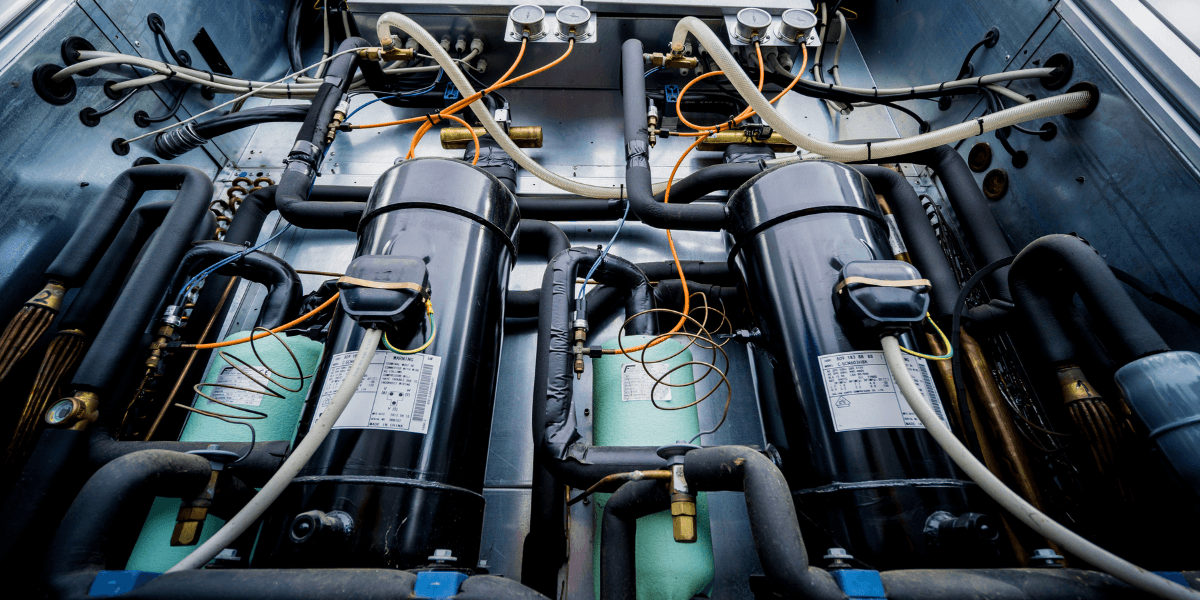
Industrial refrigeration is a key sector in the energy transition, both due to its impact on electricity consumption and the use of refrigerants with high climate-changing potential. In this context, decarbonization is a growing priority for HVAC/R companies and operators, who are challenged to reduce emissions without compromising system performance and reliability.
The path to more sustainable systems is based on a set of strategies involving technologies, refrigerants, and energy management.
Natural refrigerants and reduced environmental impact
One of the key elements of decarbonization is the progressive elimination of high-GWP synthetic refrigerants in favor of low-environmental-impact solutions. In particular, natural refrigerants such as ammonia, CO₂, and hydrocarbons are playing an increasingly important role in the industrial sector.
These fluids have particularly advantageous characteristics:
- Near-zero GWP and ODP , with minimal climate impact
- high energy efficiency , which allows for reduced consumption
- greater sustainability throughout the entire life cycle of the plant
Among these, ammonia (R717) continues to be one of the most consolidated solutions for industrial refrigeration, thanks to its high performance and long application experience.
Energy efficiency and technological innovation
In addition to choosing the right refrigerant, decarbonization also involves improving the energy efficiency of systems . Refrigeration is an energy-intensive process, and reducing consumption is a key lever for reducing indirect CO₂ emissions.
In this scenario, the following are becoming increasingly important:
- advanced control and consumption monitoring systems
- heat recovery solutions
- integration with other energy technologies
- optimization of refrigeration cycles
Technological innovation now allows us to design higher-performance and more adaptable systems, capable of meeting sustainability needs without compromising operational continuity.
An integrated approach to the sector's transition
The decarbonization of industrial refrigeration cannot be addressed with a single solution, but requires an integrated approach involving system design, management, and maintenance.
For HVAC/R operators, this means adopting a broader vision, in which the choice of refrigerants is combined with energy efficiency and process optimization strategies.
In a regulatory environment increasingly focused on reducing emissions, the ability to develop sustainable systems is an increasingly important competitive factor. Industrial refrigeration is therefore called upon to evolve, transforming from an energy-intensive sector to an active component of the energy transition.
FAQ
Key solutions include the use of low-GWP natural refrigerants (such as CO₂ and ammonia), highly energy-efficient systems, and heat recovery technologies. These innovations reduce the environmental impact of systems while maintaining high operational performance.
Optimizing energy consumption is a key lever: more efficient systems reduce both operating costs and indirect emissions related to energy production. Advanced control, monitoring, and system design technologies improve overall plant performance.
Companies can address this by reducing refrigerant leaks, recovering and reusing gases, optimizing maintenance, and integrating circular solutions. For example, CO₂ recovery and leak control can reduce emissions and improve system efficiency over the long term.
