



Solid-state cooling: solid-state technologies towards next-generation refrigeration
Solid-state cooling technologies are gaining traction in the electronics and medical markets, opening up new integration scenarios for precision refrigeration and portable systems.
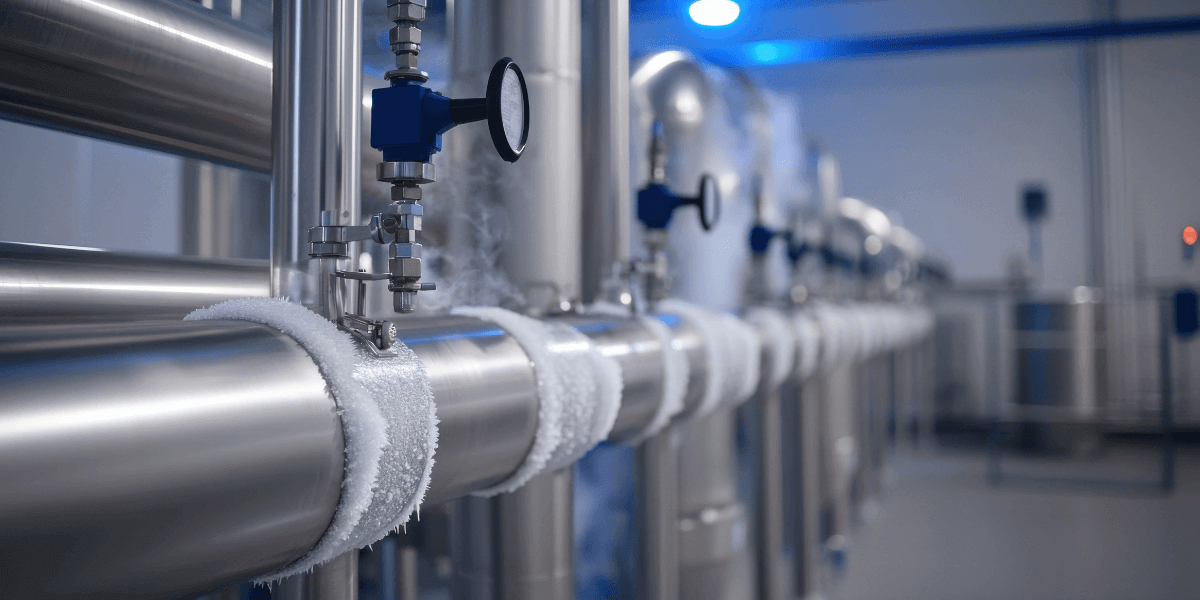
In the world of refrigeration, technologies are emerging that promise to be game-changing.
Solid-state cooling , or solid-state cooling, offers systems without compressors, without traditional refrigerants and with very few parts subject to wear .
Today these solutions find space above all in electronics, medical and precision applications , but their evolution could also have important implications for commercial and industrial refrigeration.
Solid-state technologies: how they work and where they find application
“Solid-state cooling” is a grouping of various technologies that exploit physical phenomena in solid materials to generate temperature differences , without resorting to traditional vapor compression refrigeration cycles.
The main approaches include:
- Thermoelectric systems , based on the Peltier effect;
- Magnetocaloric cooling , which exploits temperature variations in materials subjected to magnetic fields;
- Electrocaloric and piezocaloric technologies , in which electrical or mechanical stimuli induce thermal changes in the material.
The common feature is the absence of conventional refrigerants and moving mechanical parts. For applications with low or very localized thermal loads, such as electronic components, small laboratory systems, mobile storage enclosures, medical equipment, and precision cells, these solutions offer attractive advantages :
- silent operation,
- small footprint,
- less maintenance,
- no refrigerant leaks .
These technologies are therefore designed not to replace, at least in the short term, large refrigeration systems, but to meet specific needs where compactness, reliability, and cleanliness of the system are priority requirements.
Market growth and driving sectors
Forecasts point to a rapidly expanding solid-state cooling market.
Some estimates speak of a doubling of the overall value by 2030 , with growth from around 0.97 billion dollars in 2025 to almost 1.93 billion dollars in 2030 and an average annual rate that, depending on the scenarios, varies between 6–7% and over 14%.
The main drivers of this expansion are:
- Electronics and IT , where thermal management, miniaturization and silence are increasingly critical;
- Medical and pharmaceutical , with equipment requiring stable and controlled temperatures for drugs, reagents, vaccines and portable devices;
- Portable and mobile refrigeration , such as refrigerated boxes and containers for sensitive logistics or medical transport;
- Premium segments of commercial refrigeration , such as precision cells and small volumes with limited space, where “cold on demand” integrated into the device can make the difference.
For industry professionals, these numbers aren't just a niche curiosity, but a sign of a business area that could become increasingly strategic, especially in high-tech markets.
Advantages, limitations and challenges for large-scale deployment
Solid-state technologies have clear technical advantages, which explain the growing interest:
- Absence of mechanical parts subject to wear , with potential increase in reliability;
- Zero refrigerant emissions , a key aspect in a context of increasingly stringent regulations;
- Quiet operation , useful in medical environments, offices, high-end retail;
- Modular structure , which allows for localized cooling of components or micro-volumes.
At the same time, there are limitations and critical issues that hinder a wider penetration into the world of "mainstream" refrigeration:
- Cooling capacity still limited for large heat loads compared to compression systems;
- Efficiency not always competitive in extreme operating conditions;
- High costs of materials and components , especially for the most advanced technologies;
- Careful design of waste heat dissipation is essential to ensure stable performance.
Industrial-scale deployment therefore depends on several key factors: the development of higher-performance thermo- and magnetocaloric materials, increased production capacity, cost reduction, and integration into hybrid systems where solid-state and compression can work synergistically.
Scenarios for industrial and commercial refrigeration
For the industrial and commercial refrigeration sector, solid-state technologies today do not represent a direct replacement for large systems, but rather a high-value complement. They can be used in:
- cooling modules integrated into electronic or measuring equipment,
- precision cells for laboratories, research and quality control,
- portable systems for small-scale critical cold chains,
- “silent” and compact solutions to support sensitive applications.
Refrigeration companies that begin to invest in research, prototyping, and technology partnerships in this area have the opportunity to position themselves early in emerging segments, particularly where the combination of sustainability, miniaturization, and fine temperature control will become essential.