




Natural refrigerants: commercial and industrial use growing, but the transition continues
Natural refrigerants are increasingly gaining ground in commercial and industrial refrigeration, but operational and regulatory challenges remain.
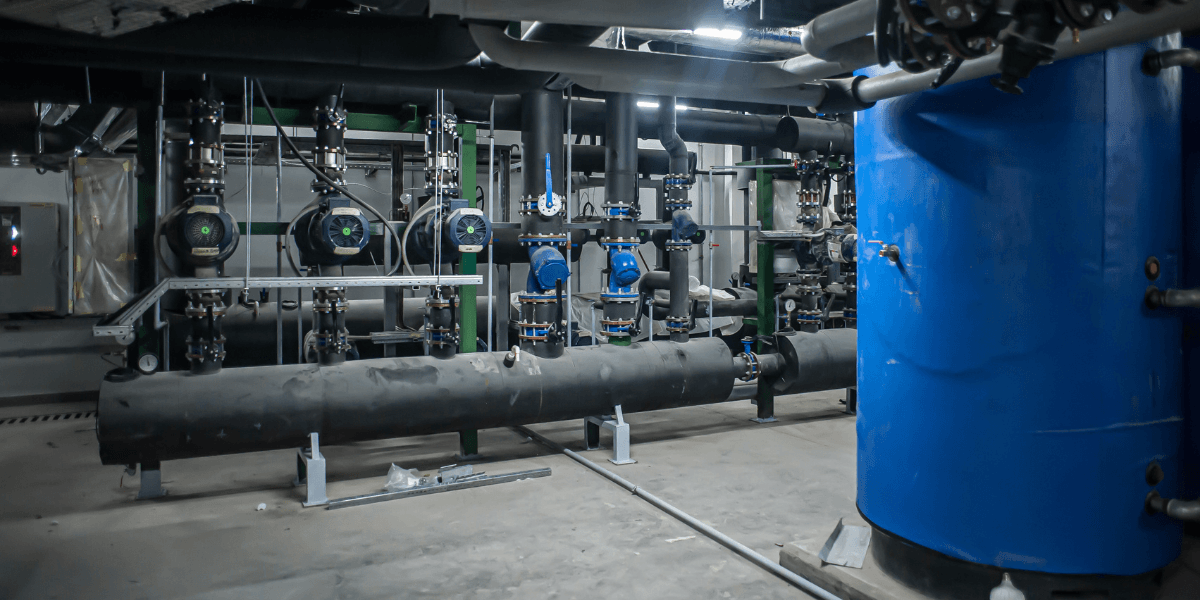
Natural refrigerants are consolidating their presence in commercial and industrial refrigeration systems; they are no longer mere laboratory alternatives or niche solutions. More and more systems are adopting CO₂, hydrocarbons, and ammonia , marking a real shift in the global market and in HVAC/R design. However, this growth still presents practical and regulatory challenges to ensure more uniform and effective deployment.
Consolidation and diffusion in real applications
In recent years, the use of natural refrigerants has seen significant growth in practical applications, especially in the commercial sector, such as supermarkets and large-scale retail trade, and in industry. Transcritical CO₂ , for example, continues to establish itself as the preferred choice for large refrigeration systems due to its ability to operate efficiently with a very low climate impact . At the same time, ammonia and hydrocarbons are increasingly finding their way into specific industrial systems, thanks to their energy efficiency and low environmental footprint .
The diffusion of these technologies reflects not only choices related to sustainability , but also economic considerations: many companies are recognizing the operational benefits and medium-long term savings offered by systems based on natural fluids.
Operational opportunities and obstacles
Despite the positive trend, the transition to natural refrigerants is not without obstacles. Some of the main difficulties emerge during the operational integration phase:
- Regulatory and safety requirements : The use of fluids such as hydrocarbons requires specific controls and procedures related to their flammability.
- Component adaptation : Not all traditional components are compatible with natural fluids without modifications or technical adjustments.
- Design capabilities : Projects based on natural refrigerants require specific technical skills, which are still being developed in many companies in the sector.
These critical issues, while not insurmountable, require investments in planning, training, and technological adaptation.
Global trend and impact on the cold chain
International trends show that natural refrigerants are playing an increasingly central role in the HVAC/R industry's transition strategies. Increased acceptance and adoption in commercial and industrial markets suggests that, over time, these technologies will become the gold standard for new installations .
For refrigeration professionals, this evolution means a progressive reassessment of technical skills, system planning, and design choices. The spread of natural refrigerants is no longer just about reducing GWP, but also about energy optimization, operational safety, and alignment with more sustainable industrial models.
Towards a wider diffusion
The observed growth is undoubtedly positive, but to make natural refrigerants a mainstream choice on a global scale it will be essential:
- develop clearer and more homogeneous regulations in different countries
- expand technical training programs for HVAC/R professionals
- promote the production and adoption of compatible components
- encourage replicable application cases even in less mature markets
The transition is underway and the results achieved show that the path taken is viable, but requires continued commitment from businesses, designers and institutions to overcome the remaining barriers.

FAQ – Domande frequenti
The use of natural refrigerants is growing significantly in commercial and industrial refrigeration and high-efficiency HVAC systems. The most relevant applications include supermarkets, cold storage warehouses, industrial plants, and CO₂, ammonia, and hydrocarbon heat pumps. In particular, transcritical CO₂ refrigeration is becoming increasingly common in food distribution chains, thanks to its high efficiency and reduced environmental impact.
The main technical challenges concern safety, pressure management, and the integration of new refrigerants into existing systems. Refrigerants such as CO₂ require systems designed to handle high operating pressures, while ammonia and hydrocarbons require advanced safety systems due to their toxicity and flammability. Furthermore, the availability of compatible components, system reliability, and system compliance with current regulations are critical factors to consider.
Design choices are increasingly shifting toward flexible and modular systems, capable of adapting to both regulations and the specific characteristics of each application. For example, in CO₂ systems, it is essential to integrate heat recovery modules to optimize efficiency, while in ammonia systems, design must ensure adequate ventilation and safety. Systems must be designed to facilitate upgrades and the integration of new technologies throughout the system's lifecycle.
